
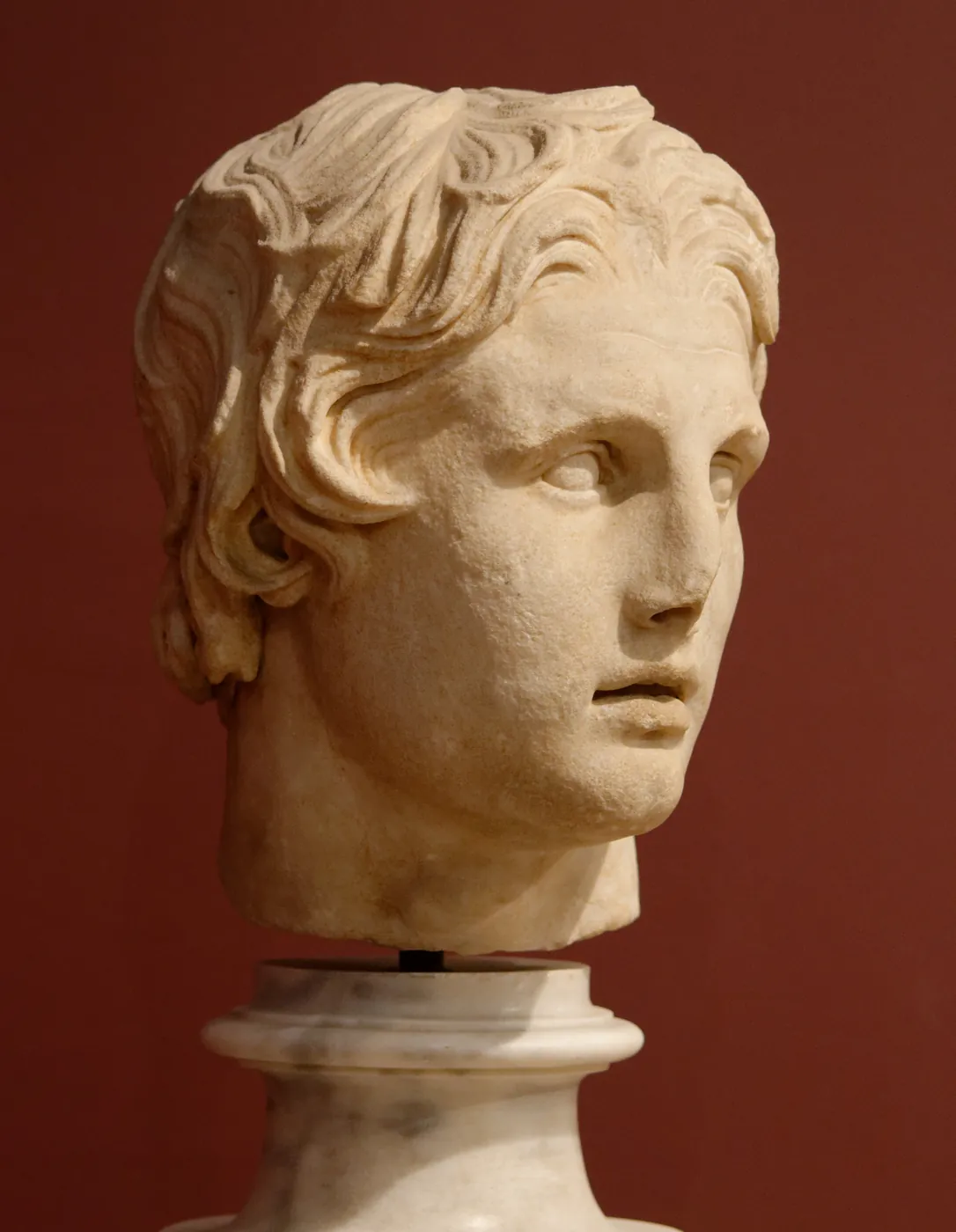
This Alexander the Great timeline follows the Macedonian king from his birth around 356 BCE to his death in Babylon in 323 BCE, tracking the battles, cities and decisions that built the largest empire the Greek world had seen. It is a dated reference to a career so short that almost every year of it contains a campaign.
Early Life and the Rise to the Throne
Alexander was born in Macedon, the son of Philip II, a king who had turned a regional kingdom into the strongest military power in Greece. He studied under Aristotle, and at the Battle of Chaeronea in 338 BCE, where Philip crushed the Greek city-states, the teenage prince commanded a wing of the cavalry. When Philip was assassinated in 336 BCE, Alexander took the throne at about twenty and inherited both a professional army and a planned war against Persia. The speed of his accession matters: rivals at home and subject Greek cities were quick to test a king so young, and Alexander answered each challenge with force, which set the pattern for the rest of his reign. He wasted little time: he secured Macedon, put down revolts in Greece and, in 334 BCE, crossed into Asia. For the wider setting, see the ancient Greece timeline.
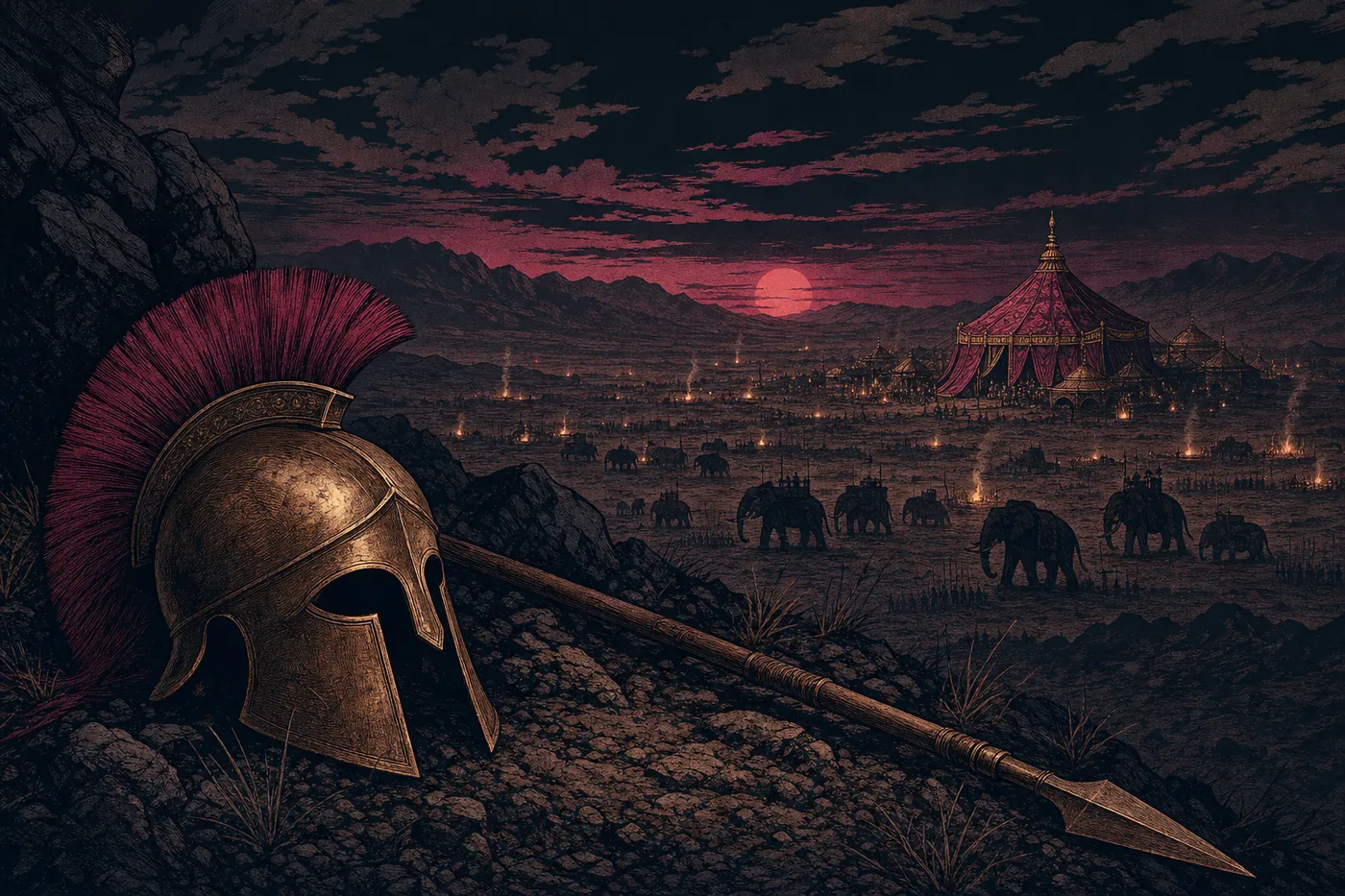
Alexander the Great Conquests Timeline: Granicus to Gaugamela
The alexander the great conquests timeline begins at the Granicus River in May 334 BCE, where he beat the Persian satraps, and moves through Issus in November 333 BCE, where Darius III himself fled the field. Rather than chase Darius inland, Alexander took the coast, besieging Tyre from January to July 332 BCE and then entering Egypt, where he founded Alexandria in early 331 BCE. The ancient Egypt timeline covers the land he took without a major fight. The decisive blow was the Battle of Gaugamela on October 1, 331 BCE. Darius chose open ground to use his numbers and scythed chariots, but Alexander’s army, estimated at around 40,000 men, held its formation and Darius fled again. After the Battle of Gaugamela, Babylon and Susa opened to the conqueror, and Persepolis was burned in May 330 BCE. Historians still argue whether the fire was deliberate policy or a drunken accident, but either way it marked the symbolic end of the Achaemenid dynasty. Gaugamela is usually taught as his masterpiece, and the reason is tactical: he lured part of the Persian line out of position and drove a wedge through the gap.
The Alexander the Great Empire and the Turn East
At its height the alexander the great empire stretched from Greece and Egypt across the old Persian lands to the Indus valley. Alexander kept pushing east, through Bactria and Sogdiana, and in May 326 BCE won his hardest battle against the Indian king Porus at the Hydaspes River, where he faced war elephants. In September 326 BCE his troops, tired after years of marching and fighting, refused to cross the Beas River, and he turned back. The march home was costly. He tried to bind the empire together by founding cities, adopting Persian court customs and arranging mass marriages between Macedonian officers and Persian women, which many of his Macedonians resented. In October 324 BCE his closest friend Hephaestion died, and Alexander took the loss badly. The ancient Mesopotamia timeline covers the region where he planned his next campaigns.
How Did Alexander the Great Die? Babylon, 323 BCE
The question of how did alexander the great die has no settled answer. He fell ill in Babylon after about ten days of fever and died on June 10 or 11, 323 BCE, aged 32. Poisoning, malaria, meningitis and a bacterial infection from contaminated water have all been proposed, and the surviving ancient accounts do not allow historians to choose among them. What followed is clearer. Asked who should inherit, he is said to have answered “the strongest,” and his generals, known as the Diadochi, fought over the empire for decades. It was eventually divided among Cassander, Ptolemy, Antigonus and Seleucus, and Greek language and culture spread across the Near East for centuries, so the legacy of the conquests outlasted the empire itself by hundreds of years.
Frequently Asked Questions
What does this Alexander the Great timeline cover?
It covers his birth around 356 BCE, his accession in 336 BCE, the campaigns from the Granicus to the Hydaspes, and his death in Babylon in June 323 BCE.
When was the Battle of Gaugamela?
The Battle of Gaugamela took place on October 1, 331 BCE, when Alexander defeated Darius III on a plain in Mesopotamia.
How old was Alexander the Great when he died?
He was 32 years old when he died in Babylon on June 10 or 11, 323 BCE.
What happened to Alexander's empire after his death?
His generals, the Diadochi, fought over it and eventually divided it among Cassander, Ptolemy, Antigonus and Seleucus.
Why did Alexander turn back in India?
In September 326 BCE his army, worn out by years of campaigning, refused to march farther east beyond the Beas River.