
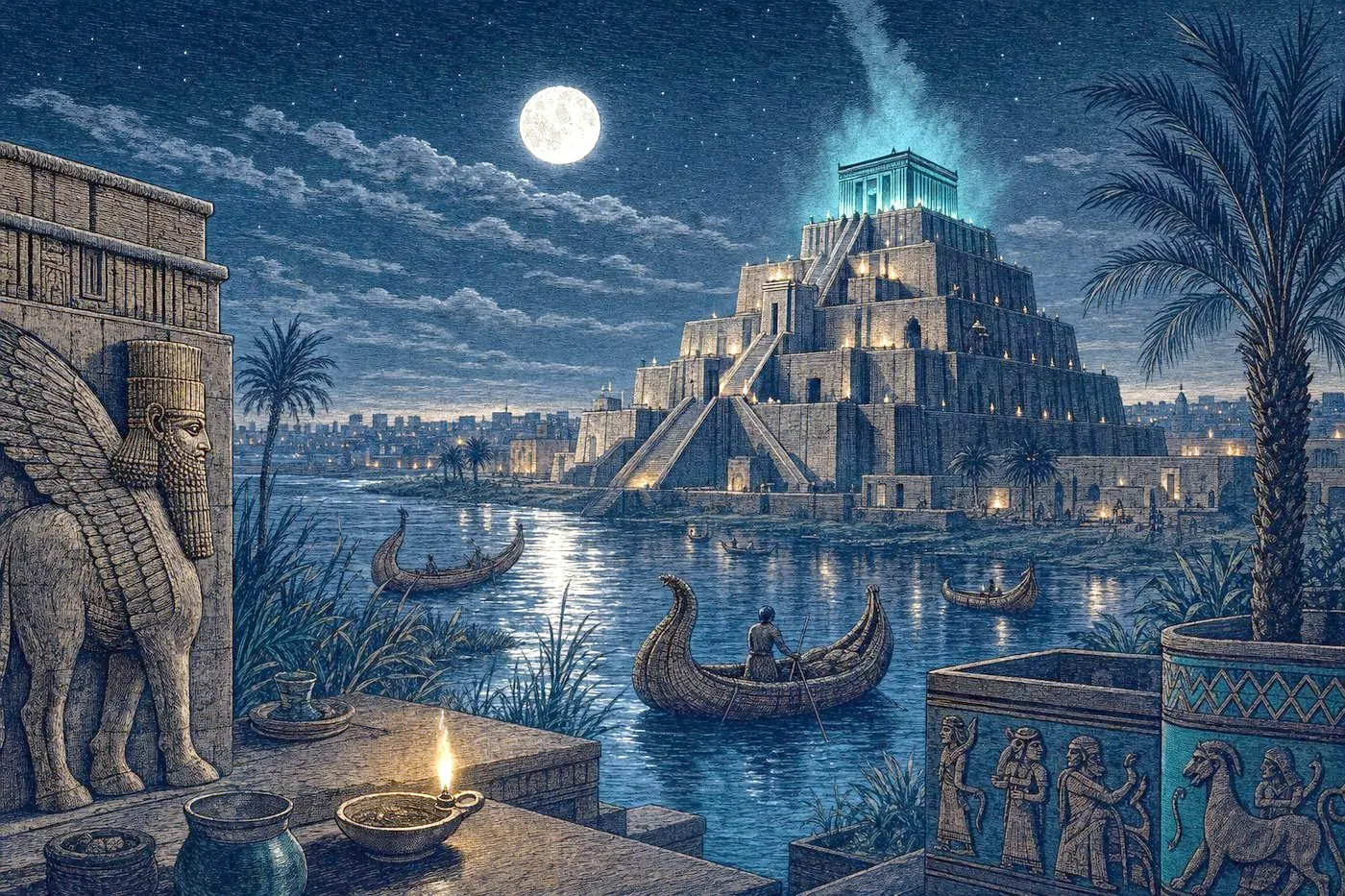
This ancient Mesopotamia timeline of events follows the region between the Tigris and Euphrates rivers, often called the cradle of civilization, from the emergence of the earliest Sumerian cities through the rise and fall of the Akkadian, Babylonian, and Assyrian empires to the Persian conquest of 539 BC.
The Ancient Mesopotamia Timeline: Sumer, Writing, and the First Empire
Mesopotamia’s earliest cities took shape in its southern floodplain, in cities such as Uruk, from around 3500 BC. These Sumerian city-states developed irrigation agriculture capable of supporting dense populations, along with monumental temple architecture and, crucially, one of the world’s earliest writing systems: cuneiform, pressed into wet clay tablets with a reed stylus. Precise dates for these earliest developments remain debated among scholars and are best understood as approximate. Sumerian civilization existed as a patchwork of independent, often rival, city-states until around 2334 BC, when a ruler named Sargon of Akkad united them under a single authority, an achievement historians commonly describe as the world’s first empire. Akkadian dominance did not last many generations, and after its collapse, the Third Dynasty of Ur, ruling roughly between 2112 and 2004 BC, restored centralized Sumerian government along with an unusually detailed bureaucratic and record-keeping system. Read as a Mesopotamia timeline of events, this early Sumerian and Akkadian history already establishes the pattern that repeats across the rest of the region’s ancient history: city-states rising, uniting under a single power, and eventually giving way to the next.
Hammurabi’s Babylon and the Rise of Assyria
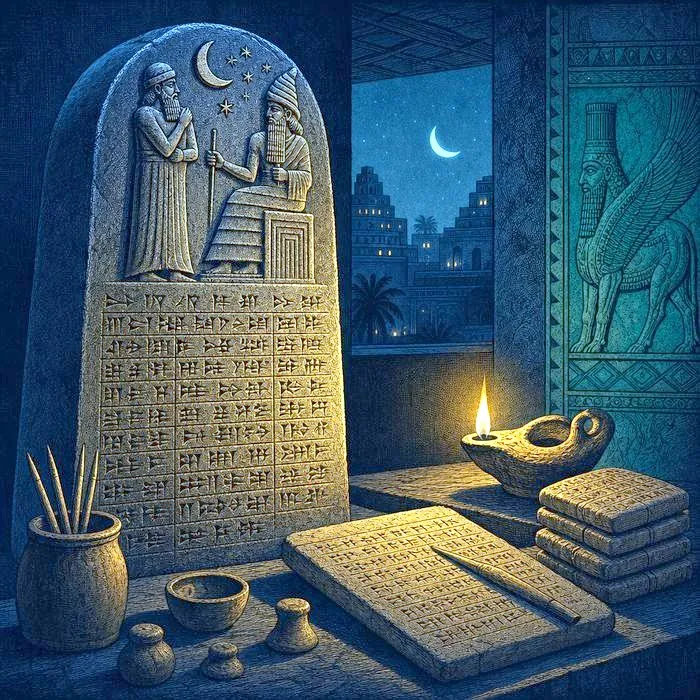
Political power in Mesopotamia shifted repeatedly over the following centuries. One of its best-known rulers, Hammurabi of Babylon, reigned from around 1792 to 1750 BC and unified much of Mesopotamia under Babylonian control. He is remembered above all for a code of laws inscribed on a large stone stele, covering matters from trade and property to family and criminal law, among the earliest and most complete legal codes to survive from the ancient world. Centuries later, the Neo-Assyrian Empire, centered on the city of Nineveh, emerged as the region’s dominant power from roughly 900 to 612 BC, building an efficient administrative and military system alongside palaces decorated with elaborate relief carvings that survive today in museums worldwide. Assyrian dominance ended abruptly in 612 BC, when a combined force of Babylonians and Medes destroyed Nineveh.
The Neo-Babylonian Empire and the History of Persian Conquest
Assyria’s fall cleared the way for a Neo-Babylonian revival under Nebuchadnezzar II, who reigned from 605 to 562 BC and undertook major building projects in Babylon, a city later described in ancient and biblical sources with a mixture of admiration and legend, including the much-debated Hanging Gardens, whose existence and exact location remain unconfirmed by archaeology. Neo-Babylonian power proved short-lived. In 539 BC, Cyrus the Great of Persia captured Babylon largely without a prolonged siege, absorbing Mesopotamia into the vast Achaemenid Persian Empire. This conquest closed several thousand years of successive native Mesopotamian civilizations and marked the region’s transition into the orbit of larger empires (Persian, later Greek, and Roman) that would govern it for centuries to come. As a Mesopotamia timeline of events, this closing chapter marks the last native dynasty in a region whose ancient history had already run for nearly three thousand years.
Frequently Asked Questions
What does this ancient Mesopotamia timeline cover?
This timeline covers the emergence of Sumerian city-states and cuneiform writing around 3500 BC, the Akkadian Empire under Sargon, the Third Dynasty of Ur, Hammurabi's Babylonian law code, the Neo-Assyrian Empire, the Neo-Babylonian Empire under Nebuchadnezzar II, and the Persian conquest of Babylon in 539 BC.
Why is Mesopotamia called the cradle of civilization?
Mesopotamia is often called the cradle of civilization because it produced some of the earliest known cities, organized states, irrigation systems, and writing systems, developments that later influenced neighboring and successor civilizations.
What was Hammurabi's Code?
Hammurabi's Code was a set of laws issued by the Babylonian king Hammurabi around the eighteenth century BC, inscribed on a stone stele and covering trade, property, family, and criminal matters; it is one of the earliest largely complete legal codes to survive.
How did ancient Mesopotamian civilization end?
Native Mesopotamian rule effectively ended in 539 BC when Cyrus the Great of Persia conquered Babylon, absorbing the region into the Achaemenid Persian Empire after millennia of successive Sumerian, Akkadian, Babylonian, and Assyrian rule.