
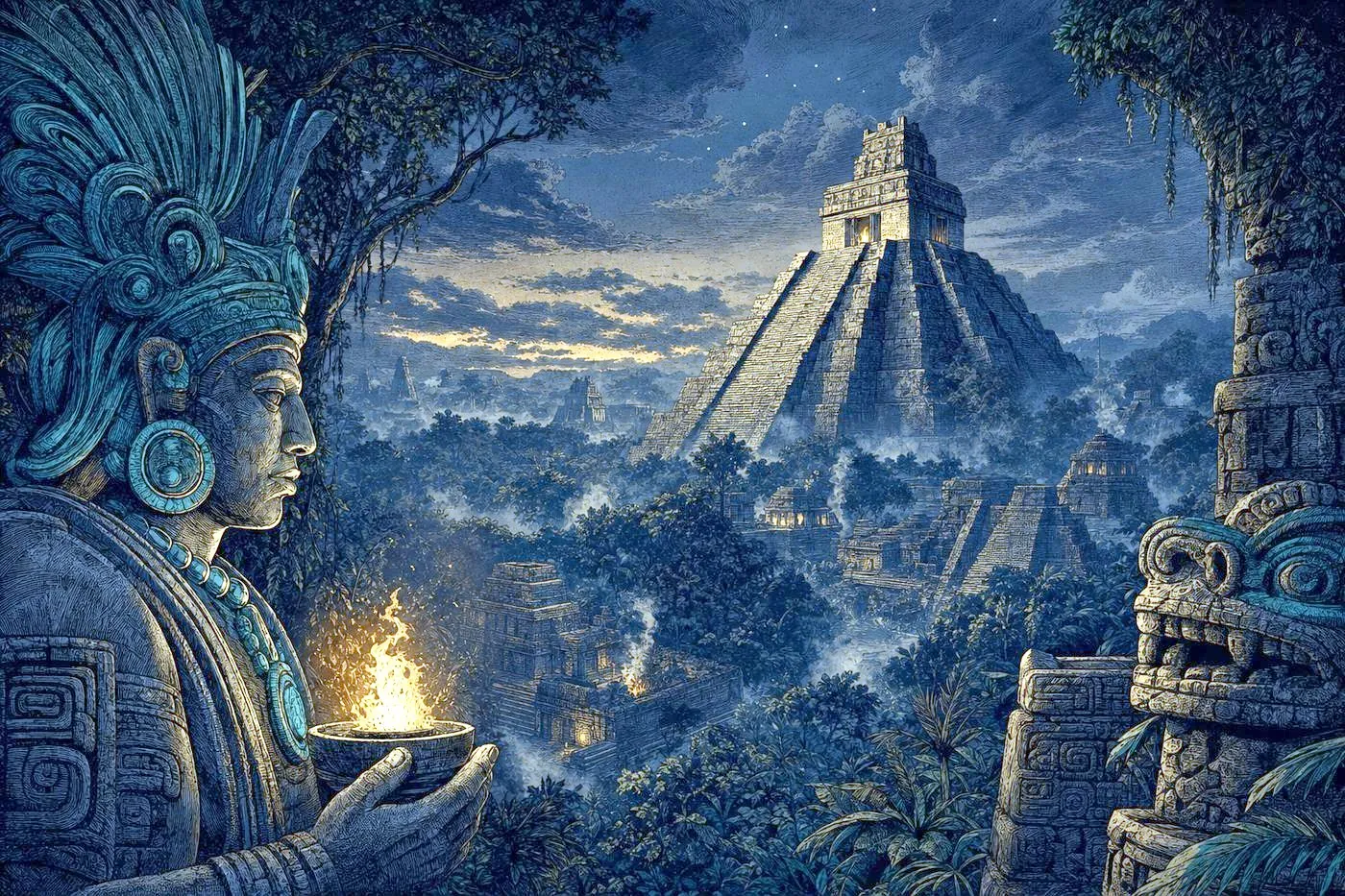
This Maya civilization timeline of events traces the region’s development from early farming villages through the towering city-states of the Classic period to the fall of the last independent Maya kingdom to Spanish forces in 1697.
Origins of the Ancient Maya Civilization Timeline
Maya civilization developed across a region spanning parts of present-day Mexico, Guatemala, Belize, Honduras, and El Salvador, beginning with small farming communities cultivating maize from around 2000 BC onward, though precise early dates remain approximate and subject to ongoing archaeological revision. Over the following centuries, these communities grew into larger settlements, and by the Middle and Late Preclassic periods, roughly 750 BC to 100 AD, some had become substantial cities with monumental temple architecture, including the early urban center of El Mirador in present-day Guatemala. This period laid the groundwork for the political, religious, and artistic traditions that would define later Maya civilization, even though the Maya were never a single unified empire but rather a shared culture spread across numerous independent city-states. Read as an ancient Maya civilization timeline, this early Preclassic stage is easy to overlook next to the later Classic cities, but it is where the region’s writing, religion, and urban planning first took shape.
The Classic Period: City-States, Writing, and the Calendar
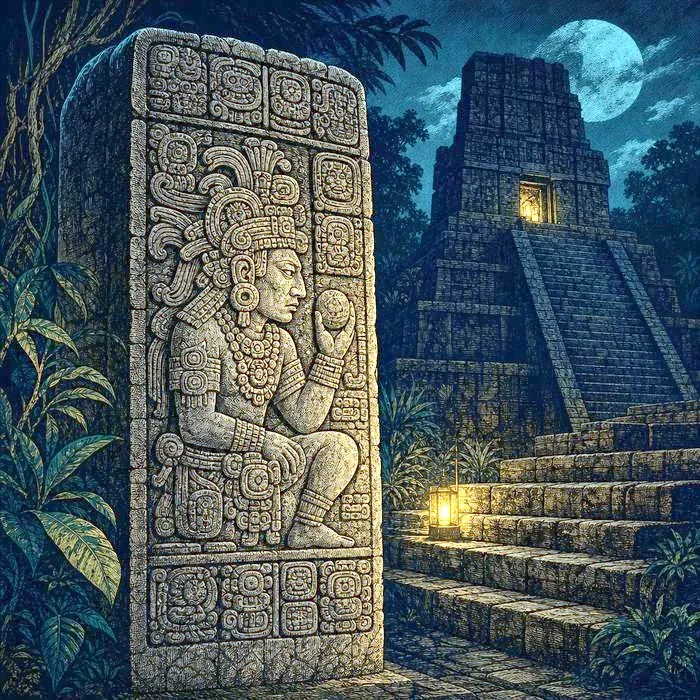
The Classic period, conventionally dated from around 250 AD, saw Maya civilization at its most politically and artistically elaborate. Powerful city-states such as Tikal, Calakmul, and Copán, each ruled by its own royal dynasty, competed and periodically warred with one another while sharing a common script, religion, and calendrical system. Maya scribes during this era refined a sophisticated hieroglyphic writing system, used to record dynastic history, astronomical observations, and religious texts, much of it inscribed on stone monuments that survive today. Maya astronomers and mathematicians also developed remarkably accurate calendrical systems, including the Long Count calendar, capable of tracking dates across enormous spans of time. Beginning around 800 to 900 AD, however, many of the great southern lowland cities were abandoned within a few generations, a phenomenon scholars call the Classic Maya collapse; researchers generally attribute it to some combination of prolonged drought, warfare between city-states, and internal political breakdown, rather than any single cause.
Postclassic Power Shifts and the History of Spanish Conquest
Following the southern collapse, political and economic power in the Maya region shifted north to the Yucatán Peninsula, where cities such as Chichén Itzá and, later, Mayapán became dominant during the Postclassic period, roughly 900 to 1500 AD. Maya civilization was still flourishing in various forms when Spanish forces first arrived in the region in the 1520s. Unlike the comparatively rapid Spanish conquests of the Aztec and Inca empires, subduing Maya territory took nearly two centuries, as the fragmented political landscape of independent kingdoms and the difficult, densely forested terrain of the interior allowed sustained resistance. The last independent Maya political state, the Itza kingdom centered at Nojpetén in present-day Guatemala, held out until 1697, when Spanish forces finally captured its capital, a conquest occurring almost two hundred years after Columbus’s first voyage. Told as a Maya civilization timeline of events, this long history of resistance is what most clearly separates the ancient Maya civilization timeline from the comparatively swift Spanish conquests of the Aztec and Inca empires.
Frequently Asked Questions
What topics does this timeline of Maya history cover?
This timeline covers early Preclassic settlements from around 2000 BC, the rise of early cities such as El Mirador, the Classic period city-states of Tikal, Calakmul, and Copán, the Classic Maya collapse around 800–900 AD, the Postclassic rise of Chichén Itzá and Mayapán, and the 1697 fall of the last independent Maya kingdom.
Was the Maya civilization a single empire?
No. The Maya were never politically unified into a single empire; instead, they formed a shared culture, language family, and religious tradition spread across many independent, often rival, city-states.
What caused the Classic Maya collapse?
Scholars generally attribute the collapse of major southern lowland cities between roughly 800 and 900 AD to a combination of factors, most commonly cited as prolonged drought, warfare between city-states, and internal political instability, rather than a single cause.
When did Maya civilization end?
Maya civilization did not end abruptly. Northern cities like Chichén Itzá and Mayapán flourished after the southern collapse, and the last independent Maya kingdom, the Itza state at Nojpetén, was not conquered by Spanish forces until 1697.