This Zimbabwe history timeline traces the region from the medieval Great Zimbabwe civilization through British colonial rule as Rhodesia to independence in 1980, following the rise and fall of one of pre-colonial Africa’s great stone-building societies and the long struggle for majority rule that followed colonization.
The Great Zimbabwe Civilization
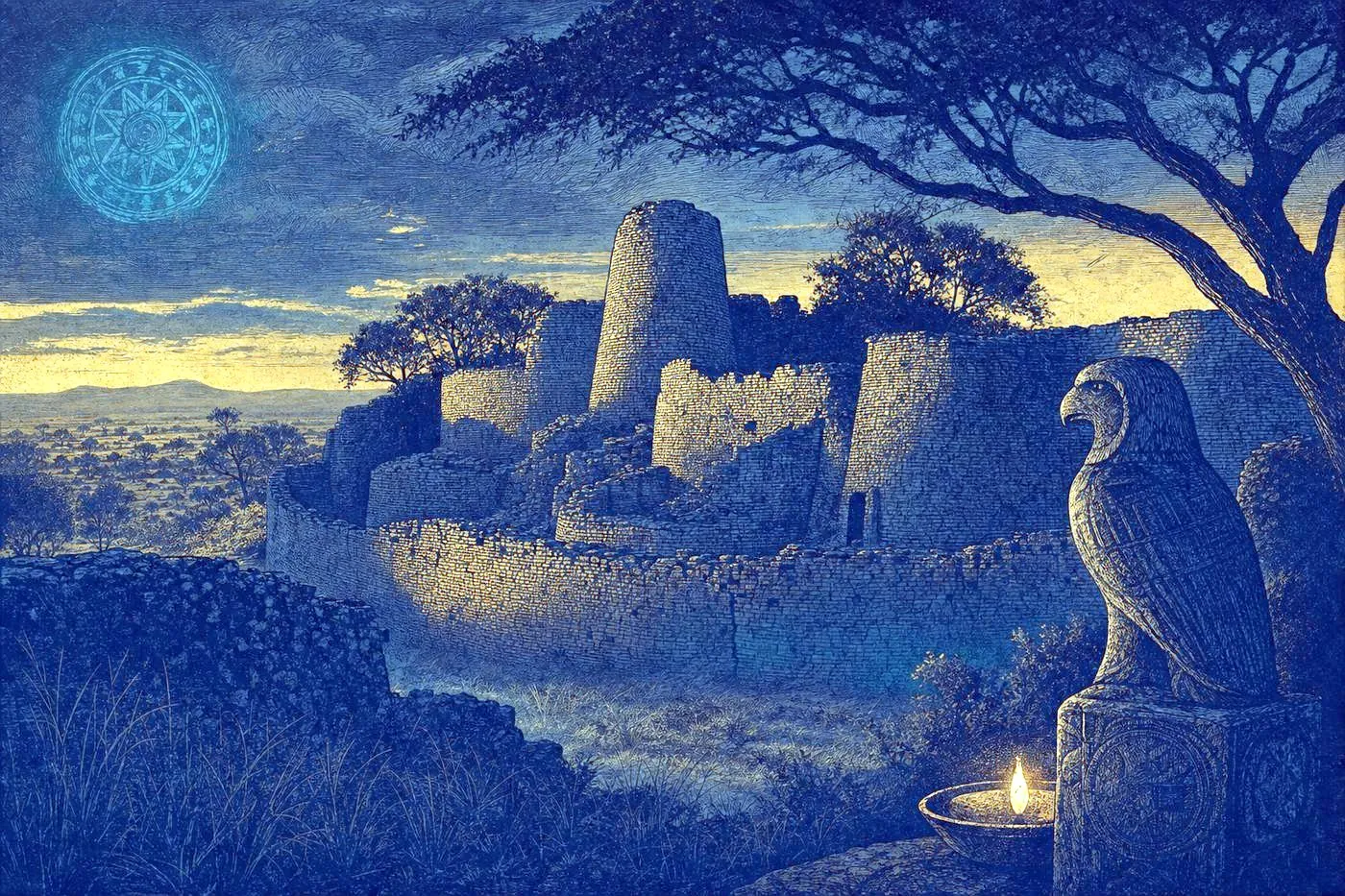
Long before European contact, the region that is now Zimbabwe was home to one of pre-colonial sub-Saharan Africa’s most significant civilizations. Between roughly 1100 and 1450, the city of Great Zimbabwe flourished as a political, religious, and trading center built by ancestors of the Shona people. Its most famous legacy is its architecture: massive walls of precisely cut granite blocks stacked without mortar, forming enclosures whose scale and craftsmanship still draw admiration and remain the source of the modern nation’s name. Great Zimbabwe anchored trade networks that carried gold and ivory to the Swahili coast in exchange for goods including Chinese porcelain and glass beads, evidence of the city’s connection to Indian Ocean trade routes. The reasons for Great Zimbabwe’s decline and eventual abandonment by the fifteenth century are not fully settled among historians, but overgrazing, resource depletion, and shifting trade patterns are commonly cited factors. As Great Zimbabwe declined, the Kingdom of Mutapa rose to its north, inheriting much of the region’s lucrative gold trade and maintaining contact with Portuguese traders who arrived on the coast from the sixteenth century onward.
British Colonization as Rhodesia
European colonization of the region began in earnest in 1890, when Cecil Rhodes’s British South Africa Company sent an armed group of settlers and administrators, known as the Pioneer Column, into the territory north of the Limpopo River. The company established colonial administration over what became known as Rhodesia, named for Rhodes, and the following decades saw the displacement of much of the indigenous population from prime farmland, forced labor practices, and the entrenchment of white settler political and economic control. In 1923, following a referendum limited to the territory’s white settlers, Southern Rhodesia became a self-governing British colony, a status that further concentrated political power in white settler hands even as the Black African population remained the overwhelming majority.
Independence and the Founding of Zimbabwe
Pressure for decolonization across Africa in the 1960s put Rhodesia’s white minority government in an increasingly difficult position, as Britain pushed for a transition toward Black majority rule as a condition of full independence. Rather than accept those terms, Prime Minister Ian Smith’s government unilaterally declared independence from Britain in 1965, an act not recognized by Britain, the United Nations, or the wider international community. The declaration was followed by international sanctions and an escalating guerrilla conflict, often called the Rhodesian Bush War, between the Rhodesian security forces and Black nationalist movements. Negotiations eventually produced the Lancaster House Agreement of 1979, which set out a path to internationally recognized independence under majority rule. In 1980, the country was reborn as Zimbabwe, taking its name from the ancient Great Zimbabwe ruins, and Robert Mugabe, leader of the Zimbabwe African National Union, was elected the new nation’s first prime minister, closing the colonial chapter of the country’s history.
Frequently Asked Questions
What does this Zimbabwe history timeline cover?
This timeline covers Zimbabwe's history from the Great Zimbabwe civilization, which flourished roughly between 1100 and 1450, through British colonial rule as Rhodesia and independence in 1980.
What was Great Zimbabwe?
Great Zimbabwe was a major political and trading city built by ancestors of the Shona people, known for its massive dry-stone walls constructed without mortar. It flourished roughly between 1100 and 1450 and gave the modern nation its name.
What was Rhodesia's Unilateral Declaration of Independence?
In 1965, Prime Minister Ian Smith's white minority government unilaterally declared Rhodesia's independence from Britain rather than accept British demands for a transition to Black majority rule. The declaration was not internationally recognized.
When did Zimbabwe become independent?
Zimbabwe achieved internationally recognized independence in 1980, following the Lancaster House Agreement, with Robert Mugabe elected as the country's first prime minister.