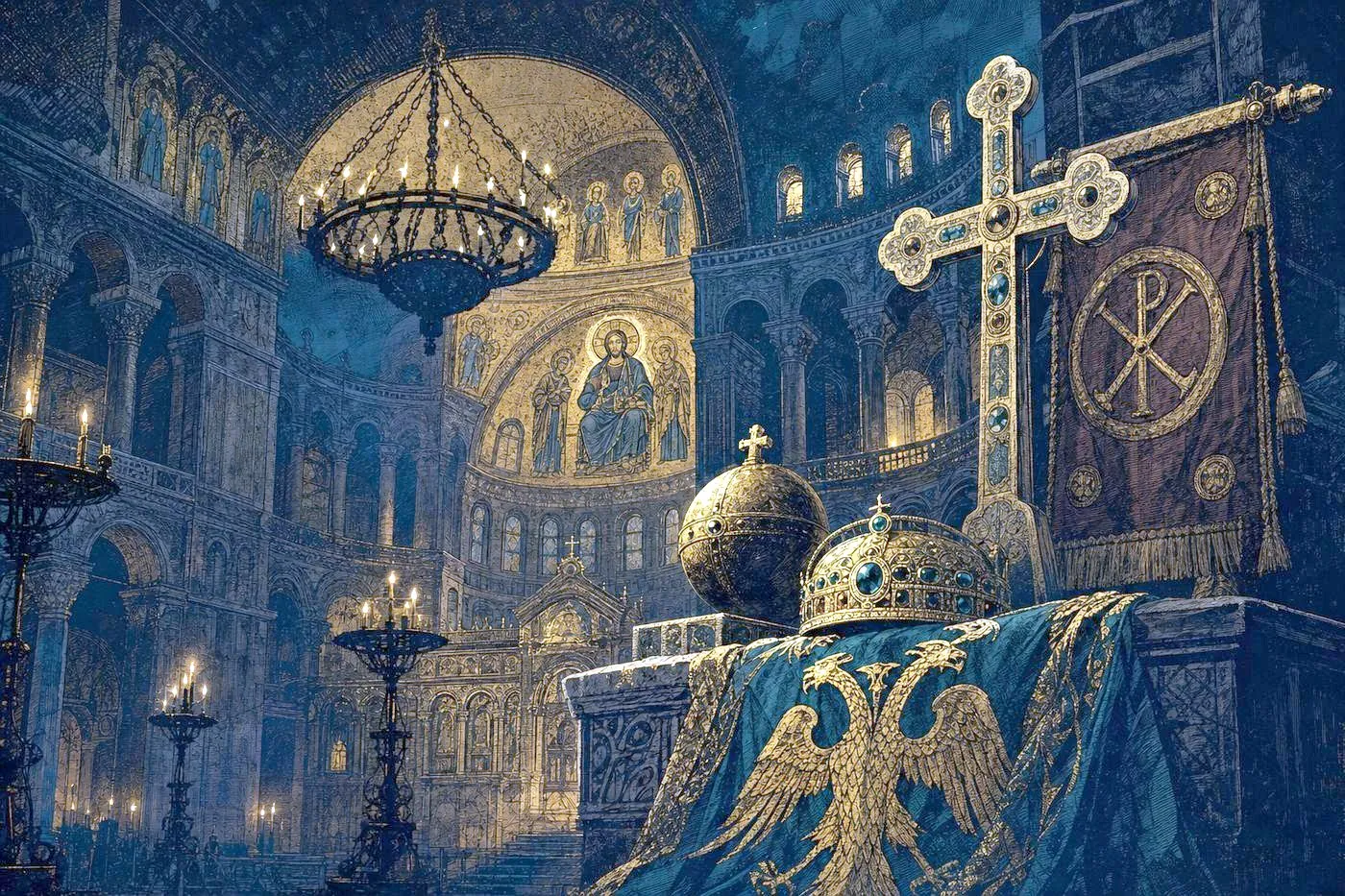
This Byzantine Empire timeline of events traces the Eastern Roman Empire from the founding of Constantinople in 330 to its fall to Ottoman forces in 1453, spanning more than a thousand years as the direct continuation of Roman rule in the East.
The Byzantine Empire Timeline: Constantinople’s Founding to Justinian’s Reign
In 330, the Roman emperor Constantine I dedicated a new capital on the site of the ancient Greek city of Byzantium, strategically positioned on the Bosporus between Europe and Asia. This city, Constantinople, became the seat of what historians now call the Byzantine Empire, though its inhabitants continued to think of themselves simply as Romans. When the Western Roman Empire collapsed in 476 under pressure from Germanic kingdoms, the Eastern half endured, its administration, army, and treasury remaining largely intact. The empire reached an early peak under Justinian I, who reigned from 527 to 565. Justinian commissioned a sweeping codification of Roman law, the Corpus Juris Civilis, that would influence legal systems for centuries afterward, rebuilt the cathedral of Hagia Sophia as one of the ancient world’s largest domed structures, and briefly reconquered parts of Italy and North Africa, though these western gains proved difficult to hold after his death. Read as a Byzantine Empire timeline of events, Justinian’s reign is the hinge point at which a regional eastern remnant of Rome briefly reasserted itself as a Mediterranean-wide power.
Schism, Crusade, and the Byzantine Emperors’ Fractured Empire
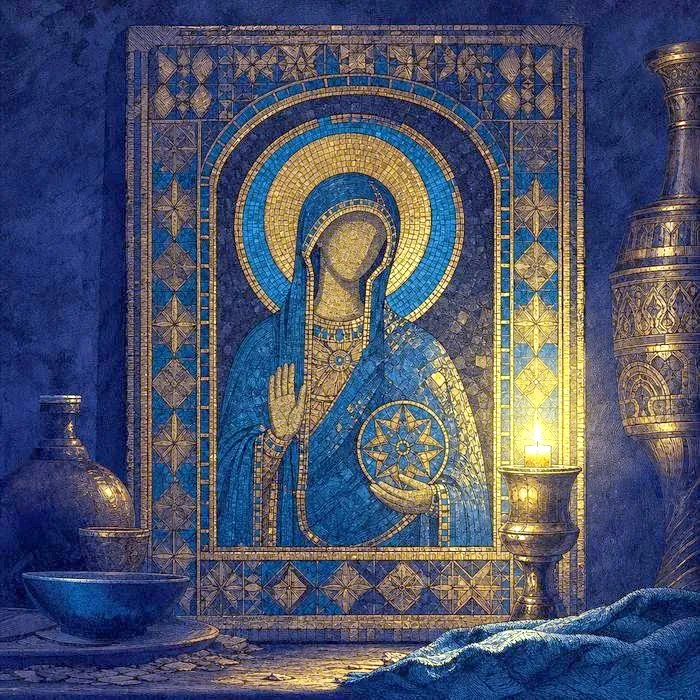
By the eleventh century, centuries of theological disagreement and political rivalry between the churches of Rome and Constantinople culminated in the Great Schism of 1054, formally dividing Christianity into Eastern Orthodox and Roman Catholic branches, a split that has never fully healed. The empire’s fortunes worsened dramatically in 1204, when armies of the Fourth Crusade, diverted from their intended target in the Holy Land, instead attacked and sacked Constantinople itself. A Latin emperor was installed and Byzantine territory was carved up among crusader states, a blow from which the empire’s finances and territory never fully recovered. Byzantine claimants eventually recaptured Constantinople in 1261 under Michael VIII Palaiologos, restoring a Byzantine government to the city, but the restored empire was a fraction of its former size and strength, increasingly hemmed in by rising regional powers, including the Ottoman Turks. Any history of the Byzantine Empire timeline has to treat 1204 as a turning point: the empire’s emperors never again commanded the resources they had held before the sack.
The Long History of Decline and the Fall of Constantinople
The final two centuries of Byzantine history were marked by steady territorial loss, internal political strife, and repeated but unsuccessful appeals to Western Europe for military aid against the advancing Ottomans. By the mid-fifteenth century, the empire had shrunk to little more than the city of Constantinople and a handful of scattered territories. In 1453, Sultan Mehmed II laid siege to the city with a large army and innovative siege artillery; after weeks of bombardment, Ottoman forces breached the ancient land walls and captured the city, killing the last Byzantine emperor, Constantine XI, in the fighting. The fall of Constantinople in 1453 is widely treated by historians as marking the definitive end of the Byzantine Empire and, in many traditional accounts, the close of the medieval period in European history. Told as a history of the Byzantine Empire timeline, its final chapter is less a single dramatic collapse than the slow exhaustion of an empire whose emperors had, for a thousand years, kept Rome’s institutions alive in the East.
Frequently Asked Questions
What does this Byzantine Empire timeline cover?
This timeline covers the founding of Constantinople in 330, the fall of the Western Roman Empire in 476, the reign of Justinian I, the 1054 East-West Schism, the 1204 sack of Constantinople during the Fourth Crusade, its 1261 recapture, and its final fall to the Ottomans in 1453.
How is the Byzantine Empire different from the Roman Empire?
The Byzantine Empire was the continuation of the Roman Empire in the East after the Western half collapsed in 476. Its inhabitants called themselves Romans; "Byzantine" is a term historians later applied to distinguish this Greek-speaking, Constantinople-centered phase of Roman history.
Who was the most significant Byzantine emperor?
Justinian I, who reigned from 527 to 565, is often considered the most significant, largely for his legal code, his rebuilding of Hagia Sophia, and his temporary reconquest of former Roman territory in Italy and North Africa.
When and how did the Byzantine Empire end?
The empire ended in 1453, when Ottoman forces under Sultan Mehmed II captured Constantinople after a prolonged siege, killing the last emperor, Constantine XI, and ending more than a thousand years of continuous Roman imperial rule.