
From the Fall of Rome to Fragmented Medieval Italy
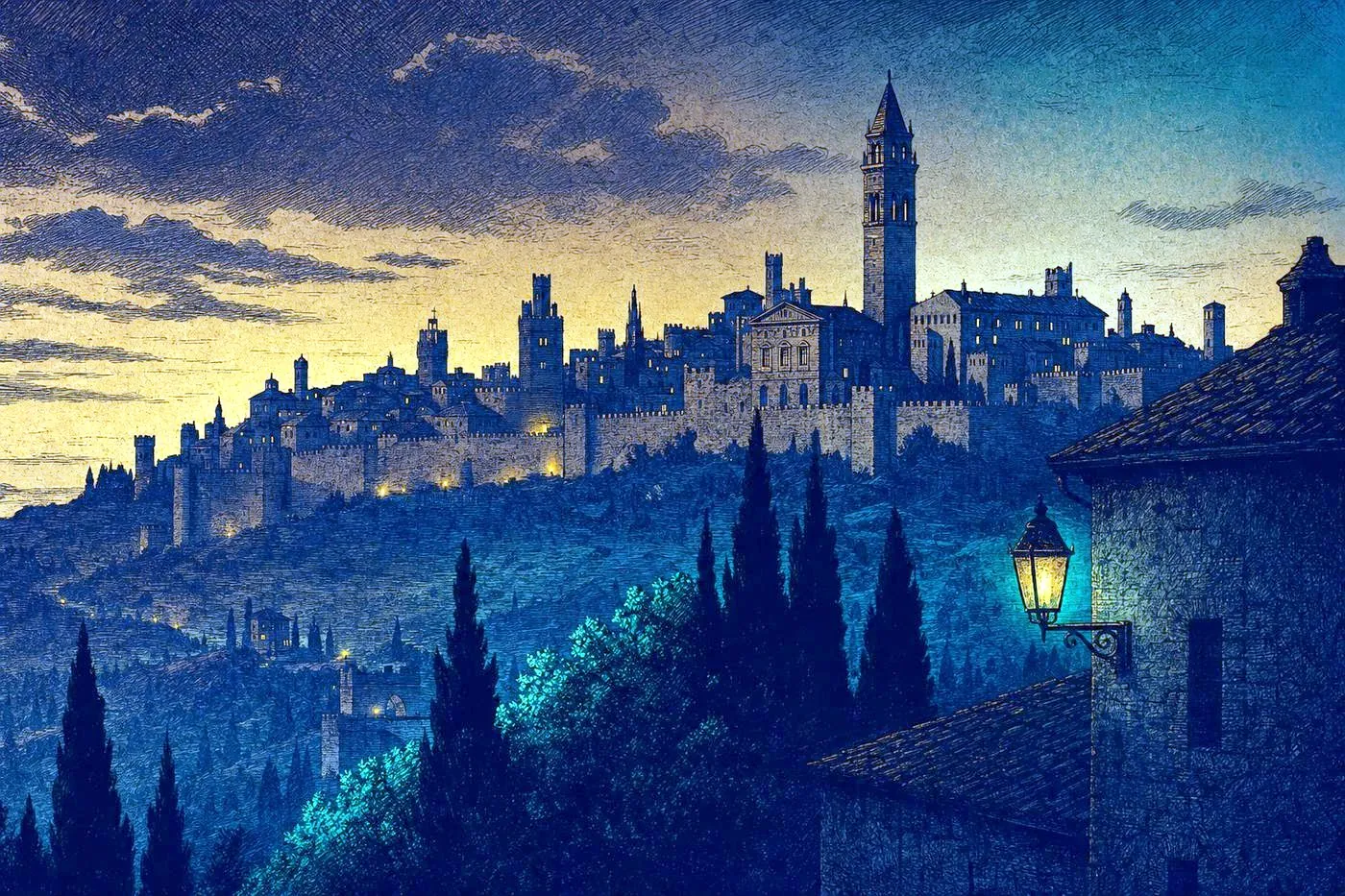
The Western Roman Empire’s collapse is conventionally dated to 476 AD, when the Germanic general Odoacer deposed the child emperor Romulus Augustulus, ending centuries of centralized imperial rule over the Italian peninsula. In the centuries that followed, Italy was fought over and settled by a succession of outside powers, including the Ostrogoths, the Byzantine Empire, and the Lombards, and no single authority controlled the whole peninsula again for well over a thousand years. Out of this fragmentation, and helped by revived Mediterranean trade, a number of Italian towns grew into effectively independent city-states from around the eleventh and twelfth centuries onward. Maritime republics such as Venice and Genoa built trading networks across the Mediterranean and beyond, while inland communes including Florence, Milan, and Siena developed their own governments, guild structures, and, in time, considerable wealth. This period of intense inter-city rivalry, commerce, and increasingly sophisticated urban government laid much of the institutional and economic groundwork for the cultural flowering that followed.
Plague, Renaissance, and Foreign Invasion
The Black Death arrived in Italy in 1347 to 1348, entering Europe partly through Genoese trading ships, and killed a substantial share of the population across Italian cities within a few years; estimates for European mortality overall commonly range from roughly a third to half of the population, though figures for individual Italian cities varied widely. The demographic and economic disruption that followed the plague is often cited by historians as one of several factors, alongside accumulated mercantile wealth and renewed interest in classical antiquity, that contributed to the Italian Renaissance, a cultural movement centered on cities such as Florence, Rome, and Venice from roughly the fourteenth through the sixteenth centuries. This era produced an extraordinary concentration of art, architecture, and scholarship, associated with figures including Leonardo da Vinci, Michelangelo, and patron families such as the Medici. Political fragmentation, however, left Italy vulnerable to outside powers. The Italian Wars began in 1494 with a French invasion under Charles VIII and drew in Spain, the Holy Roman Empire, and other powers in a decades-long struggle for control of Italian territory. The wars ended with the Peace of Cateau-Cambrésis in 1559, which left Spain as the dominant foreign power over much of the peninsula for the following century and a half.
Unification and Modern Italy
Foreign domination and political division persisted through the seventeenth and eighteenth centuries, and Italy remained a patchwork of separate states, including the Papal States, the Kingdom of the Two Sicilies, and various duchies, into the nineteenth century, when a nationalist movement known as the Risorgimento sought to unify the peninsula under a single Italian state. Driven by figures including Giuseppe Garibaldi, Camillo di Cavour, and King Victor Emmanuel II of Piedmont-Sardinia, this movement achieved its central goal in 1861, when the Kingdom of Italy was formally proclaimed with Victor Emmanuel II as its first king, though Rome itself was not incorporated into the new state until 1870 and some border regions were added even later. Italy’s history since unification has included two world wars, a period of Fascist rule under Benito Mussolini between the 1920s and early 1940s, and the postwar establishment of the Italian Republic in 1946, developments that carried the peninsula from a patchwork of city-states and foreign-ruled territories into a unified modern nation-state.