
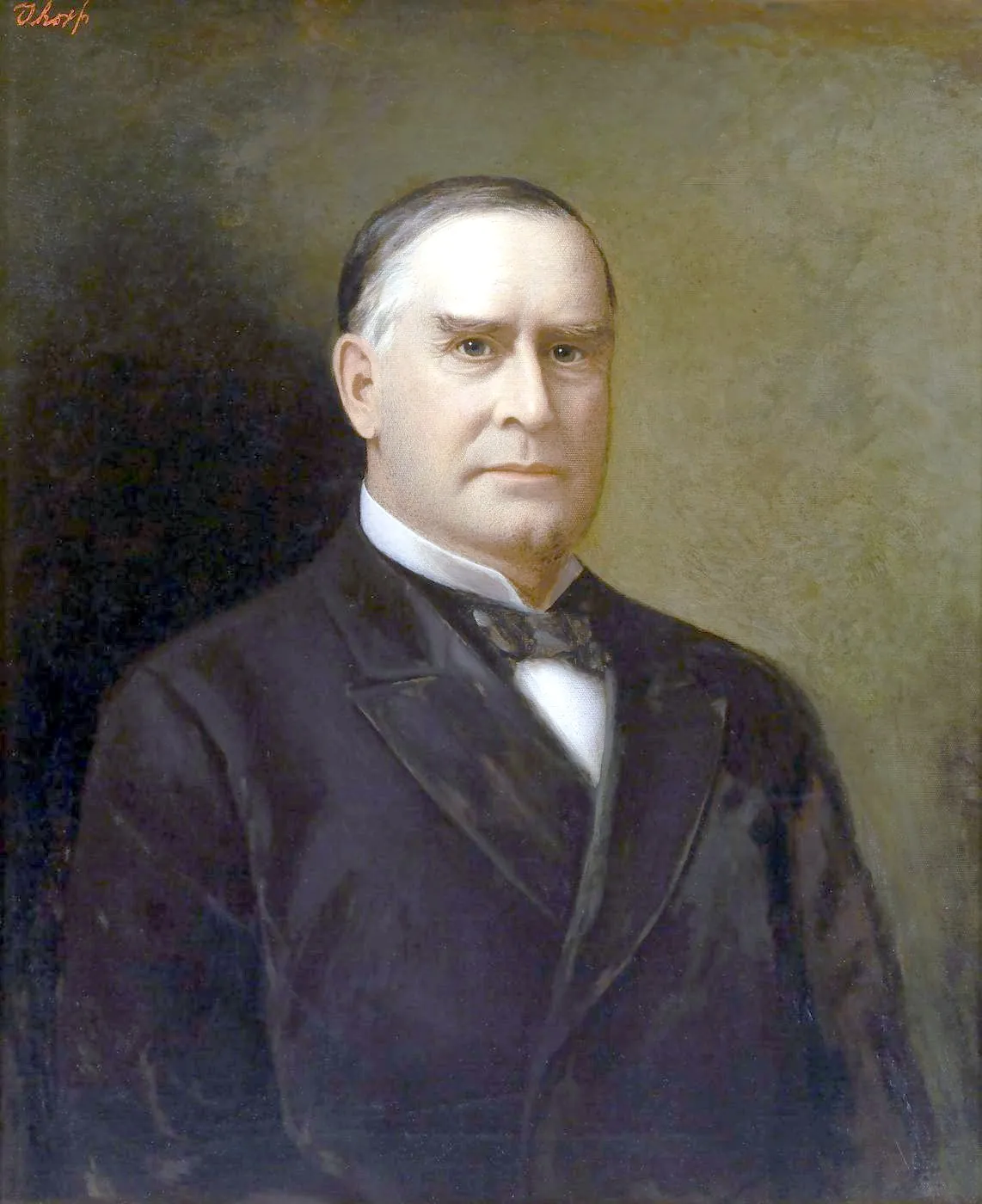
This William McKinley timeline traces the twenty-fifth president’s rise from Civil War soldier to Ohio governor, his presidency’s decisive turn toward overseas expansion, and his assassination near the start of his second term.
Early Life, War Service, and the Ohio Governorship
William McKinley was born on January 29, 1843, in Niles, Ohio, and enlisted in the Union Army as a teenager during the Civil War, eventually rising to the rank of brevet major under the command of future president Rutherford B. Hayes, an experience he credited with shaping his character. After the war he trained as a lawyer and settled into Ohio Republican politics, winning multiple terms in the U.S. House of Representatives, where he became closely associated with high protective tariffs, including the 1890 tariff act that bore his name. He was elected governor of Ohio in 1891, serving two terms and building the national reputation and party organization that carried him to the Republican presidential nomination in 1896, with substantial help from wealthy Cleveland industrialist and political strategist Mark Hanna, who organized much of McKinley’s national campaign.
Presidency: Gold, Silver, and a War with Spain
McKinley won the 1896 election against William Jennings Bryan in a campaign fought largely over currency policy, defending the gold standard against Bryan’s calls for the free coinage of silver, alongside continued support for protective tariffs. His presidency’s defining crisis arrived in 1898, after the American battleship USS Maine exploded and sank in Havana harbor amid Cuba’s revolt against Spanish rule; the incident, widely blamed on Spain at the time though its exact cause remains disputed by historians, pushed a reluctant McKinley toward war. The brief Spanish-American War ended in a decisive American victory within months, and the Treaty of Paris that followed transferred the Philippines, Puerto Rico, and Guam to American control while Cuba gained nominal independence; the United States separately annexed Hawaii the same year.
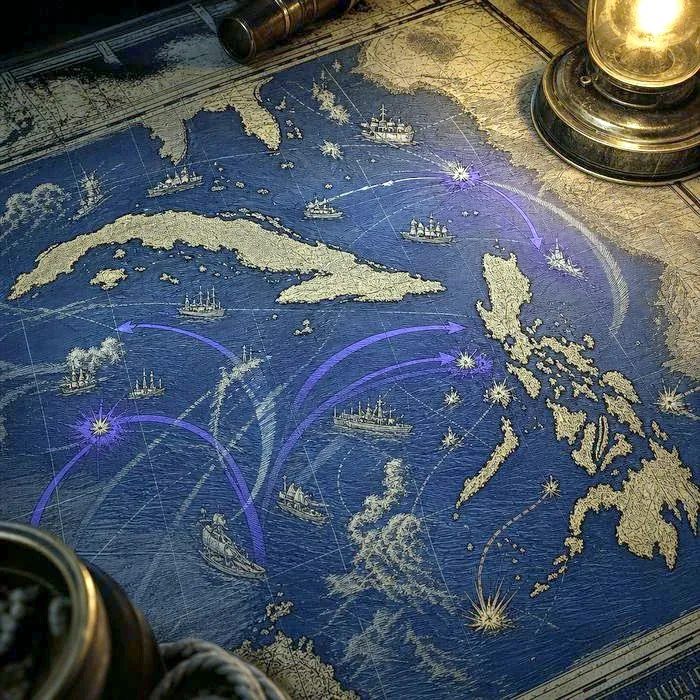
The acquisitions made the United States an overseas colonial power for the first time, a shift that sparked genuine domestic debate over the country’s role in the world and led to a prolonged, costly insurgency in the Philippines that continued for several years after the war with Spain officially ended. McKinley’s administration also pursued an “Open Door Policy” toward China, seeking equal trading access for all nations rather than exclusive colonial spheres of influence. McKinley won reelection comfortably in 1900, this time with the war hero Theodore Roosevelt as his running mate.
Assassination and Legacy
McKinley’s second term had barely begun when, on September 6, 1901, he was shot twice while greeting the public at the Pan-American Exposition in Buffalo, New York, by Leon Czolgosz, an anarchist who believed McKinley represented an unjust concentration of power. McKinley initially seemed to be recovering, but gangrene set in around his wounds, and he died on September 14, 1901, eight days after the shooting. He was succeeded by Vice President Theodore Roosevelt, whose vastly different, more activist style of governing would soon reshape the presidency itself. McKinley’s assassination, the third of a sitting president in less than four decades, prompted Congress eventually to assign the Secret Service permanent responsibility for protecting the president, a practice that continues today. McKinley is generally remembered as the president who presided over the country’s decisive turn toward overseas expansion and a modern, more assertive American role in world affairs.