
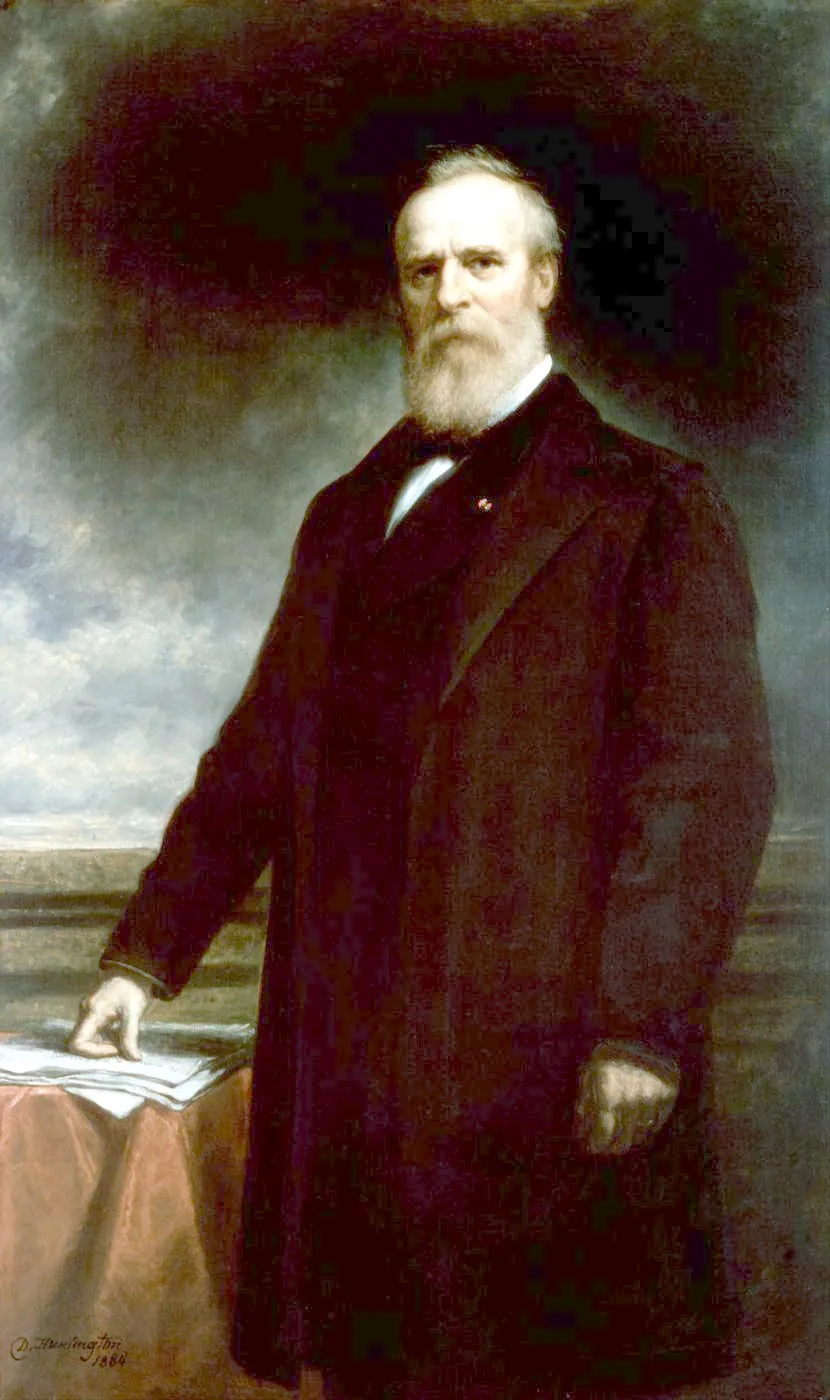

This Rutherford B. Hayes timeline traces his path from a wounded Civil War officer and reform-minded Ohio governor to a presidency permanently shadowed by the disputed election that put him in office.
Early Life and Civil War Service
Rutherford Birchard Hayes was born on October 4, 1822, in Delaware, Ohio, several months after his father’s death; he was raised largely by his mother, Sophia, and an uncle, Sardis Birchard, who later helped fund his education at Kenyon College and Harvard Law School. He built a successful law practice in Cincinnati, where he also served briefly as a city solicitor, before the Civil War interrupted it. Hayes volunteered for the Union Army and proved a courageous and capable field officer, wounded five times over the course of the war, most seriously at the Battle of South Mountain in September 1862. He was eventually brevetted major general for his service. His wartime record helped launch a political career: he was elected to Congress in 1864 while still in uniform, and after the war was elected governor of Ohio in 1867, ultimately serving three terms and establishing a reputation for moderate reform, including support for Black suffrage in Ohio and improvements to the state’s prisons and asylums.

Presidency: A Disputed Election and the End of Reconstruction
Hayes secured the Republican nomination for president in 1876 and faced Democrat Samuel Tilden in one of the closest and most disputed elections in American history. Tilden won the popular vote and appeared to lead in the Electoral College, but returns from Florida, Louisiana, and South Carolina were contested by both parties amid widespread allegations of fraud and voter intimidation. Congress created a special Electoral Commission, made up of members of both houses and Supreme Court justices, to resolve the dispute; it voted along strict party lines to award all contested votes to Hayes, giving him a one-vote electoral margin of 185 to 184, one of the narrowest outcomes in American electoral history. The resolution is widely understood to have depended on an informal bargain, later called the Compromise of 1877, in which Southern Democrats accepted Hayes’s victory in exchange for the withdrawal of the remaining federal troops enforcing Reconstruction in the South. Hayes did withdraw those troops shortly after taking office, a decision that effectively ended Reconstruction and left Southern Black citizens without federal protection against the disenfranchisement and segregation that followed for generations. His presidency also pursued civil service reform and sound-money policies, opposing the free coinage of silver and vetoing the Bland-Allison Act, only for Congress to override him, though he was hampered throughout by questions about the legitimacy of his election, which critics nicknamed him “Rutherfraud” or “His Fraudulency.”
Later Years and Legacy
Having pledged before his election to serve only a single term, Hayes did not seek re-election in 1880 and retired to Spiegel Grove, his estate in Fremont, Ohio. He spent his later years engaged in philanthropic causes, including prison reform and education, notably supporting funding efforts aimed at Black education in the South through the Slater Fund. He died at Spiegel Grove on January 17, 1893. Historians generally view his presidency as consequential chiefly for the compromise that ended Reconstruction, a decision whose costs to Black Americans’ civil rights were felt for decades afterward, as Southern states moved to enact segregation laws and voting restrictions once federal oversight ended.