
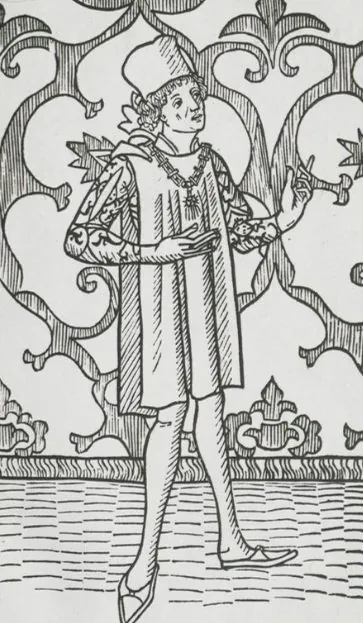
This Marco Polo timeline follows his journey from Venice to the Mongol court of Kublai Khan and the account of his travels that shaped European understanding of Asia for centuries.
A Merchant Family’s Journey East
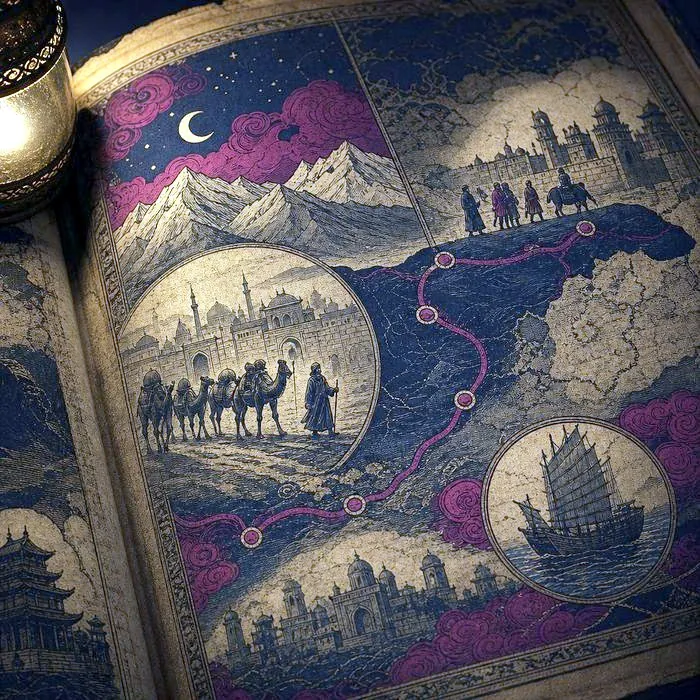
Marco Polo was born around 1254 into a Venetian merchant family already active in eastern Mediterranean trade. His father, Niccolò, and uncle, Maffeo, had made an earlier journey into Mongol-ruled territory before Marco was old enough to travel, reportedly meeting Kublai Khan and receiving a request from him for learned emissaries and religious oil from Jerusalem to be sent back on a future visit. In 1271, the teenage Marco joined them on a second, more ambitious expedition overland toward the Khan’s court, carrying gifts and a letter from the pope, and travelling with the Mongol ruler who by then controlled a vast empire stretching across much of Asia in mind as their destination. Their route followed portions of the network of trade paths later known collectively as the Silk Road, crossing Persia, the deserts and mountain passes of Central Asia, and the high altitudes bordering the Himalayas and the Pamir range, before reaching Mongol territory in what is now China around 1275, after a journey of roughly four years marked by illness, difficult terrain, and long delays.
Years in the Mongol Empire
According to the account later attributed to him, Marco Polo spent close to two decades travelling within and around the territories controlled by Kublai Khan, and he describes being entrusted with various assignments, possibly including diplomatic or administrative tasks on the Khan’s behalf, though the precise nature and extent of his role at the Khan’s court is disputed among historians, some of whom have questioned whether Polo travelled as extensively as his narrative claims or whether parts of the account draw on the reports of other travellers. The book describes numerous cities, courts, and customs across the Mongol Empire’s territory, along with reports of neighbouring regions across South and Southeast Asia, and it offers one of the most detailed surviving European descriptions of Mongol-era China, its governance, paper currency, postal system, and commerce. By the early 1290s, the Polos sought the Khan’s permission to return home, reportedly securing it by agreeing to escort a Mongol princess by sea to Persia for a diplomatic marriage. The Polos eventually left the Khan’s court, made their way back toward Venice via Persia and the Mediterranean, and arrived around 1295 after an absence of roughly 24 years.
The Travels and Lasting Influence
Soon after his return, Marco Polo was captured, likely commanding a Venetian ship, during a naval conflict between Venice and its rival Genoa, and held as a prisoner for roughly a year. While imprisoned, he dictated his recollections to a fellow captive, the romance writer Rustichello da Pisa, producing the work generally known in English as The Travels of Marco Polo, sometimes also titled Il Milione. The book circulated widely in hand-copied manuscript form across Europe in the following decades, well before the advent of printing, and though some contemporaries and later scholars doubted elements of its accuracy, dismissing some claims as exaggeration, it became a major source of European knowledge, and curiosity, about Asia, reportedly influencing later explorers, including, by some accounts, Christopher Columbus, who is said to have owned and annotated a copy. After his release, Polo returned to Venice, married, and lived as a merchant until his death in the city in 1324. His account remains one of the most cited travel narratives connecting medieval Europe to the wider world of the Silk Road.
Frequently Asked Questions
What does this Marco Polo timeline cover?
This timeline covers his 1271 departure from Venice, his roughly four-year journey to the court of Kublai Khan, his years travelling within the Mongol Empire, his 1295 return, and the dictation of his travel account while imprisoned in Genoa.
Did Marco Polo really travel as far as his book claims?
Most historians accept that Polo did travel extensively in Mongol-ruled Asia, though some details and the extent of his official role at Kublai Khan's court have been questioned and cannot be fully verified.
How was The Travels of Marco Polo written?
Polo dictated his recollections to Rustichello da Pisa, a fellow prisoner, while held captive in Genoa around 1298–1300, after being captured during a conflict between Venice and Genoa.
Why is Marco Polo historically significant?
His account became one of medieval Europe's most influential sources of information about Asia, shaping European geographic knowledge and, by some accounts, later inspiring explorers such as Christopher Columbus.