
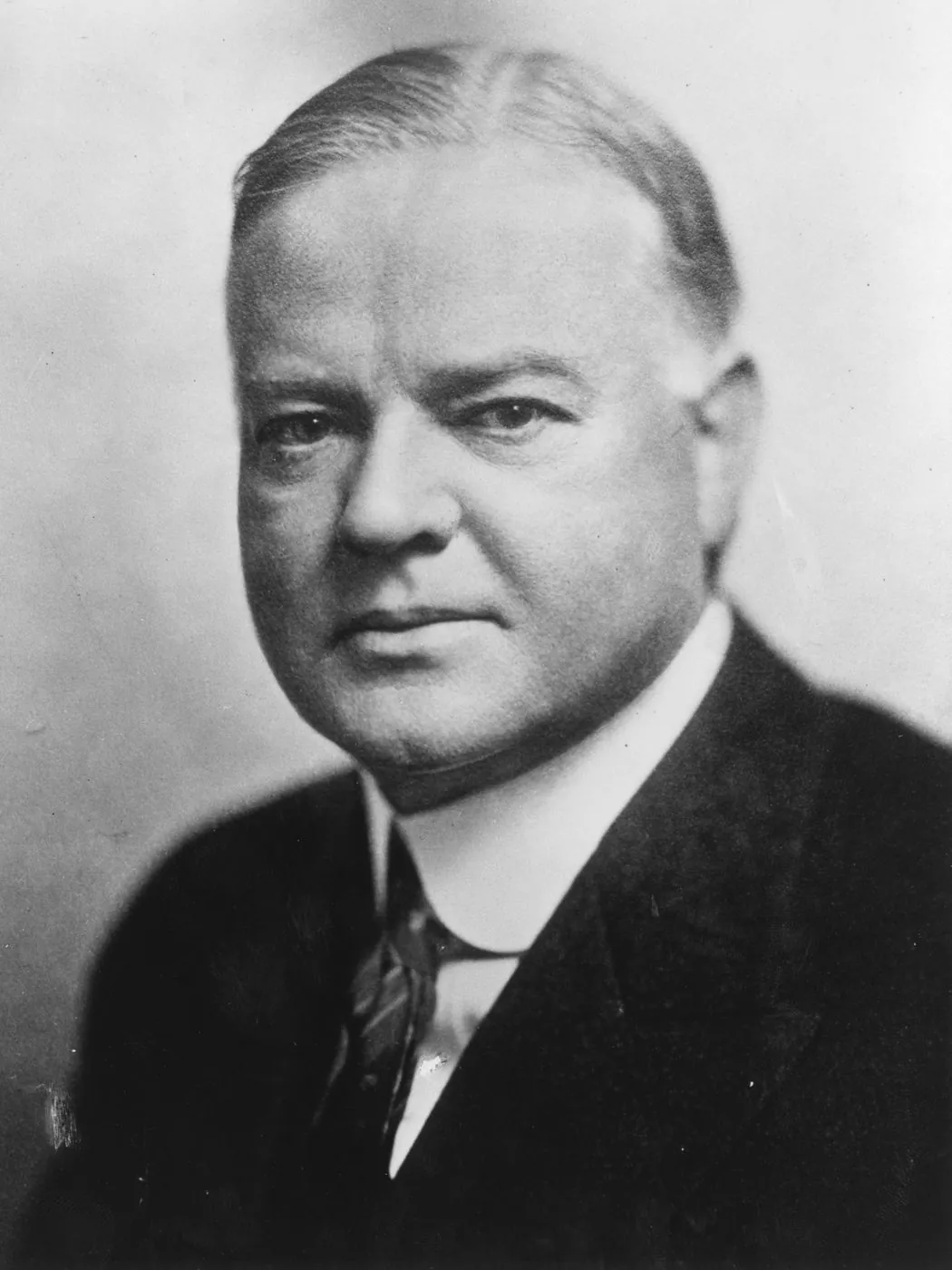
This Herbert Hoover timeline of events traces his career and biography from an orphaned Iowa childhood through a career as an international relief administrator to a presidency overtaken by the onset of the Great Depression, sourced and dated so it can be cited with confidence.
From Iowa Orphan to Global Relief Administrator
Herbert Clark Hoover was born on August 10, 1874, in the small Quaker community of West Branch, Iowa, making him the first US president born west of the Mississippi River. Orphaned by the age of nine after the deaths of both parents, he was raised by relatives, eventually settling with an uncle in Oregon. Hoover enrolled in the pioneer class of the newly founded Stanford University, graduating in 1895 with a degree in geology, and went on to build a highly successful international career as a mining engineer and executive, working on projects across several continents and amassing considerable personal wealth well before entering public life. That career took a decisive turn with the outbreak of the First World War: when German-occupied Belgium faced mass starvation, Hoover organized and led the Commission for Relief in Belgium, a large-scale private humanitarian effort that fed millions of civilians and established his reputation as an extraordinarily capable administrator. After the United States entered the war, President Woodrow Wilson appointed him to run the US Food Administration, and after the armistice Hoover directed further relief efforts across famine-stricken parts of Europe, work that made him one of the most internationally admired Americans of his generation, associated abroad with efficient, large-scale humanitarian organization.
Secretary of Commerce to the Presidency
Hoover’s reputation for administrative competence carried directly into government service. He was appointed Secretary of Commerce in 1921 under President Warren G. Harding and continued in the role under Calvin Coolidge until 1928, using the position, traditionally a minor cabinet post, to expand the department’s involvement in standardizing industries, promoting radio and aviation regulation, and encouraging business efficiency, to the point that critics jokingly called him “Secretary of Commerce and Under-Secretary of everything else.” When Coolidge declined to seek re-election in 1928, Hoover secured the Republican nomination and won the presidency decisively over Democrat Al Smith, campaigning on the promise of continued prosperity and further progress toward eliminating poverty. He took office in March 1929 amid what appeared to be an unbroken economic boom, with public confidence in continued growth running high across much of the country.

The Great Depression and Its Political Toll
That confidence collapsed only months into Hoover’s term. The stock market crash of October 1929 marked the beginning of the Great Depression, an economic collapse whose broader causes and course are addressed in detail elsewhere; here it is enough to note that the crisis defined the remainder of Hoover’s presidency and, ultimately, his historical reputation. Hoover did not stand entirely idle: he pursued measures including the Reconstruction Finance Corporation, established in 1932 to provide emergency loans to banks and businesses, along with expanded public works. But his continued emphasis on voluntary cooperation, local relief, and balanced budgets over direct federal aid to individuals was widely seen as inadequate to the scale of the unemployment and hardship spreading across the country, and the shantytowns that sprang up on the outskirts of many cities became known, bitterly, as “Hoovervilles.” His standing was damaged further in the summer of 1932, when thousands of unemployed World War I veterans and their families, known as the Bonus Army, camped in Washington to demand early payment of a promised service bonus; their forcible dispersal by US Army troops under General Douglas MacArthur drew widespread public criticism. That November, Hoover lost the presidency in a landslide to Franklin D. Roosevelt. He lived for more than three decades after leaving office, later chairing federal commissions on government reorganization under Presidents Truman and Eisenhower, and died on October 20, 1964, having outlived his presidency by longer than almost any other former president.
Frequently Asked Questions
What does this Herbert Hoover timeline cover?
This Herbert Hoover timeline of events covers his 1874 birth in West Branch, Iowa, his career as a mining engineer and international relief administrator, his time as Secretary of Commerce, his 1928 election, the 1929 stock market crash, and his 1932 election defeat.
What was Herbert Hoover known for before becoming president?
Before his presidency, Hoover was known as a successful international mining engineer and, especially, as the administrator who led the Commission for Relief in Belgium during World War I, followed by service as US Food Administrator and Secretary of Commerce.
Did Herbert Hoover cause the Great Depression?
The Wall Street crash that began the Great Depression occurred only months after Hoover took office in 1929, and its underlying causes were already in motion before his presidency. Hoover's response to the crisis, however, is widely judged by historians to have been inadequate to its scale.
Why did Herbert Hoover lose the 1932 election?
Hoover lost to Franklin D. Roosevelt in a landslide largely because of widespread economic hardship under the Great Depression and public dissatisfaction with his administration's response, including the damaging fallout from the forcible dispersal of the Bonus Army in 1932.