
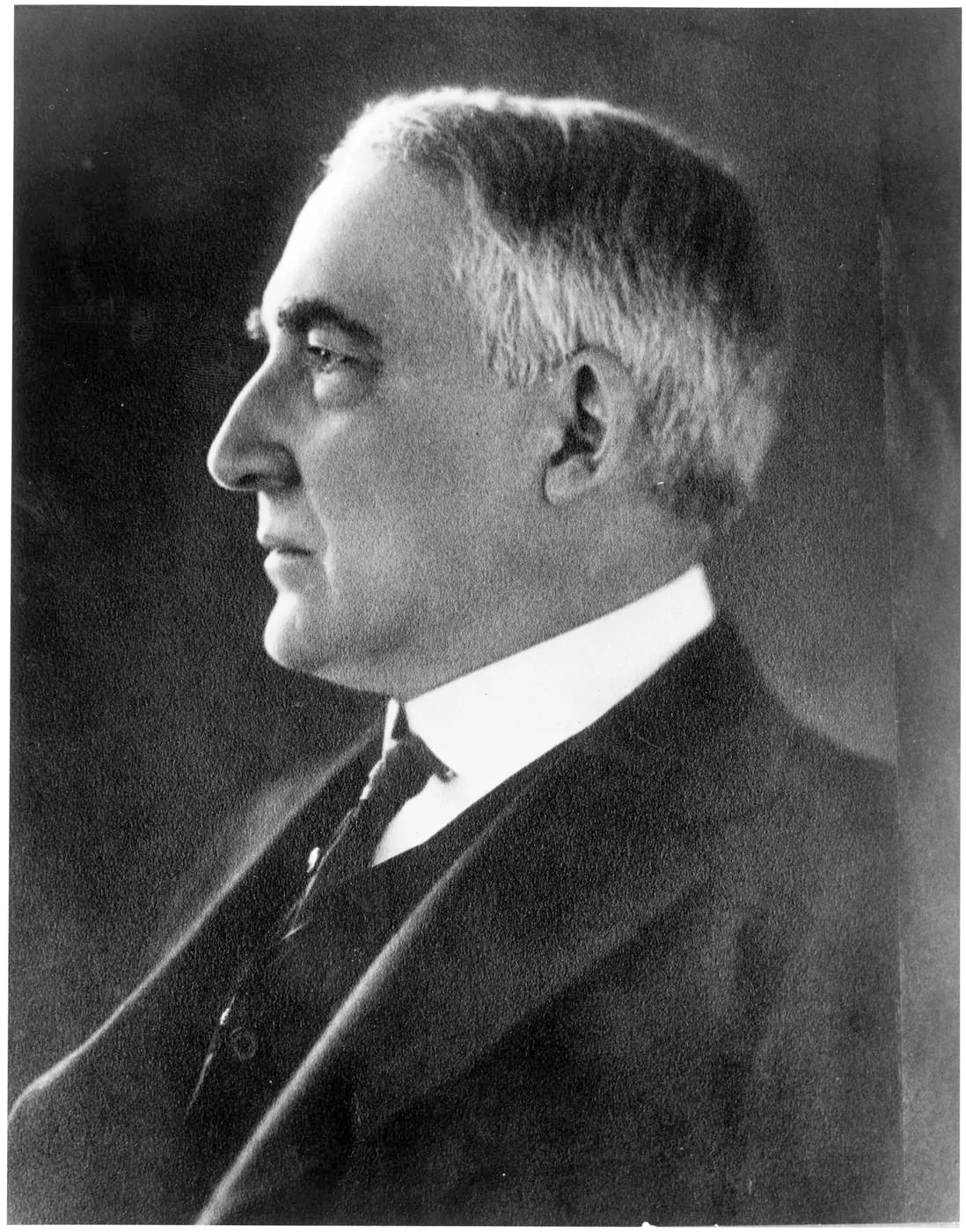
This Warren Harding timeline traces his rise from small-town newspaper publisher to a landslide presidential win, and the corruption scandal that came to define his administration’s legacy after his sudden death.
Early Life and Rise in Ohio Politics
Warren Gamaliel Harding was born on November 2, 1865, near Corsica (later renamed Gilead), Ohio, and built his early career as the owner and publisher of the Marion Star, a small Ohio newspaper he grew into a respected regional voice. His newspaper work gave him a public platform and useful connections, which he parlayed, with the close support of his wife, Florence Kling Harding, who took an active role in managing both the paper and his political career, into a rise through Ohio Republican politics, serving as a state senator and lieutenant governor before winning election to the U.S. Senate in 1914, the first year senators were chosen by direct popular vote nationwide. As a senator, Harding was a reliably loyal party figure rather than a legislative leader, a low profile that made him an appealing compromise candidate when the 1920 Republican convention deadlocked among stronger contenders.
Presidency: A Return to Normalcy and a Genuine Diplomatic Achievement
Harding won the 1920 election by a landslide over Democrat James M. Cox, campaigning on a promise to restore a “return to normalcy” after the disruptions of the First World War and the Wilson presidency; it was the first presidential election in which women could vote nationwide following ratification of the 19th Amendment. In office, his administration pursued tax cuts, tighter immigration restrictions under the 1921 Emergency Quota Act, and a more cooperative relationship with business, while also establishing a formal federal budget process through the Budget and Accounting Act of 1921. Its most substantive achievement came in convening the Washington Naval Conference of 1921–22, which produced the first major multilateral naval arms-limitation agreements among the United States, Britain, Japan, and other powers, easing a costly naval arms race in the years following the First World War.
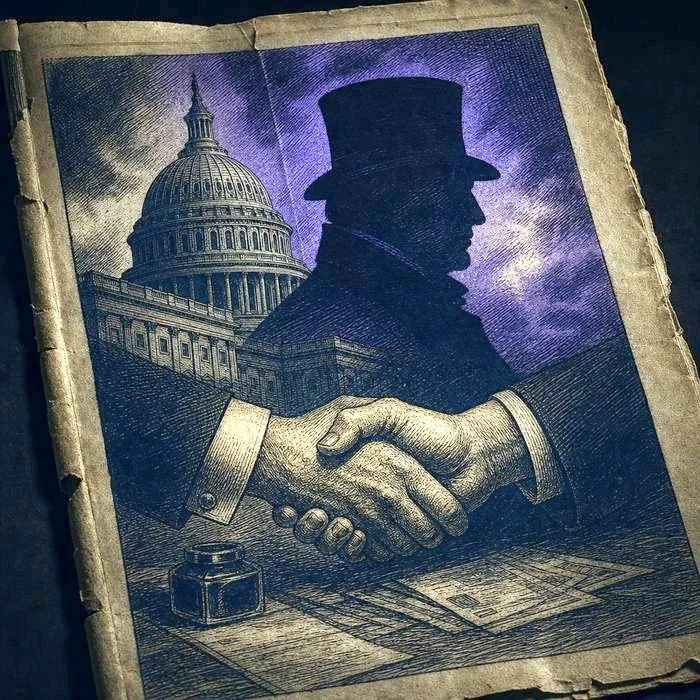
That record was soon overshadowed by corruption within his administration. Harding was known for a loyal but often compromised inner circle of political allies, and in 1922 congressional investigators began uncovering what became known as the Teapot Dome scandal: Interior Secretary Albert Fall had secretly leased federal petroleum reserves at Teapot Dome, Wyoming, and Elk Hills, California, to private oil companies in exchange for personal bribes. Fall would later become the first former Cabinet secretary convicted and imprisoned for crimes committed in office, though the full extent of the scandal, and related corruption at the Veterans’ Bureau and the Justice Department under Attorney General Harry Daugherty, became fully public only after Harding’s death. There is no reliable evidence that Harding personally profited from or knowingly directed the bribery, but his loose management style and reliance on a circle of old political friends, sometimes called the “Ohio Gang,” allowed the corruption to flourish largely unchecked.
Death and Legacy
While on a cross-country speaking tour intended in part to distance himself from the mounting scandals, Harding died suddenly in San Francisco on August 2, 1923, in an episode reported at the time as a heart attack, though some historians have debated the precise cause given the limited medical information available. He was succeeded by Vice President Calvin Coolidge. In the years following his death, the full scope of the Teapot Dome affair and other administration scandals came to define Harding’s historical reputation, and he is generally ranked by historians among the more poorly regarded American presidents, his genuine foreign-policy achievements largely eclipsed by the corruption exposed after he was no longer alive to answer for it.
Frequently Asked Questions
What does this Warren Harding timeline cover?
This timeline covers Harding's biography from his 1865 birth in Ohio through his newspaper and Senate career, his 1920 landslide election, the Washington Naval Conference, the emergence of the Teapot Dome scandal, and his sudden death in 1923.
What was the Teapot Dome scandal?
The Teapot Dome scandal involved Interior Secretary Albert Fall secretly leasing federal oil reserves, including one at Teapot Dome, Wyoming, to private oil companies in exchange for bribes. It became one of the largest political corruption scandals in American history and became fully public mostly after Harding's death.
How did Warren Harding die?
Harding died suddenly on August 2, 1923, in San Francisco during a cross-country tour, in an episode reported at the time as a heart attack; he was succeeded by Vice President Calvin Coolidge.
Did Harding achieve anything positive as president?
Yes. His administration convened the Washington Naval Conference of 1921–22, which produced significant naval arms-limitation treaties among major world powers, an achievement generally regarded as a genuine diplomatic success despite the corruption that later overshadowed his presidency.