
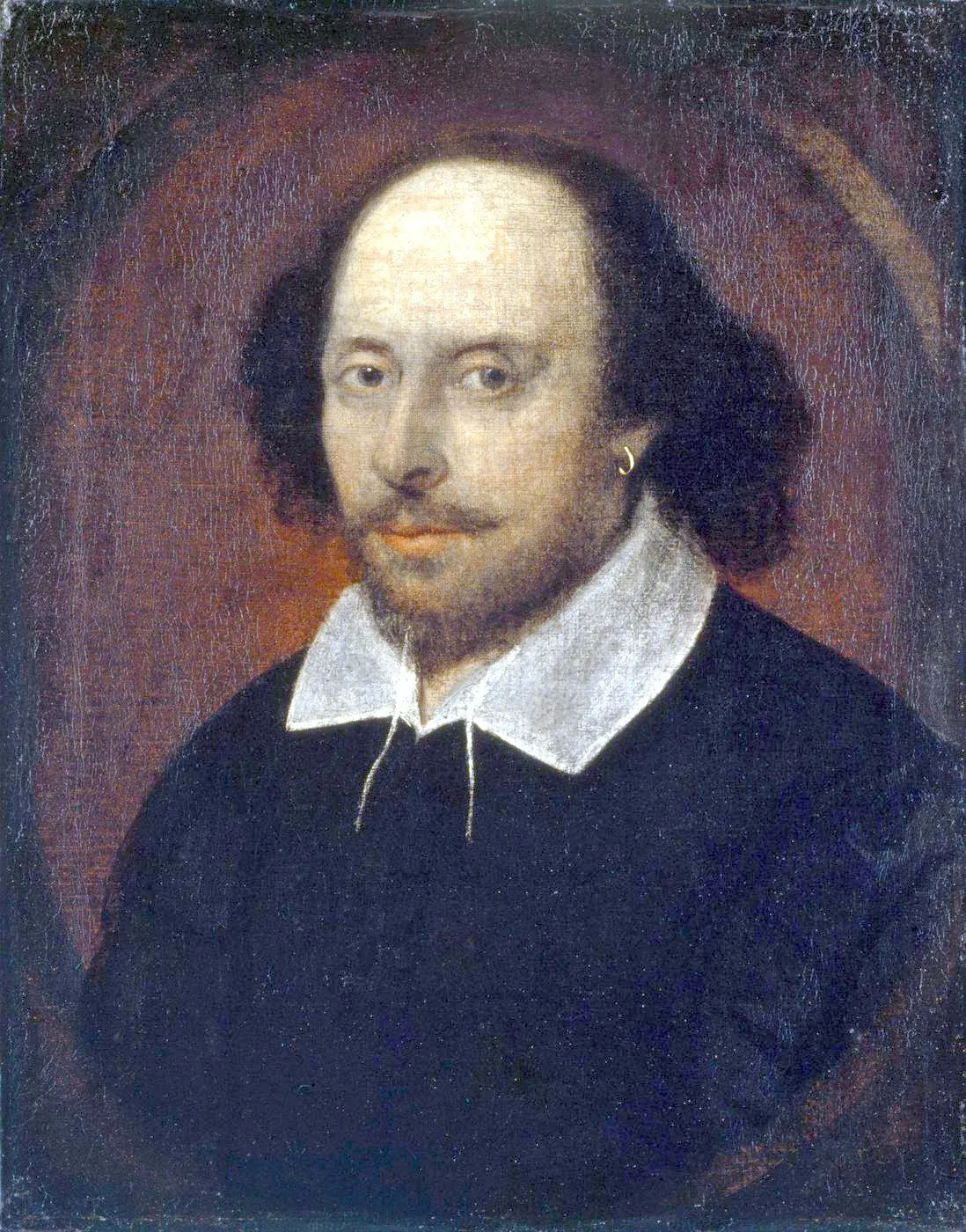
Early Life in Stratford-upon-Avon
William Shakespeare’s exact birth date is not recorded, but parish records show he was baptized on April 26, 1564, in Stratford-upon-Avon, and his birthday is traditionally observed on April 23, based on that baptismal record and the date of his death. He was the son of John Shakespeare, a glove-maker and local official, and Mary Arden. Little is documented about his education, though he likely attended Stratford’s grammar school, where the curriculum would have included Latin grammar and classical literature. In 1582, at age 18, he married Anne Hathaway, several years his senior; the couple had three children, including twins, one of whom, his son Hamnet, died in childhood in 1596. The period between the mid-1580s and early 1590s, sometimes called Shakespeare’s “lost years,” is not well documented, and it remains unclear exactly when or why he moved to London to pursue a career in theater.
Career in London Theater
By the early 1590s, Shakespeare was established in London as both an actor and a playwright, and by 1594 he was a leading member of a company known as the Lord Chamberlain’s Men, for whom he wrote most of his subsequent work and in which he held a financial share as a part-owner. Over roughly two decades, he produced comedies, histories, and tragedies including Romeo and Juliet, Hamlet, Macbeth, and King Lear, alongside a celebrated sequence of 154 sonnets, published in 1609, building a body of work widely regarded as central to English literature. His output combined popular entertainment with unusually sophisticated language and characterization, and it drew on a wide range of earlier sources, including English chronicle histories, classical mythology, and Italian romance, which he freely adapted rather than invented from nothing.
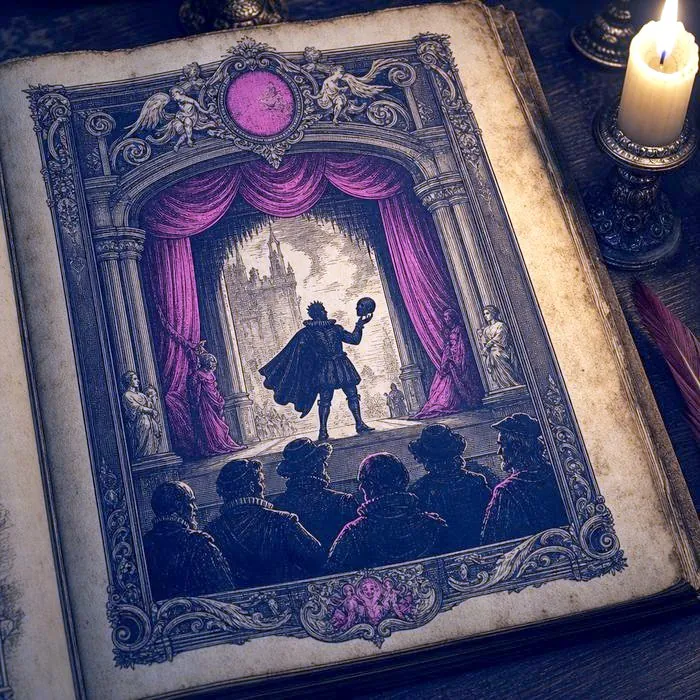
In 1599, the company built the Globe Theatre on the south bank of the Thames, which became the primary venue for performances of his plays. When James I acceded to the throne in 1603, the company gained royal patronage and was renamed the King’s Men, reflecting Shakespeare’s standing as one of the era’s most successful dramatists.
Later Years, Death, and Legacy
Shakespeare appears to have divided his later career between London and Stratford-upon-Avon, where he had acquired substantial property, and by around 1613 he had largely retired from writing and returned to Stratford. He died there on April 23, 1616, and was buried in the Church of the Holy Trinity, though the cause of his death is not documented and remains a matter of speculation. In 1623, two of his former fellow actors published the First Folio, a collected edition of 36 of his plays, without which roughly half of his surviving works, including Macbeth and Twelfth Night, might have been lost entirely. Shakespeare’s plays and sonnets have since been translated into most major languages and remain among the most widely performed and studied works in the English language, and his influence on the vocabulary and structure of English drama is considered difficult to overstate. A small minority of writers and researchers have, since the 19th century, questioned whether Shakespeare of Stratford actually wrote the plays attributed to him, proposing alternative candidates; this authorship question remains a fringe position rejected by the large majority of scholars, who point to substantial contemporary documentary evidence connecting Shakespeare to the works.