
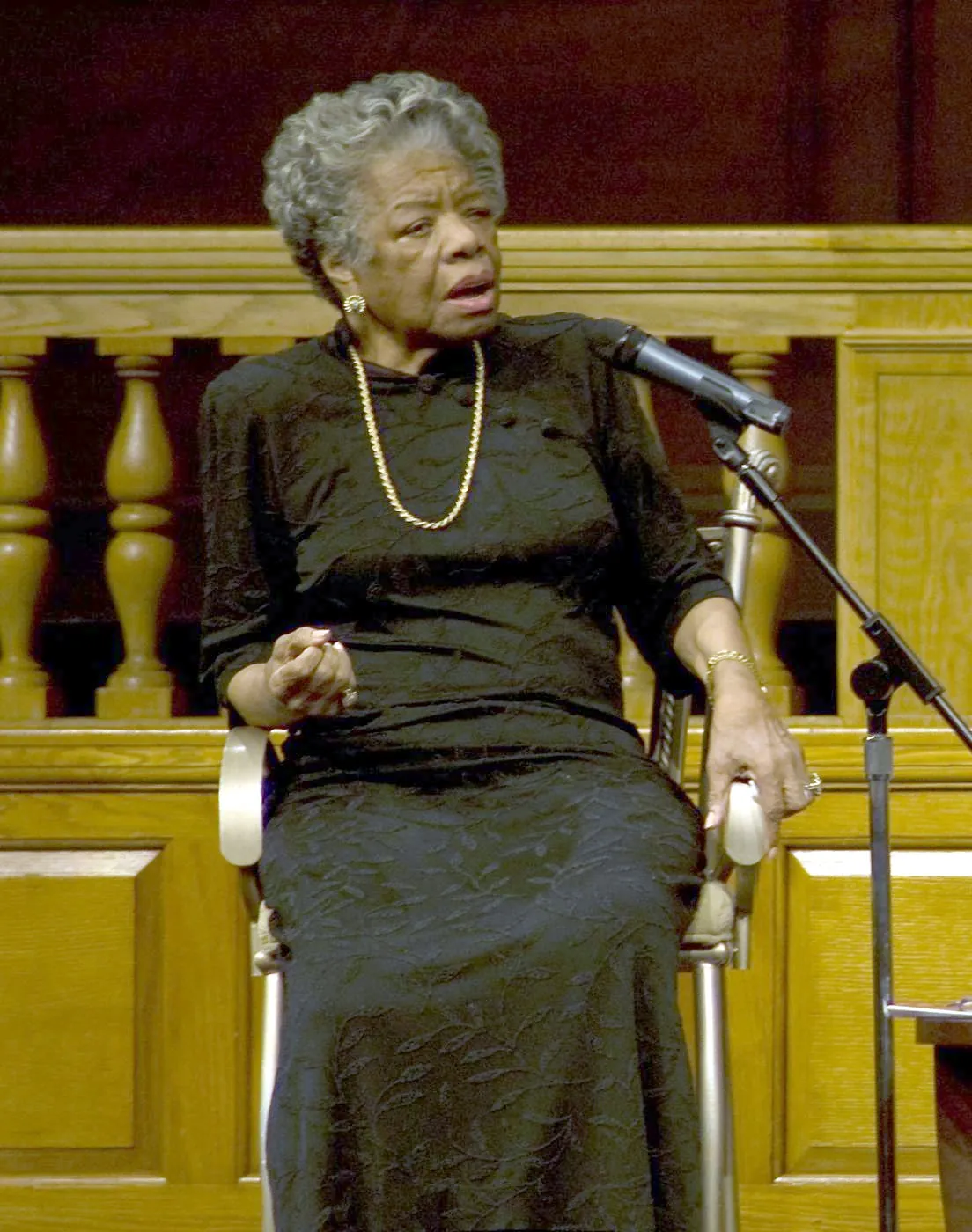
This Maya Angelou timeline traces her path from a childhood in Depression-era Arkansas through her civil rights work and a five-decade writing career that made her one of the most widely read American memoirists and poets.
Early Life and Formative Years
Maya Angelou was born Marguerite Annie Johnson on April 4, 1928, in St. Louis, Missouri. Following her parents’ divorce, she and her older brother Bailey were sent to live with their paternal grandmother in the small, segregated town of Stamps, Arkansas, an upbringing she later drew on extensively in her writing. Her early life included periods of hardship and trauma, including a sexual assault she experienced at around age seven, after which she reportedly did not speak for several years. She later wrote about that silence directly, and many readers and critics have connected it to the themes of voice and silence running through her later work. As a young adult she worked a range of jobs, including as a dancer and as San Francisco’s first female Black streetcar conductor, before moving toward writing and performance.
Civil Rights Work and Literary Breakthrough

In the late 1950s, Angelou became involved in the civil rights movement, and in 1959, at the invitation of Martin Luther King Jr., she took on the role of northern coordinator for the Southern Christian Leadership Conference, organizing fundraising events in northern cities. She spent much of the 1960s living and working abroad, including in Egypt and Ghana, where she worked as a journalist and editor and became part of a community of Black American expatriates. She returned to the United States and, encouraged by friends including the writer James Baldwin, began work on a memoir. Published in 1969, ‘I Know Why the Caged Bird Sings’ recounted her childhood and young adulthood with unusual candor for its time, including her account of childhood abuse, and became both a critical success and, in the years since, one of the most frequently taught, and most frequently challenged or banned, books in American schools. It was the first of what would eventually become a seven-volume autobiographical series.
Later Career and Recognition
Angelou continued publishing poetry, essays, and further volumes of autobiography over the following decades while also working in theater, film, and television; she was nominated for a Tony Award for her stage acting and received an Emmy nomination for her role in the 1977 television adaptation of Roots. In January 1993, she composed and read the poem “On the Pulse of Morning” at the presidential inauguration of Bill Clinton, becoming only the second poet in American history, after Robert Frost, to read at a presidential inauguration, a moment that introduced her work to a much wider public. She continued writing, teaching, and speaking publicly for the rest of her life, holding a lifetime appointment as Reynolds Professor of American Studies at Wake Forest University. In 2010, President Barack Obama awarded her the Presidential Medal of Freedom, the United States’ highest civilian honor, recognizing her contributions to literature and civil rights. Maya Angelou died on May 28, 2014, at her home in Winston-Salem, North Carolina, leaving behind a body of work still widely read, taught, and quoted. In addition to her memoirs and poetry collections, she published cookbooks and essay collections, narrated audiobooks, and remained a sought-after public speaker until late in her life. She was posthumously honored with a commemorative US Postal Service stamp in 2015 and, in 2022, became the first Black woman depicted on a US quarter as part of the American Women Quarters program, reflecting her continued prominence in American cultural memory.