
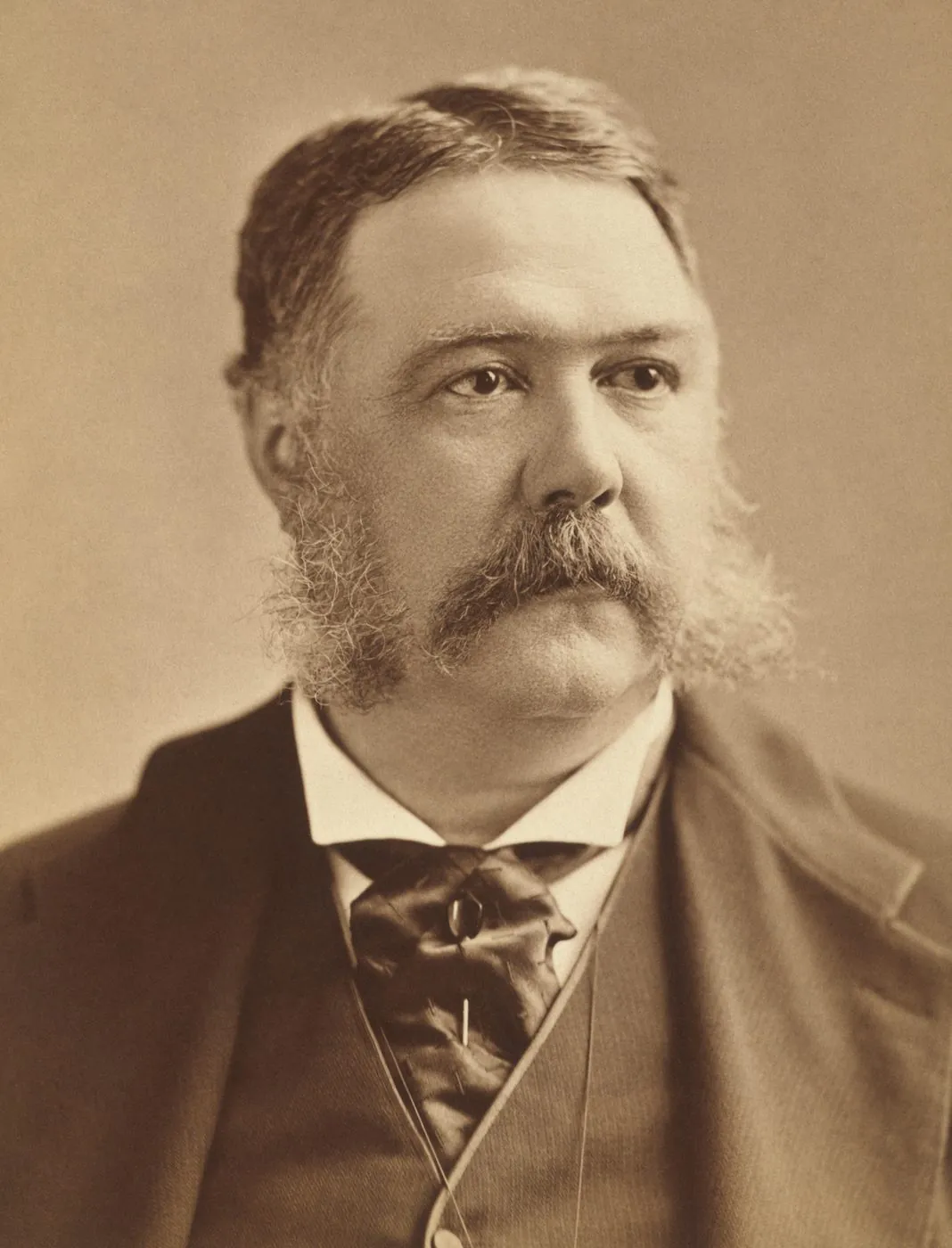
This Chester Arthur timeline traces the twenty-first president’s path from a Gilded Age patronage appointee to a president who, against nearly everyone’s expectations, signed the law that began dismantling the spoils system that had made his own career possible.
Early Life and the New York Patronage Machine
Chester Alan Arthur was born on October 5, 1829, in Fairfield, Vermont, the son of a Baptist minister; some contemporaries later disputed details of his birthplace and citizenship for political reasons, though the Vermont birth record is generally accepted by historians today. After graduating from Union College, he trained as a lawyer in New York City and gained early recognition assisting in civil rights cases, including one that helped establish the right of Black passengers to ride New York City streetcars. During the Civil War he served competently as quartermaster general of New York, overseeing the organization of troops and supplies for the state. Afterward, Arthur became closely aligned with powerful New York Senator Roscoe Conkling and the Stalwart faction of the Republican Party, which prized political patronage over reform. In 1871, President Ulysses S. Grant appointed him Collector of the Port of New York, one of the most lucrative federal patronage posts in the country; Arthur ran the customs house efficiently but staffed it through the same spoils system that reformers were increasingly targeting, and President Hayes removed him from the post in 1878 as part of a reform push.
Vice Presidency, Sudden Succession, and an Unexpected Reform
In 1880, Republicans nominated Arthur for vice president largely to reassure Conkling’s Stalwart faction, pairing him with reform-minded presidential nominee James Garfield. The arrangement looked purely symbolic until July 2, 1881, when a disappointed office-seeker named Charles Guiteau shot Garfield in Washington, D.C.; Garfield lingered for more than two months before dying on September 19, 1881. Arthur was sworn in as president the next day, inheriting an office for which he had never been groomed, amid public suspicion that a Stalwart patronage figure would resist reform. Arthur surprised much of the country: in January 1883 he signed the Pendleton Civil Service Reform Act, which created a bipartisan Civil Service Commission and required that many federal positions be filled through competitive examination rather than political favor, directly undercutting the machine that had built his own career.
His administration also enacted the Chinese Exclusion Act of 1882, the first major federal law restricting immigration by nationality, and began modernizing the U.S. Navy with new steel-hulled ships, a program later credited with launching the so-called “New Navy.”
Later Life and Legacy
During his presidency, Arthur was privately diagnosed with Bright’s disease, a serious kidney ailment he largely kept from the public. Aware his health was failing, he made little effort to secure renomination in 1884, and the Republican Party instead nominated James G. Blaine. Arthur left office in March 1885 and returned to private law practice in New York, but his condition continued to decline, and he died in New York City on November 18, 1886, at the age of 57. Historians have generally judged his presidency more favorably than his earlier career as a patronage operator suggested it would be, largely on the strength of the Pendleton Act, which is widely credited with beginning the federal government’s long transition from patronage toward a professional civil service.