
Early Life and Accession
Elizabeth was born on September 7, 1533, at Greenwich Palace, the daughter of King Henry VIII and his second wife, Anne Boleyn. Her early life was marked by instability: she was declared illegitimate following her mother’s execution in 1536, and her position at court shifted through the reigns of her father and her half-siblings, Edward VI and Mary I. Under Mary’s Catholic rule, Elizabeth, a Protestant, was viewed with suspicion and was briefly imprisoned in the Tower of London in 1554 amid fears she might become a focus for rebellion. She survived this precarious period through caution and, by most accounts, genuine reticence about publicly declaring her religious views, and succeeded to the throne on November 17, 1558, following Mary’s death, becoming queen of a country divided by decades of religious upheaval. Elizabeth had received an unusually thorough humanist education, becoming fluent in several languages, and she relied heavily throughout her reign on a small circle of trusted advisers, most notably William Cecil, who served as her principal secretary and chief minister for four decades.
Religious Settlement and the Spanish Armada
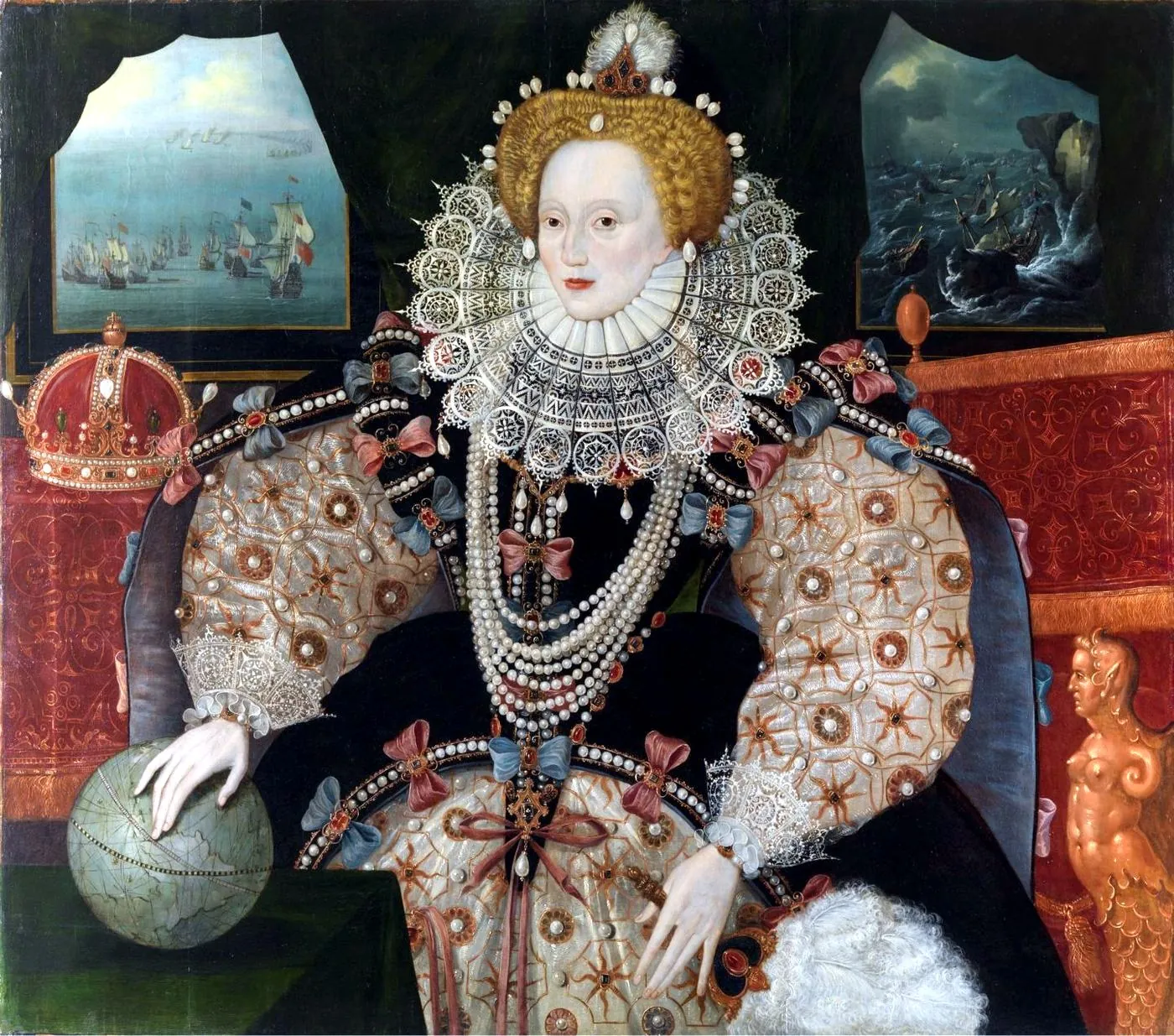
One of Elizabeth’s first major acts was to establish what became known as the Elizabethan Religious Settlement of 1559, a set of laws that reestablished the Church of England under royal supremacy while permitting enough doctrinal flexibility to reduce, though not eliminate, religious conflict. Her reign nonetheless remained shadowed by threats from Catholic rivals, particularly her cousin Mary, Queen of Scots, whose presence in England as an alternative claimant to the throne became the focus of repeated plots; Elizabeth had her tried and executed in 1587 after evidence linked her to a conspiracy against the queen’s life.
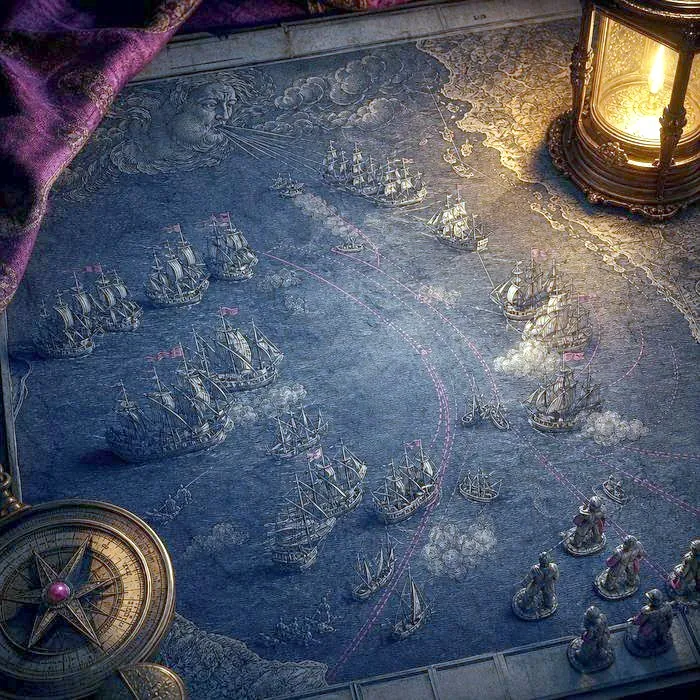
Tensions with Catholic Spain, heightened by English support for Protestant rebels in the Netherlands and by English privateering against Spanish shipping, culminated in 1588 with Spain’s attempt to invade England using a large fleet known as the Spanish Armada. A combination of English naval tactics and severe storms scattered the Armada, and its defeat became a defining moment of Elizabeth’s reign and of English national identity.
Later Reign and Legacy
The decades that followed are often remembered as a high point of English culture, a period that saw the flourishing of English drama and poetry, including the early career of William Shakespeare, alongside voyages of exploration by figures such as Francis Drake, who completed a circumnavigation of the globe under Elizabeth’s patronage in 1580. Elizabeth never married, despite numerous proposed matches with foreign princes over the decades, instead cultivating an image as the “Virgin Queen” wedded symbolically to her kingdom. The question of succession remained unresolved for much of her reign, a source of periodic anxiety among her advisers and Parliament, who repeatedly urged her to marry or name an heir. She died on March 24, 1603, at Richmond Palace, without a direct heir, bringing the Tudor dynasty to an end; the throne passed to her cousin James VI of Scotland, who became James I of England. Elizabeth’s 45-year reign is generally regarded by historians as a period of relative stability and growing national confidence following the turbulence of earlier Tudor rule, and the era’s cultural and naval achievements led later generations to describe it, somewhat idealizingly, as a golden age.