
Early Life and the Turn to Resistance
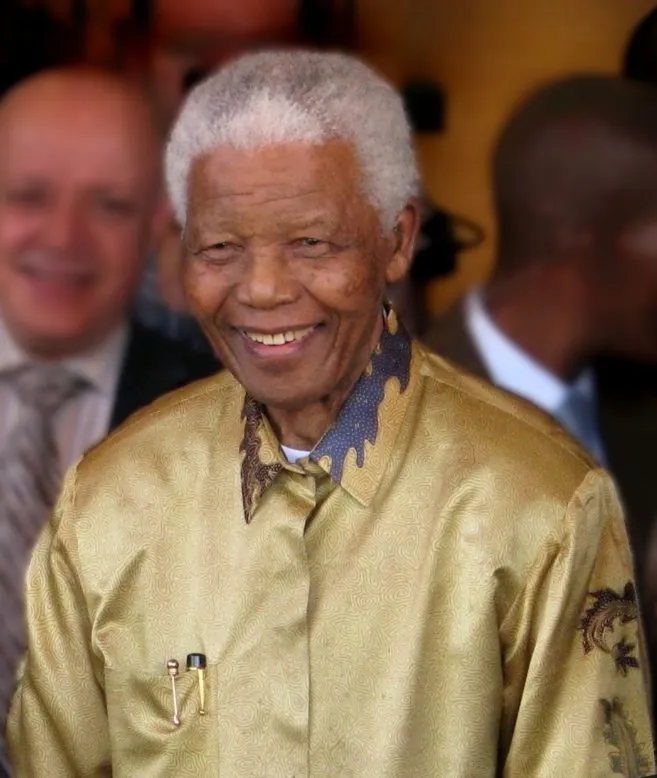
Rolihlahla Mandela, later given the English name Nelson by a schoolteacher, was born on July 18, 1918, in the village of Mvezo in the Transkei, part of what was then South Africa’s Eastern Cape. Born into the Thembu royal family, he was groomed in his youth for a role advising Thembu chiefs, an upbringing that gave him an early, close view of traditional governance and law. He left the Transkei for Johannesburg in the early 1940s, eventually training as a lawyer and opening, with fellow activist Oliver Tambo, one of the first Black-run law practices in the country.
In 1944, Mandela joined the African National Congress and helped establish its Youth League, a group of younger members who pressed the ANC toward more assertive, mass-based opposition to South Africa’s system of racial segregation, formalized as apartheid after 1948. Through the 1950s he was a central organizer of campaigns such as the 1952 Defiance Campaign and stood trial, alongside more than a hundred other activists, in the long-running Treason Trial that ended in acquittals in 1961. As peaceful protest was met with escalating state violence, including the 1960 Sharpeville massacre, Mandela concluded that nonviolent methods alone could not dislodge apartheid, and he helped found Umkhonto we Sizwe (“Spear of the Nation”), the armed wing of the ANC, in 1961.
Rivonia, Robben Island, and 27 Years in Prison
Mandela was arrested in 1962 and initially convicted on lesser charges, but in 1963 he and several co-defendants were brought before the Rivonia Trial on charges of sabotage against the state. During the trial, in a courtroom statement widely known as the “I Am Prepared to Die” speech, he laid out the case for the ANC’s turn to armed struggle and closed by describing the ideal of a free and democratic society as one he hoped to live for, but was prepared, if needed, to die for. In June 1964 he was sentenced to life imprisonment rather than death.
Mandela spent the next 27 years in South African prisons, the majority of them at the maximum-security Robben Island prison off the coast near Cape Town, followed later by Pollsmoor Prison and, in his final months of imprisonment, Victor Verster Prison. Even from behind bars, he remained the ANC’s most recognizable symbol, and international pressure on the apartheid government, including sanctions and a global anti-apartheid movement, grew steadily through the 1980s. As the government of President F.W. de Klerk began negotiating an end to apartheid, Mandela was released on February 11, 1990, an event broadcast around the world.
Negotiating a New South Africa
The years after his release were dominated by fraught negotiations between the ANC and the National Party government over how to dismantle apartheid and build a multiracial democracy. In 1993, Mandela and de Klerk were jointly awarded the Nobel Peace Prize for that work, even as violence between rival political factions continued to threaten the transition. South Africa held its first fully democratic, multiracial elections in April 1994, and the ANC won a decisive majority; Mandela was inaugurated as the country’s first Black president on May 10, 1994, leading a Government of National Unity that included his former political opponents.
Mandela served a single term as president, stepping down in 1999 and devoting much of his later life to charitable work, including HIV/AIDS advocacy and the Nelson Mandela Foundation, which he established to continue his work on social justice. He died on December 5, 2013, in Johannesburg at the age of 95, mourned internationally as a central figure in the 20th century’s struggle against institutionalized racism.