
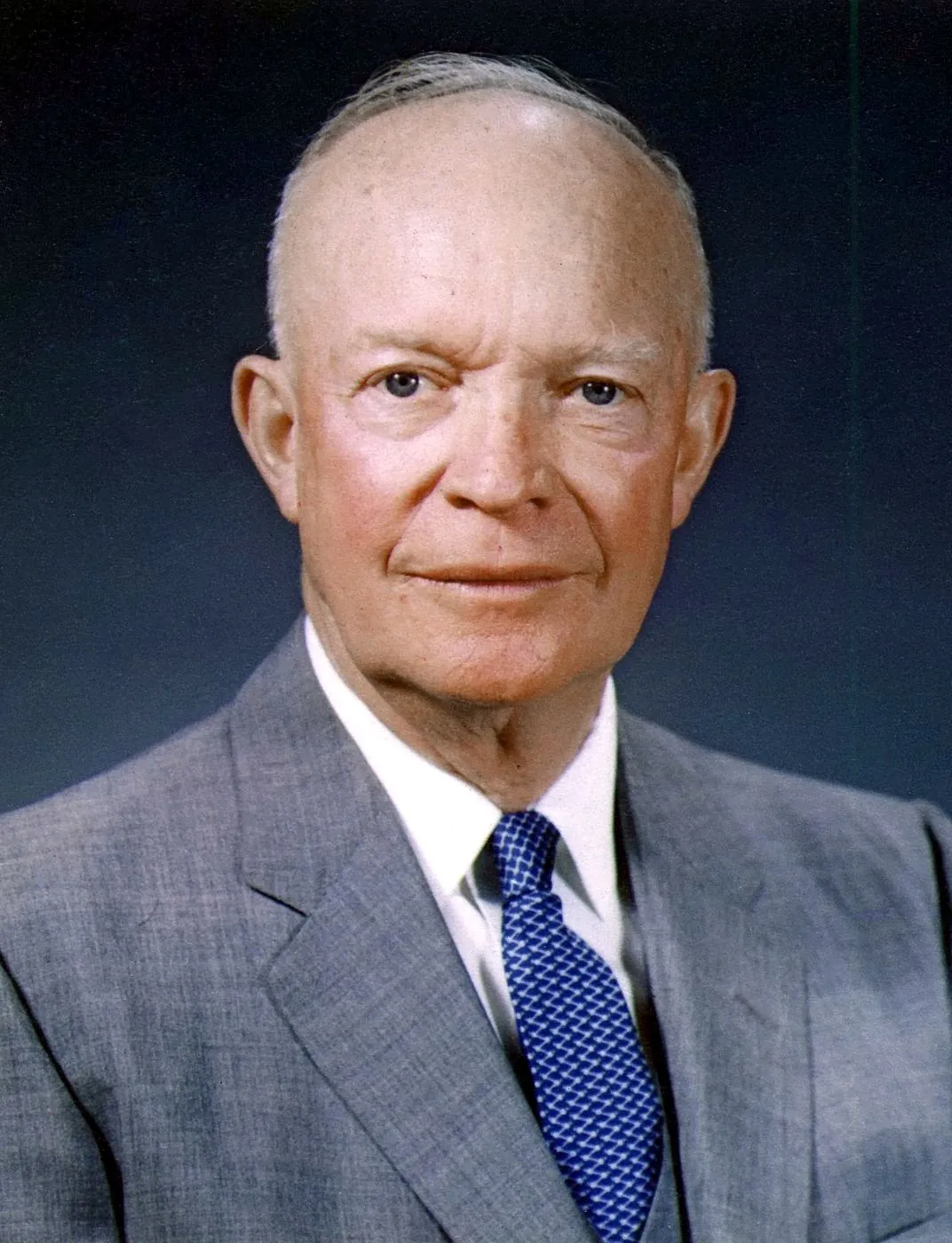
This Dwight D. Eisenhower timeline traces his path from a Kansas childhood through Supreme Allied Command in the Second World War to a presidency defined by Cold War management and lasting infrastructure.
Early Life and Military Career
Dwight David Eisenhower was born on October 14, 1890, in Denison, Texas, and raised in Abilene, Kansas, in a family of modest means. He graduated from the United States Military Academy at West Point in 1915 and spent the interwar years steadily rising through the peacetime army, serving under generals including John J. Pershing and Douglas MacArthur and developing a reputation as a skilled planner and organizer rather than a combat commander. When the United States entered the Second World War, his organizational abilities and talent for coalition diplomacy led to his appointment, over more senior officers, as Supreme Allied Commander in Europe. In that role, he planned and oversaw Operation Overlord, the Allied invasion of Normandy on June 6, 1944, and directed the subsequent campaign that liberated Western Europe from Nazi occupation, emerging from the war as one of its most celebrated American commanders and, briefly, president of Columbia University before returning to military duty as the first Supreme Commander of NATO forces in Europe. His wartime reputation for coalition-building and calm, methodical command made him one of the most trusted public figures in the country, and by the early 1950s both major political parties had reportedly courted him as a potential presidential candidate.
Presidency: Infrastructure and the Cold War
Eisenhower, running as a Republican, was elected the 34th President of the United States in 1952 and took office in January 1953, ending twenty years of Democratic control of the presidency. He negotiated an armistice ending active fighting in the Korean War within his first year in office, fulfilling a campaign pledge to personally visit the front and bring the conflict to a close. Eisenhower also presided over a significant expansion of federal science and education investment, including the creation of NASA in 1958 following the Soviet Union’s launch of Sputnik. Domestically, his most enduring achievement came in 1956, when he signed the Federal-Aid Highway Act, launching the Interstate Highway System (a project he had long championed, partly for its military logistics value) that reshaped American transportation, commerce, and suburban growth over the following decades. Abroad, Eisenhower navigated the Cold War through a doctrine of nuclear deterrence and covert action, articulated the Eisenhower Doctrine offering support to Middle Eastern nations resisting communist influence, and saw U.S.–Soviet relations strained by the 1960 U-2 spy plane incident. In 1957, he sent federal troops to Little Rock, Arkansas, to enforce a federal court order desegregating Central High School after the state’s governor defied it, one of the first major federal interventions on behalf of school integration, following the Supreme Court’s 1954 ruling in Brown v. Board of Education that had declared segregated public schools unconstitutional.
Later Years and Legacy
Eisenhower won re-election in 1956 and left office in January 1961 after two terms, delivering a farewell address that warned of the growing influence of what he termed the “military-industrial complex”: a phrase that has remained a touchstone in American political discourse. He retired to a farm in Gettysburg, Pennsylvania, adjacent to the Civil War battlefield, and remained an elder statesman within the Republican Party. He died on March 28, 1969, and was buried in Abilene, Kansas. Historians generally regard Eisenhower’s presidency as a period of relative stability and steady, if cautious, management of Cold War tensions, combined with lasting infrastructure achievements whose effects remain visible in American daily life.
Frequently Asked Questions
What does this Dwight D. Eisenhower timeline cover?
This timeline covers Eisenhower's biography from his 1890 birth in Denison, Texas, through his Second World War command, his 1952 election, the Interstate Highway System, the 1957 Little Rock crisis, and his 1969 death.
What was Eisenhower's role in the Second World War?
Eisenhower served as Supreme Allied Commander in Europe, planning and overseeing the June 1944 Normandy invasion and the subsequent liberation of Western Europe from Nazi occupation.
What is Eisenhower's most significant domestic achievement as president?
His 1956 Federal-Aid Highway Act, which launched the Interstate Highway System, is generally regarded as his most lasting domestic achievement.
What did Eisenhower warn about in his farewell address?
In his 1961 farewell address, Eisenhower warned of the growing influence of the "military-industrial complex" on American policy and society.