
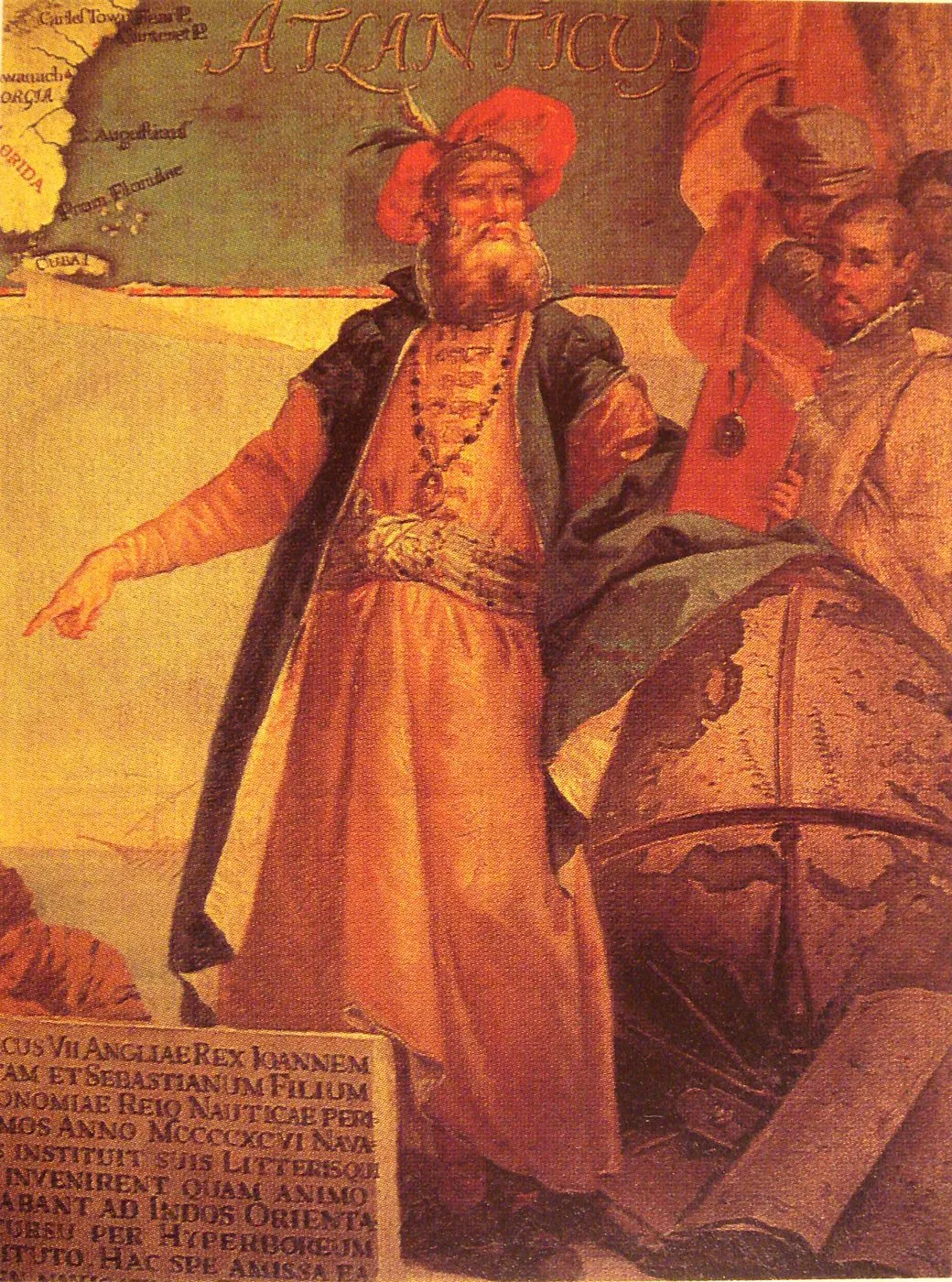
This John Cabot timeline traces his path from Genoa and Venice to Bristol, and the 1497 voyage that gave England its first documented claim to the North American mainland.
From Italian Merchant to English Navigator
John Cabot was born around 1450, most sources agree in Genoa, and later became a citizen of Venice in 1476, where records indicate he worked in Mediterranean and possibly Middle Eastern trade, including journeys that may have taken him as far as Mecca in the course of spice-trading business. Like many mariners of his era, Cabot appears to have been drawn to the idea of a westward sea route to Asia, a project that had gained new urgency after Christopher Columbus’s 1492 voyage under Spanish sponsorship demonstrated that transatlantic sailing was, at minimum, survivable and potentially profitable. Having failed to secure backing from Portugal or Spain, both already committed to their own established routes and rivalries under the Treaty of Tordesillas, Cabot relocated to England by the mid-1490s with his wife and sons, settling in Bristol, a city with an established fishing fleet and a documented history of Atlantic exploratory voyages that may have already reached parts of the North Atlantic, possibly including the Grand Banks fishing grounds, before his arrival.
The 1497 Voyage and Landfall
In March 1496, King Henry VII issued Cabot letters patent authorising him to seek out and claim lands in the king’s name that were not already held by other Christian rulers, in exchange for a share of any resulting profits. An initial attempt to sail in 1496 was abandoned early due to bad weather and supply problems. Cabot then sailed from Bristol in May 1497 aboard a single small ship, the Matthew, with a crew of around 18 men, and after roughly five weeks at sea made landfall on the North American coast, generally believed to be around Newfoundland or nearby Atlantic Canada, though the precise landing site is debated among historians and has also been proposed as coastal Maine or Nova Scotia. Cabot believed he had reached the northeastern coast of Asia, consistent with the geographical assumptions of the time, and observed what he described as rich fishing waters along the coast. He returned to England to report his discovery, receiving a royal pension of £10 a year and considerable public acclaim, with contemporary accounts describing him being celebrated in the streets of London.
Second Voyage and Disappearance
Buoyed by the reception of his first voyage, Cabot organised a larger expedition in 1498 with several ships and additional trade goods, intending to explore further along the coastline he believed led toward Asian trading ports and to establish contact with wealthy markets described in earlier travel accounts. This second voyage ended in disappearance: Cabot and most of his ships were never heard from again, and no confirmed account of their fate has survived, though one ship is thought to have turned back early after storm damage and reached an Irish port. Despite the uncertainty surrounding his end, Cabot’s 1497 voyage became historically significant as the basis for later English claims to territory in North America, informing the country’s subsequent involvement in the North Atlantic fishing trade and, much later, its colonial ambitions in the region. He is commemorated today in Bristol and in Newfoundland, including through named landmarks and annual observances, as a foundational figure in the English-speaking world’s presence in the New World.
Frequently Asked Questions
What does this John Cabot timeline cover?
This timeline covers his background as a Genoese-born Venetian citizen, his move to Bristol, his 1497 royal-patent voyage to North America, and his disappearance on a second voyage in 1498.
Where did John Cabot land in 1497?
He is generally believed to have made landfall around Newfoundland or nearby Atlantic Canada, though the exact location remains debated among historians due to limited surviving records.
What happened to John Cabot on his second voyage?
He departed England in 1498 with a larger fleet and was never heard from again; his fate and that of most of his ships remain unresolved.
Why is John Cabot's voyage historically important?
It gave England one of its earliest documented claims to North American territory, later cited to support English colonial ambitions in the region.