
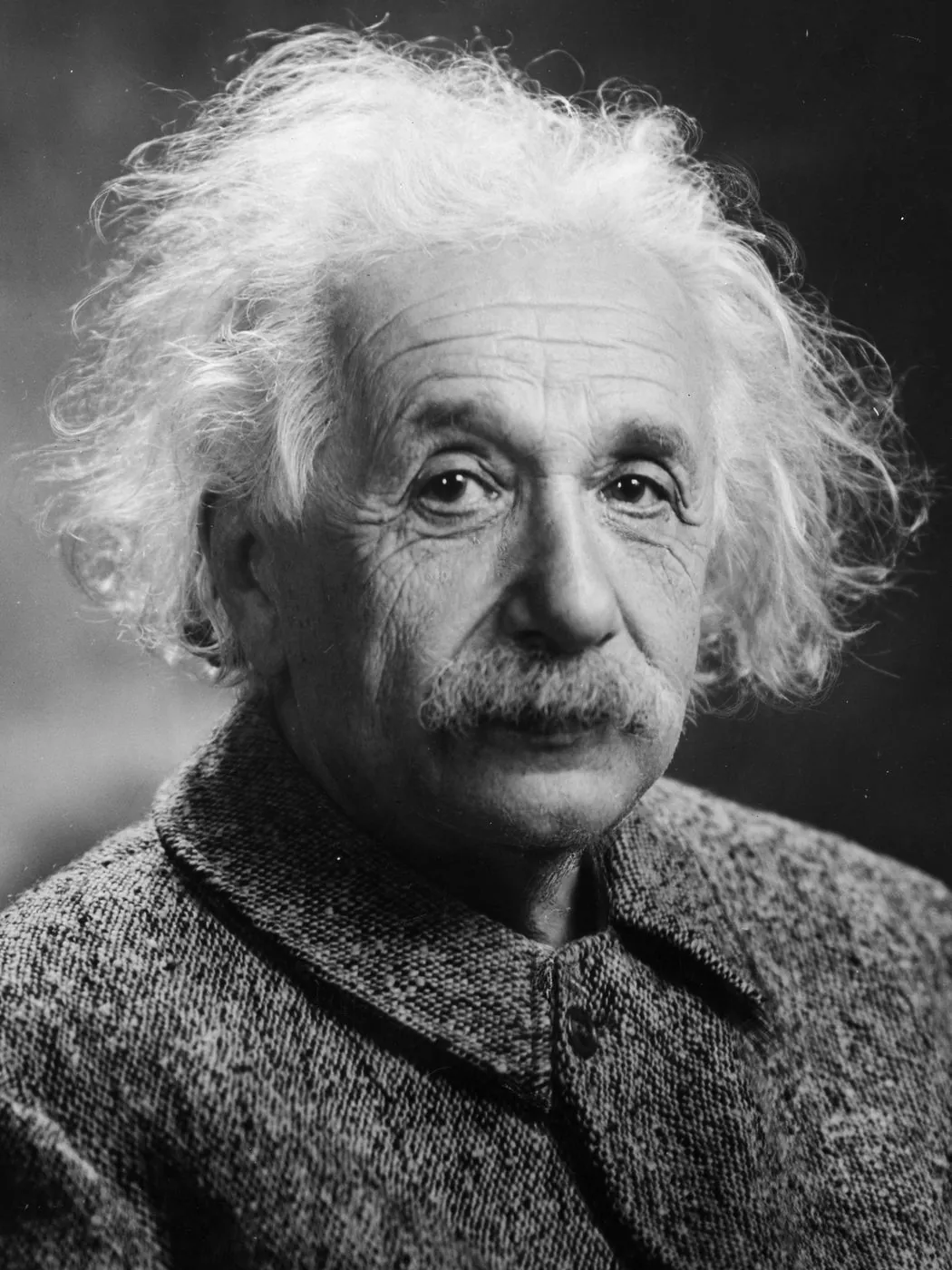
This Albert Einstein timeline traces his life from a childhood in the German Empire, through the theoretical breakthroughs that reshaped modern physics, to his final decades in the United States.
Early Life and the 1905 Breakthroughs
Albert Einstein was born on March 14, 1879, in Ulm, in the Kingdom of Württemberg, and grew up mainly in Munich before his family’s business took them to Italy while he finished school in Switzerland. He trained as a physicist and mathematician at the Swiss Federal Polytechnic in Zurich, but struggled to find an academic post after graduating and instead took a position as a technical examiner at the Swiss patent office in Bern. It was there, in 1905, working outside the university system, that he produced four papers now regarded as among the most consequential in the history of science: one explained the photoelectric effect using the idea that light travels in discrete packets of energy, one addressed Brownian motion, one introduced the special theory of relativity, and one derived the equivalence of mass and energy expressed in the equation E=mc^2. This period is often called Einstein’s “miracle year,” and it established the theoretical foundation on which the rest of his career was built.
General Relativity and the Making of a Public Figure
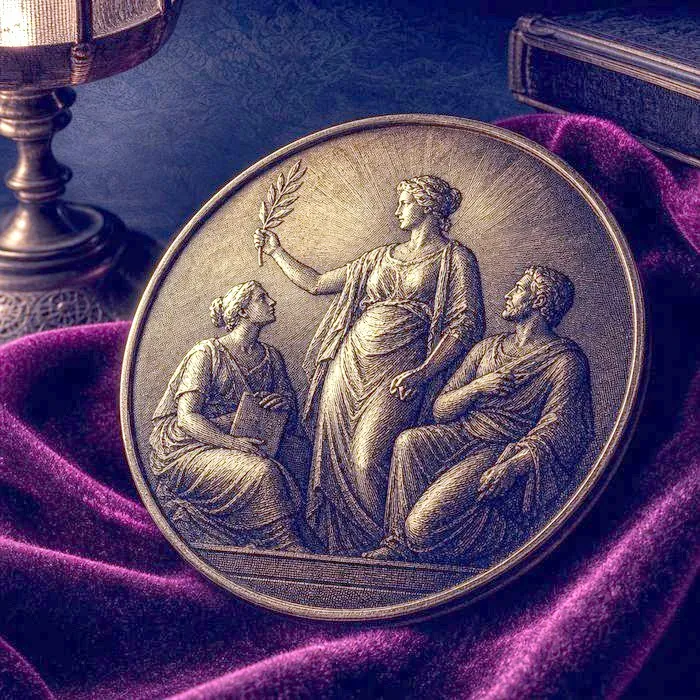
Special relativity dealt with objects moving at constant velocity, but Einstein spent the following decade extending the theory to account for gravity and acceleration. He completed the general theory of relativity in 1915, presenting it to the Prussian Academy of Sciences in Berlin, where he had taken up a research position. General relativity reimagined gravity not as a force acting between masses but as the curvature of spacetime itself, a claim that made specific, testable predictions, among them that light passing near a massive body like the Sun should visibly bend. In 1919, a British scientific expedition led by the astronomer Arthur Eddington photographed stars near the Sun during a total solar eclipse and found displacement consistent with Einstein’s predictions. The results, announced in London, turned Einstein into an international celebrity almost overnight. Two years later, in 1921, he was awarded the Nobel Prize in Physics; notably, the citation credited his work on the photoelectric effect rather than relativity, which several Nobel committee members still regarded as unproven or too theoretical at the time.
Emigration, Later Work, and Legacy
As antisemitism and Nazi political power intensified in Germany, Einstein, who was Jewish and already a prominent public figure, left the country in 1933 and settled permanently in the United States, taking a research position at the newly formed Institute for Advanced Study in Princeton, New Jersey. He spent his remaining decades there, continuing to search for a unified theory linking gravity and electromagnetism, a project he never completed, while also becoming an outspoken voice on nuclear weapons policy, civil rights, and internationalism. He was among the scientists whose 1939 letter to President Franklin Roosevelt helped prompt US research into atomic weapons, though he did not work directly on the Manhattan Project. Einstein died on April 18, 1955, in Princeton. His theories remain the working foundation of modern cosmology and gravitational physics, later confirmed further by phenomena such as gravitational lensing and, in 2015, the direct detection of gravitational waves by the LIGO observatories, a century after general relativity first predicted their existence. Beyond physics, Einstein’s name became, and remains, a popular shorthand for genius itself, a reputation reinforced by his distinctive public image, his outspoken political views, and the sheer scale of his scientific output. Papers, notebooks, and correspondence from his career are preserved today across several major archives, including collections at the Hebrew University of Jerusalem, an institution he helped found and to which he willed his personal papers.