
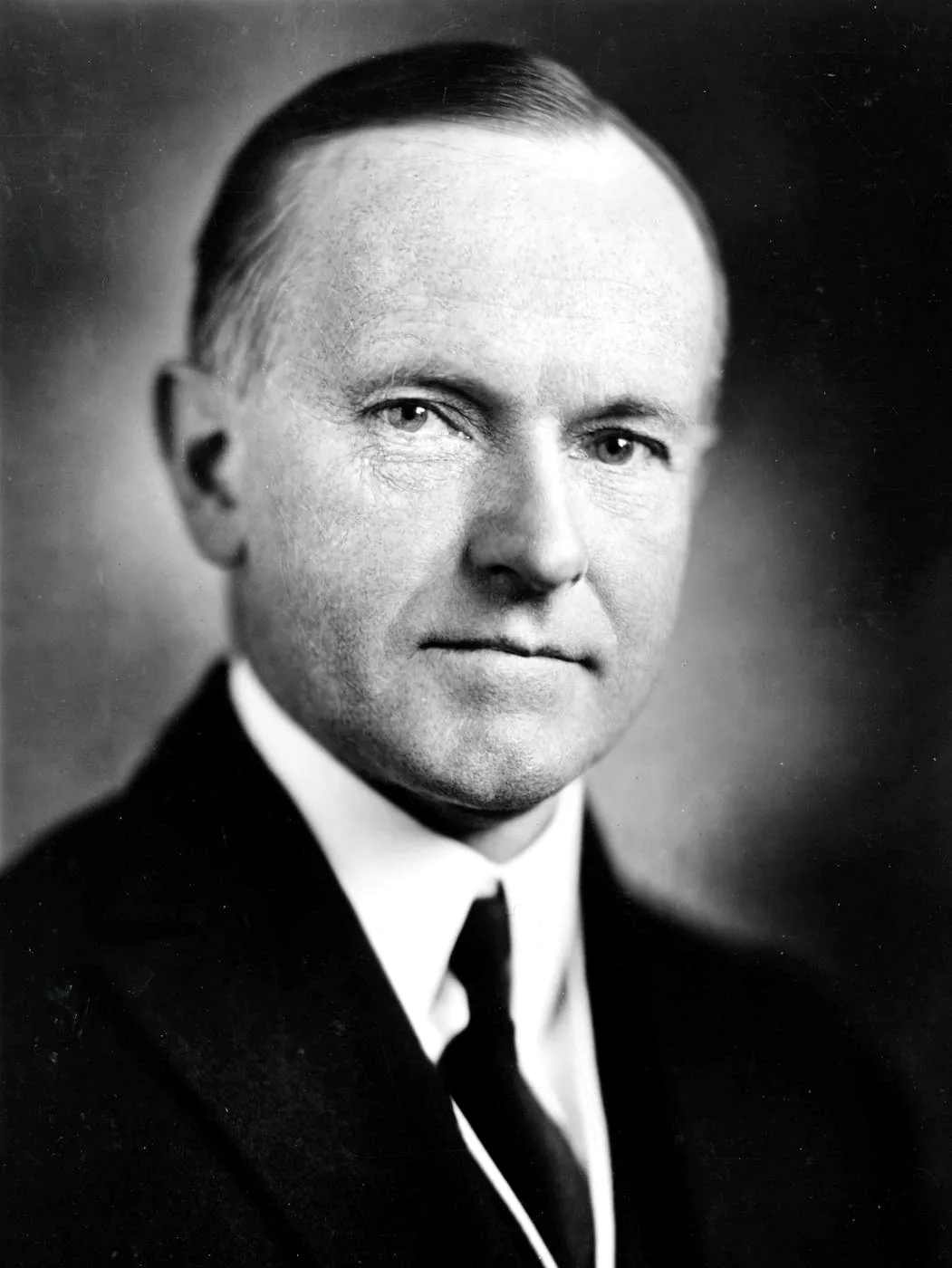
This Calvin Coolidge timeline of events traces his career and biography from a small-town Vermont upbringing through the vice presidency to the presidency of the 1920s, sourced and dated so it can be cited with confidence.
From Vermont to the Vice Presidency
John Calvin Coolidge Jr. was born on July 4, 1872, in Plymouth Notch, Vermont, the son of a village storekeeper who also served as a notary public, a detail that would matter unexpectedly decades later. Coolidge trained as a lawyer and built a career in Massachusetts state politics, working methodically up through local office, the state legislature, and the lieutenant governorship before being elected governor of Massachusetts in 1918. His single term as governor brought him national attention in 1919, when he backed the state’s use of the National Guard to end a strike by the Boston police force, declaring that there was “no right to strike against the public safety by anybody, anywhere, any time.” The remark, and his handling of the strike more broadly, established Coolidge’s reputation as a calm, firm executive at a moment of considerable postwar labor unrest, and helped make him an attractive running mate for Warren G. Harding on the Republican ticket in 1920. Harding and Coolidge won that election by a wide margin, and Coolidge spent the next three years as a famously quiet vice president, a role in which he reportedly attended cabinet meetings but said little.
“Silent Cal” in the White House
Coolidge’s presidency began under extraordinary circumstances. On August 2, 1923, Harding died suddenly while traveling in San Francisco, and Coolidge, who was visiting his family home in Plymouth Notch, was sworn in overnight: according to the traditional account, by his own father, acting in his capacity as a notary public, by the light of a kerosene lamp, since the house had no electricity. Coolidge went on to win a full term in his own right in 1924, defeating Democrat John W. Davis and Progressive Party candidate Robert La Follette. As president, he earned the enduring nickname “Silent Cal” for his famously taciturn, economical manner of speech, a trait that stood in sharp contrast to his consistently active pursuit of a small-government, pro-business agenda. His administration cut federal spending and taxes, following the recommendations of Treasury Secretary Andrew Mellon, and Coolidge is often associated with the sentiment, commonly if perhaps too neatly summarized, that the chief business of the American people is business. His presidency also quietly cleaned up the fallout from the Teapot Dome scandal that had emerged under Harding, despite having no personal involvement in it, and in 1928 the United States joined dozens of other nations in signing the Kellogg-Briand Pact, a treaty renouncing war as an instrument of national policy.

Legacy: “Coolidge Prosperity” and Its Limits
Coolidge’s years in office coincided with the sustained economic expansion of the mid-to-late 1920s, sometimes referred to as “Coolidge prosperity,” marked by rising stock prices, growing consumer spending, and general public confidence in continued growth. In 1927, in a characteristically brief and much-discussed statement, Coolidge announced that he did not choose to run for president in 1928, and he left office in March 1929, succeeded by his own secretary of commerce, Herbert Hoover. Coolidge’s hands-off, pro-business approach to the economy has since drawn considerable historical debate: admirers point to the era’s genuine growth and his restraint in expanding government, while critics argue that the light regulatory touch of his administration, particularly toward the stock market and the banking sector, helped set the stage for the speculative excesses that led to the Wall Street crash later that same year, only months after he left the White House. Coolidge retired to Massachusetts, wrote a syndicated newspaper column and an autobiography, and died on January 5, 1933, having spent his brief retirement watching from the sidelines as the Great Depression, which began just after his presidency ended, deepened into the defining crisis of his successor’s term.
Frequently Asked Questions
What does this Calvin Coolidge timeline cover?
This Calvin Coolidge timeline of events covers his 1872 birth in Plymouth Notch, Vermont, his governorship of Massachusetts, his vice presidency under Warren G. Harding, his sudden 1923 accession to the presidency, his 1924 election in his own right, and his 1929 departure from office.
How did Calvin Coolidge become president?
Coolidge became president on August 2, 1923, after President Warren G. Harding died suddenly while traveling. As vice president, Coolidge was sworn in overnight at his family home in Vermont.
Why was Calvin Coolidge nicknamed "Silent Cal"?
Coolidge earned the nickname "Silent Cal" for his famously terse, economical manner of speaking in public, which contrasted with his consistently active pursuit of tax cuts and reduced federal spending as president.
Did Calvin Coolidge run for re-election in 1928?
No. In 1927, Coolidge announced he did not choose to run for president in 1928. He left office in March 1929 and was succeeded by his secretary of commerce, Herbert Hoover.