
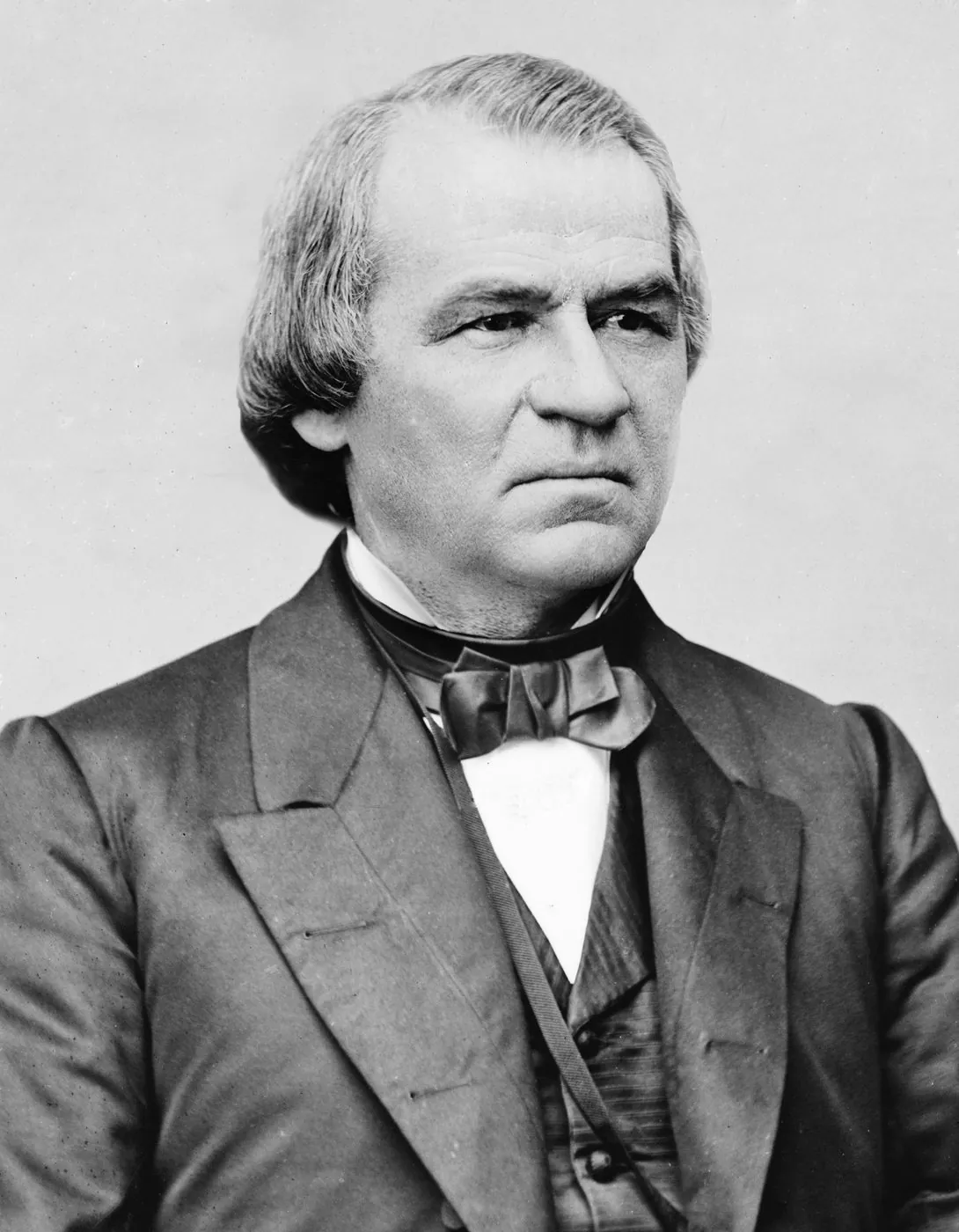
This Andrew Johnson timeline follows his rise from an impoverished, self-taught tailor to a presidency defined by his bitter conflict with Congress over Reconstruction.
Early Life and Rise Through Tennessee Politics
Andrew Johnson was born into poverty on December 29, 1808, in Raleigh, North Carolina. Apprenticed as a boy to a tailor, he received no formal schooling and was taught to read by fellow apprentices and, later, to read and write more fully by his wife, Eliza McCardle, whom he married at seventeen. He settled in Greeneville, Tennessee, where his tailoring business succeeded and launched him into local politics as an advocate for small farmers and working people against the planter elite. He rose steadily through Tennessee office (alderman, mayor, state legislator, congressman, and governor) before entering the US Senate in 1857, building a reputation as a fierce defender of the interests of poor white farmers and a lifelong opponent of what he saw as an entrenched planter aristocracy. When Tennessee seceded in 1861, Johnson was the only senator from a Confederate state to keep his seat and remain loyal to the Union, a defiant stand that made him a prominent wartime Unionist and led Lincoln to appoint him military governor of occupied Tennessee. Seeking to broaden his ticket’s appeal in 1864, Lincoln, running under the National Union banner, chose Johnson, a Southern Democrat, as his running mate, hoping to signal that loyal Southerners of any party had a place in the reunited nation Lincoln expected to govern after the war.
Presidency: Reconstruction Conflict and Impeachment
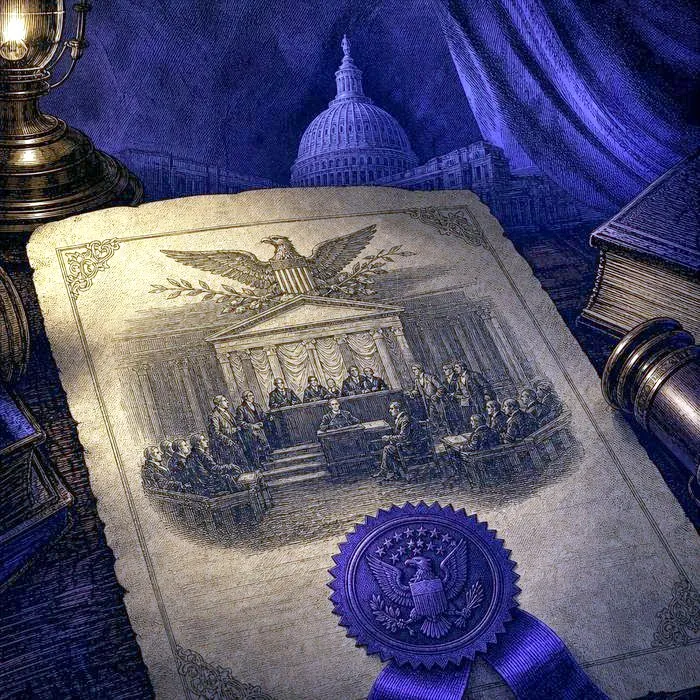
Johnson became president on April 15, 1865, hours after Lincoln died from John Wilkes Booth’s gunshot wound. He pursued a lenient approach to Reconstruction, quickly restoring Southern states to the Union and pardoning many former Confederates, while vetoing Congress’s Civil Rights Act of 1866 and the extension of the Freedmen’s Bureau, both later passed over his veto. His confrontations with the Republican-controlled Congress escalated through 1866 and 1867 as lawmakers moved to protect formerly enslaved people’s rights over his objections, and a group known as the Radical Republicans increasingly saw Johnson’s leniency toward the former Confederacy as a betrayal of the war’s aims. Matters came to a head when Johnson dismissed Secretary of War Edwin Stanton in violation of the Tenure of Office Act, a law Congress had passed specifically to limit his power over Cabinet appointments. The House of Representatives impeached Johnson in February 1868, and the Senate trial that followed ended in acquittal in May 1868 by a single vote, with several Republicans breaking ranks partly out of concern that removing a president over a policy dispute would dangerously weaken the office. Amid the turmoil, his administration achieved one lasting success: in 1867, Secretary Seward negotiated the purchase of Alaska from Russia for $7.2 million, a deal ridiculed at the time as “Seward’s Folly” but later regarded as a major territorial acquisition.
Later Years and Legacy
Johnson left the presidency in 1869 deeply unpopular and returned to Tennessee. In an unusual political comeback, he won election to the US Senate in 1875, becoming the only former president to serve in that chamber, but died on July 31, 1875, only months into the term. Johnson’s presidency is generally judged harshly by historians, who point to his resistance to Reconstruction protections for Black Americans as a major factor in the era’s failures, even as his impeachment remains a landmark case in the balance of power between Congress and the presidency, cited repeatedly in later disputes over how far lawmakers may go in checking an unpopular president.