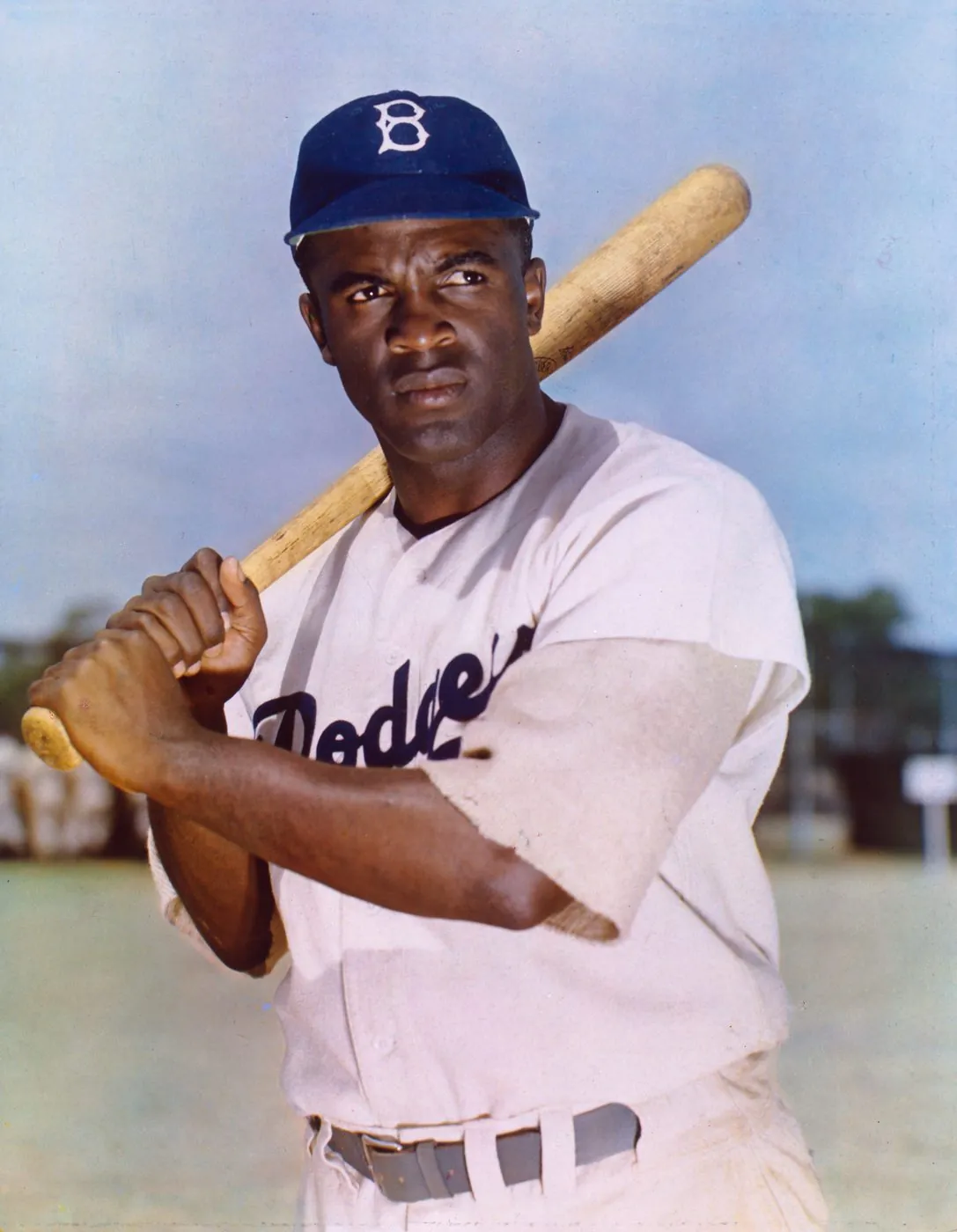
This Jackie Robinson timeline traces his path from a childhood in the segregated American South to breaking modern Major League Baseball’s color barrier and his later life in business and civil rights advocacy.
Early Life and Path to Professional Baseball
Jack Roosevelt Robinson was born on January 31, 1919, in Cairo, Georgia, the youngest of five children in a family of sharecroppers. His family relocated to Pasadena, California, while he was still an infant, and he grew into a standout athlete, becoming the first student at UCLA to letter in four sports: baseball, basketball, football, and track. His studies were interrupted by financial pressures, and he later served as a second lieutenant in the US Army during the Second World War, an experience that included his court-martial and subsequent acquittal after he refused to move to the back of a segregated military bus, a episode that foreshadowed the resistance he would face throughout his baseball career. After his military service, Robinson played briefly for the Kansas City Monarchs in the Negro American League, where his talent drew the attention of Brooklyn Dodgers executive Branch Rickey.
Breaking the Color Barrier
Rickey, seeking to integrate Major League Baseball, signed Robinson in 1945 and assigned him first to the Montreal Royals, the Dodgers’ top minor-league affiliate, where he played in 1946 before being called up to the major leagues. On April 15, 1947, Robinson took the field at first base for the Brooklyn Dodgers, becoming the first Black player in the modern major leagues since baseball’s unofficial color line had excluded Black players for decades. He endured hostility from opposing players, fans, and even some teammates during his rookie season, an arrangement Rickey and Robinson had agreed on in advance, under which Robinson committed not to retaliate publicly regardless of provocation. He was named the National League’s first Rookie of the Year in 1947 and continued to develop into one of the sport’s most complete players, known for his combination of hitting, baserunning speed, and aggressive style of play. In 1949, he led the National League in batting average and stolen bases and was named the league’s Most Valuable Player.
Later Career, Activism, and Legacy
Robinson played his entire ten-season major league career with the Dodgers, helping the team reach the World Series six times and win the championship in 1955, before retiring after the 1956 season. In 1962, he was inducted into the National Baseball Hall of Fame in his first year of eligibility, becoming the first Black player so honored. After retiring from baseball, Robinson remained a visible public figure, working in business, writing a newspaper column, and becoming an outspoken advocate for civil rights, at times criticizing the pace of racial progress in both baseball and American society more broadly. He died on October 24, 1972, in Stamford, Connecticut. In 1997, Major League Baseball retired his uniform number, 42, across every team in the league, a permanent, sport-wide honor unmatched for any other player, and every team now marks Jackie Robinson Day each April 15 in recognition of his 1947 debut. Robinson also received the Presidential Medal of Freedom posthumously in 1984, and his wife, Rachel Robinson, went on to found the Jackie Robinson Foundation, which has provided scholarships and mentoring to thousands of students in the decades since. His debut is widely regarded as a milestone not only in baseball history but in the broader history of American civil rights, preceding the more organized civil rights movement of the following decade by several years.