
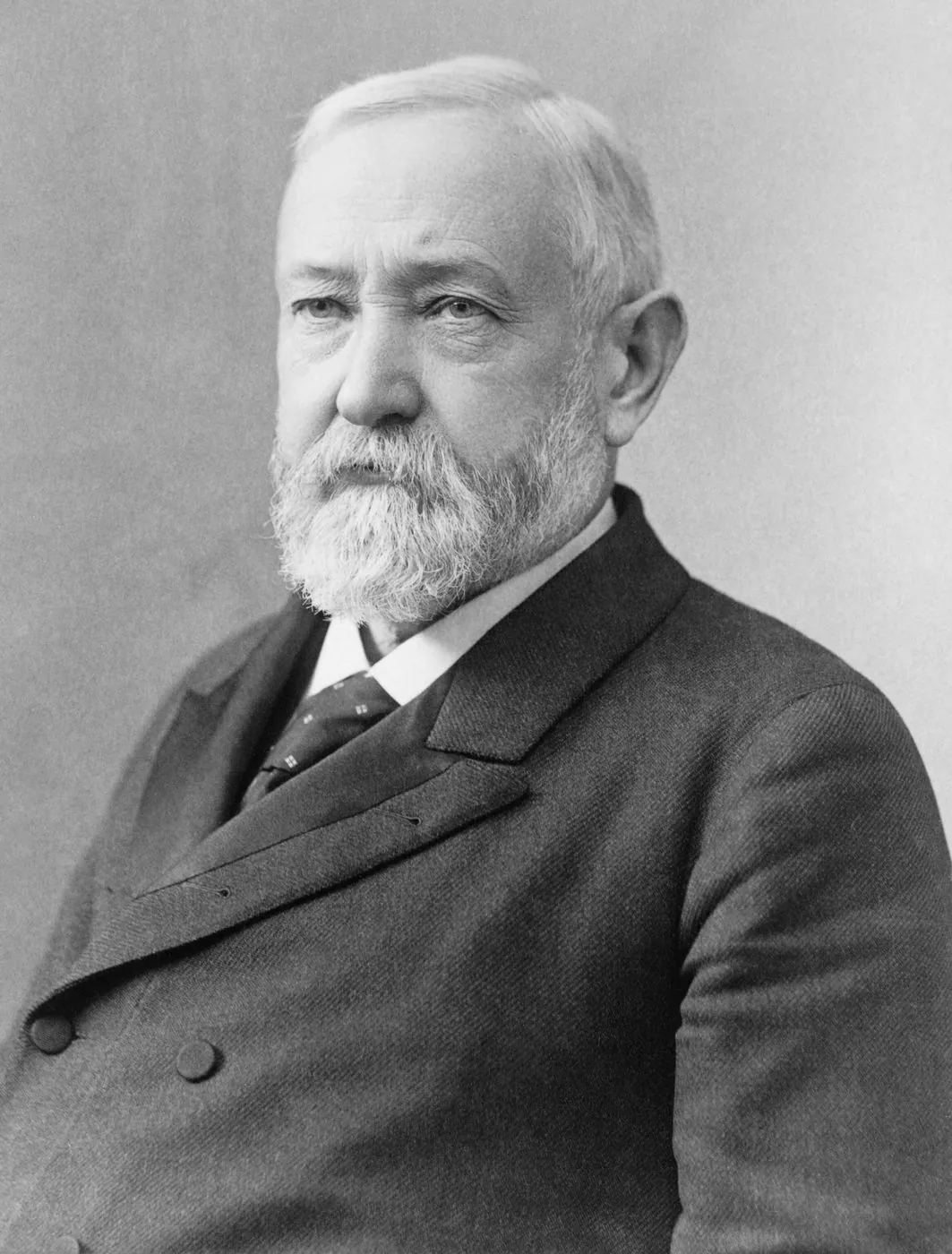
This Benjamin Harrison timeline traces the twenty-third president’s path from a general’s grandson and Civil War veteran to a single term that reshaped the American map and American antitrust law alike.
Early Life, War Service, and the Senate
Benjamin Harrison was born on August 20, 1833, in North Bend, Ohio, the grandson of William Henry Harrison, the ninth president, a lineage that shaped his political career from the start. He trained as a lawyer and built a practice in Indianapolis, Indiana, before the outbreak of the Civil War, in which he served as an officer in the Union Army and rose to the rank of brevet brigadier general, seeing action in the Atlanta campaign. Contemporaries often described Harrison as a gifted courtroom orator but a cool, formal presence in private company, a reserve that earned him the nickname “the Human Iceberg” among some political rivals. After the war, Harrison returned to Indiana law and Republican politics, eventually winning election to the U.S. Senate in 1881, where he developed a reputation as a capable, if somewhat reserved, legislator on veterans’ pensions and tariff policy. His Senate term and prior military service positioned him as a credible national candidate by the mid-1880s, and Republicans nominated him for president in 1888 to challenge the incumbent Grover Cleveland.
Presidency: New States and a New Antitrust Law
Harrison won the 1888 election by carrying the Electoral College despite losing the national popular vote to Cleveland, a split outcome that would recur in later American elections. His term, aided by a Republican-controlled Congress that critics nicknamed the “Billion Dollar Congress” for its spending levels, produced an unusually productive legislative record. In 1889 and 1890, six new states entered the Union under Harrison: North Dakota, South Dakota, Montana, and Washington, followed by Idaho and Wyoming, more admissions than under any other single president. In 1890 he also signed the Sherman Antitrust Act, the first major federal law aimed at restraining monopolies and anticompetitive combinations, a foundation later used to break up major trusts under subsequent administrations.

That same year, Harrison signed the McKinley Tariff, raising import duties sharply, and the Sherman Silver Purchase Act, expanding federal silver purchases; both measures proved politically costly amid rising consumer prices and grew unpopular by 1892. His administration also hosted the first Pan-American Conference, an early step toward institutionalized cooperation among nations of the Western Hemisphere, and near the end of his term submitted a treaty to annex Hawaii after American-backed businessmen overthrew the Hawaiian monarchy, though the treaty stalled in the Senate and was later withdrawn by his successor.
Defeat, Later Life, and Legacy
Harrison’s wife, Caroline, died shortly before the 1892 election, a personal loss that overshadowed a campaign already weakened by tariff backlash and economic anxiety; he lost his bid for a second term in a rematch with Cleveland. He returned to Indianapolis and resumed legal practice, later serving as lead counsel for Venezuela in a boundary arbitration dispute with Britain. Harrison remarried in 1896 and remained a respected elder statesman within the Republican Party until his death from pneumonia in Indianapolis on March 13, 1901. His single term is generally remembered less for personal charisma than for its unusually consequential legislative output on antitrust policy, tariffs, and the admission of new states to the Union.