
Early Life and Military Career
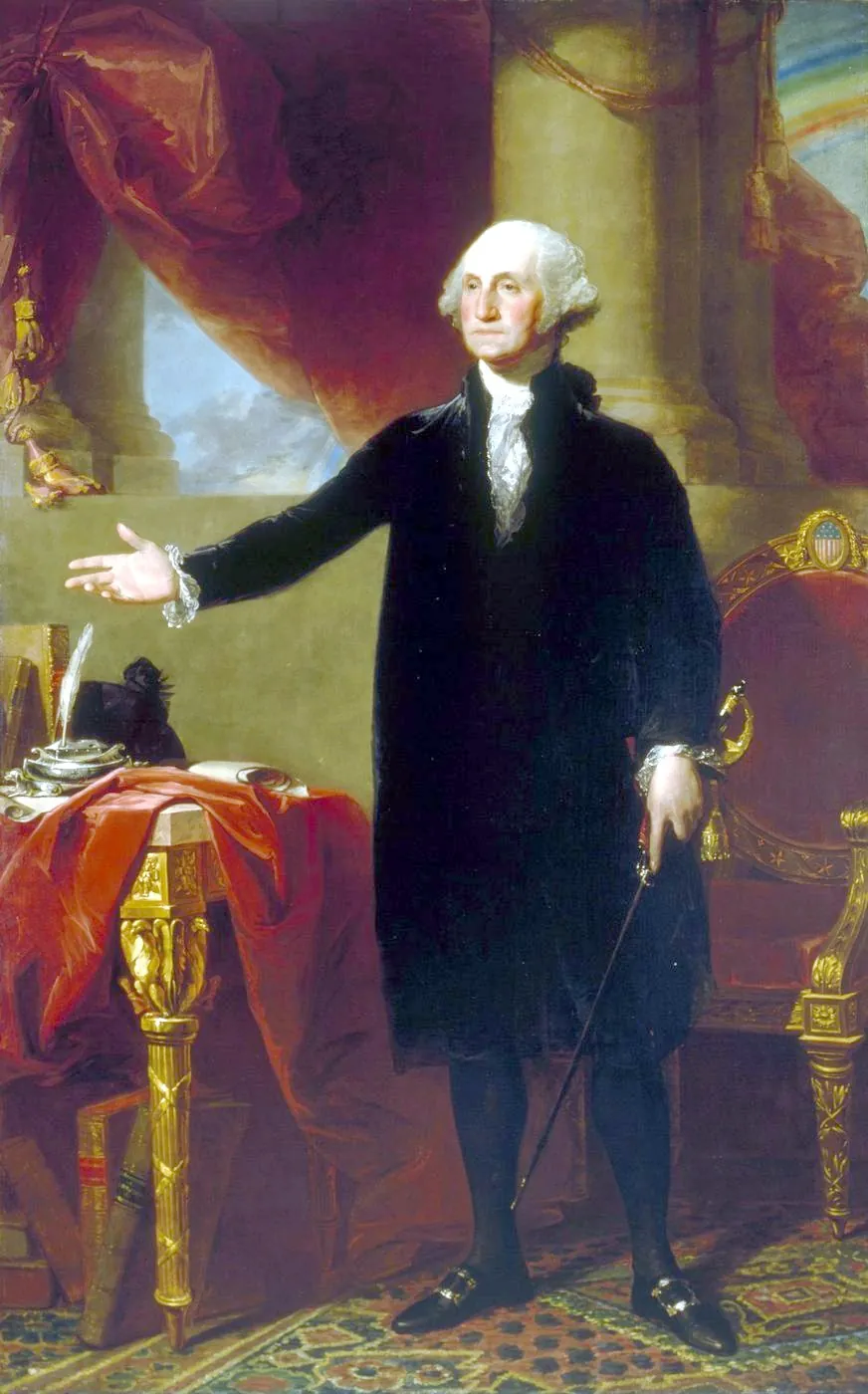
George Washington was born on February 22, 1732 (by the calendar adopted in Britain and its colonies in 1752; contemporary records at his birth used an earlier date), into a moderately prosperous planter family in Westmoreland County, Virginia. He received a practical education that included training in surveying, and he worked as a surveyor in the Virginia backcountry as a young man, gaining an early familiarity with the frontier that shaped his later military career. In the 1750s, Washington served as a militia officer during the French and Indian War, the North American theater of a broader conflict between Britain and France, gaining valuable, if occasionally painful, experience in frontier warfare, including the disastrous 1755 expedition under British General Edward Braddock. He returned to Virginia to manage his Mount Vernon estate and married Martha Dandridge Custis, a wealthy widow, in 1759, settling for a time into life as a planter, slaveholder, and colonial legislator in Virginia’s House of Burgesses. Like most large Virginia planters of his era, Washington owned enslaved people throughout most of his adult life, a fact modern historians weigh alongside his public legacy; his will provided for the eventual emancipation of those he held after his wife’s death.
Commander of the Continental Army
When armed conflict broke out between Britain and its American colonies in 1775, the Second Continental Congress appointed Washington Commander-in-Chief of the newly formed Continental Army, valuing both his military background and his standing as a Virginian at a moment when colonial unity was fragile. Washington led the Continental Army through years of difficult campaigning, including the harsh winter encampment at Valley Forge in 1777–78, holding together an underfunded and often undersupplied force against the more established British military.
The turning point came in 1781, when Washington, aided by French land and naval forces, trapped a British army under General Cornwallis at Yorktown, Virginia. The resulting siege and surrender effectively ended major fighting and led to British recognition of American independence in 1783.
The Presidency and Legacy
Washington’s standing as the victorious commander made him the near-unanimous choice to lead the new federal government created under the Constitution, and he was inaugurated as the first President of the United States in New York City in April 1789, then re-elected unopposed in 1792. Over two terms, he worked to establish the practical functioning of the new presidency, assembling a cabinet that included Alexander Hamilton as Treasury Secretary and Thomas Jefferson as Secretary of State, two men whose sharp disagreements over federal power previewed the young republic’s first party divisions. He personally led militia forces to suppress the Whiskey Rebellion of 1794, an early test of federal authority to enforce tax law, and he maintained American neutrality amid war between Britain and France, a stance formalized through the controversial Jay Treaty of 1795. In 1796, he chose not to seek a third term, a voluntary transfer of power that set a lasting precedent for the presidency, and his farewell address that year warned against permanent foreign alliances and the dangers of political factionalism. Washington died at Mount Vernon on December 14, 1799, likely from a severe throat infection, and is remembered as the “Father of His Country” for his roles in winning American independence and shaping the early character of the presidency.