
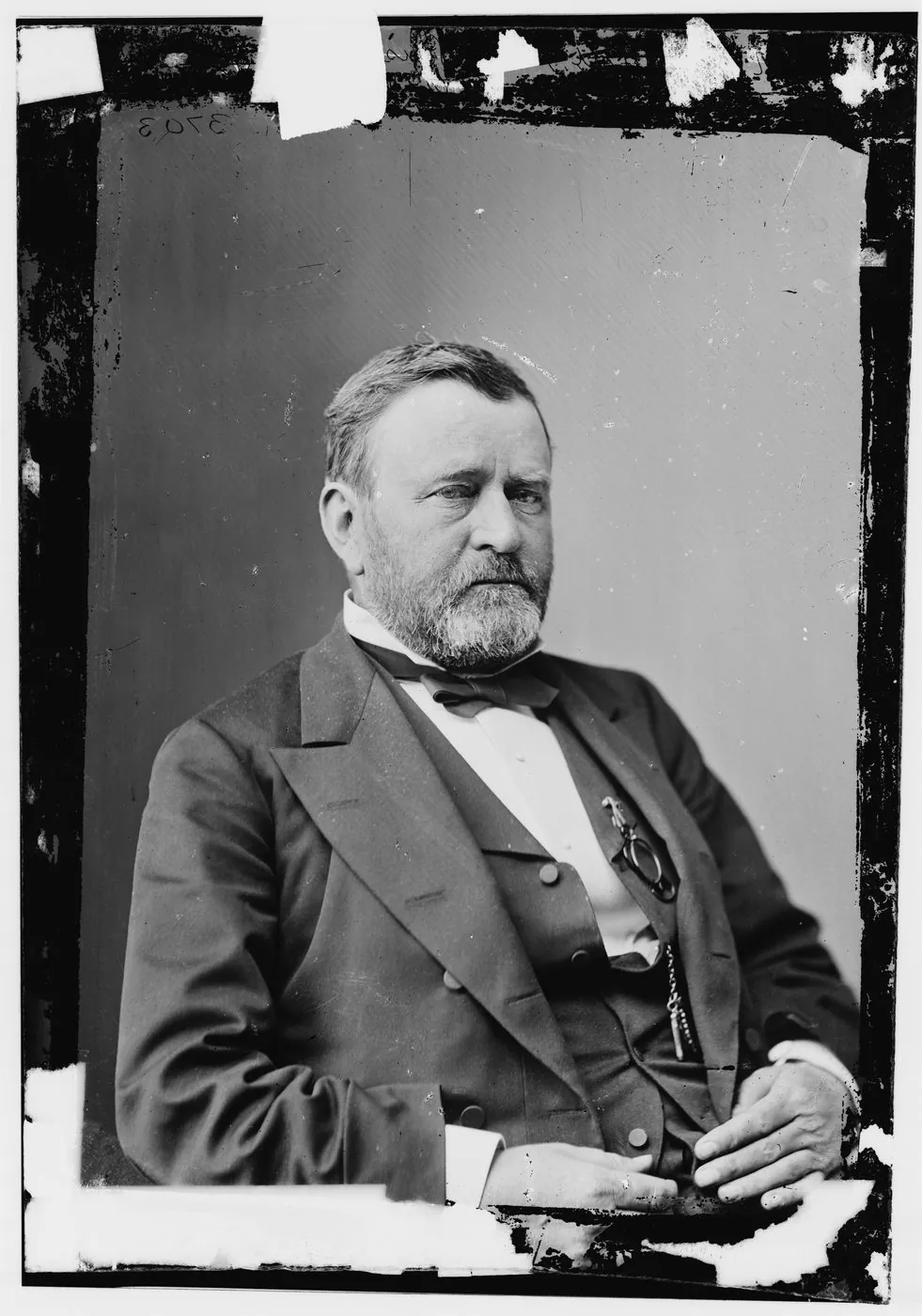
This Ulysses S. Grant timeline traces his path from a struggling pre-war veteran to the Union’s most successful general and a two-term president who confronted Reconstruction’s violent backlash.
From West Point to Union Command
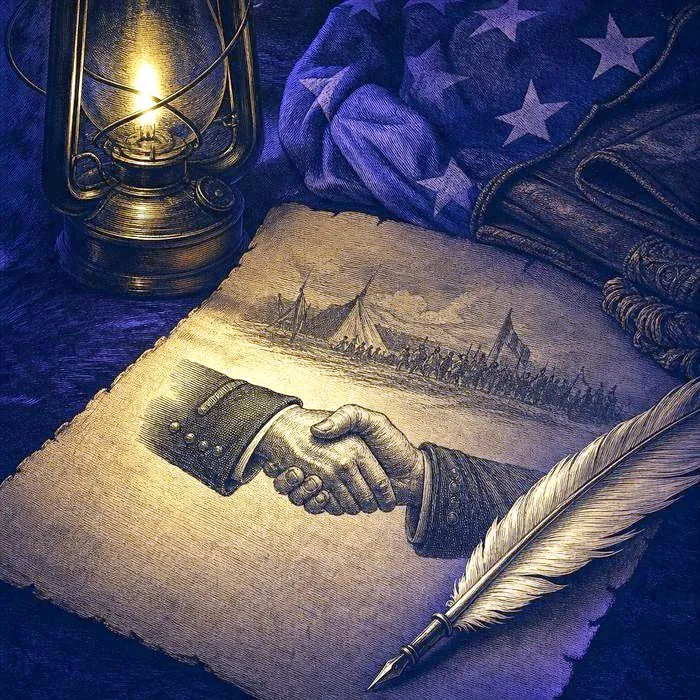
Hiram Ulysses Grant was born on April 27, 1822, in Point Pleasant, Ohio, the son of a tanner. A clerical error at his appointment to the United States Military Academy at West Point fixed his name permanently as Ulysses S. Grant. He served capably in the Mexican-American War, an experience he later described in his memoirs as an unjust conflict, but struggled afterward in peacetime army postings and then in a series of failed civilian businesses, resigning his commission amid rumors of heavy drinking. By the time the Civil War began, he was working as a clerk in his father’s leather-goods store in Galena, Illinois. The Civil War revived his career: reentering the army in 1861, Grant proved a relentless and effective battlefield commander, winning key victories at Forts Henry and Donelson, Shiloh, and the siege of Vicksburg, which split the Confederacy along the Mississippi River. President Lincoln promoted him to command all Union armies in 1864. After a grinding campaign against Robert E. Lee’s forces in Virginia, Grant accepted Lee’s surrender at Appomattox Court House on April 9, 1865, effectively ending the Civil War and cementing his reputation as the Union’s most successful general.
Presidency: Reconstruction and Its Scandals
Grant was elected the 18th president in 1868 and won re-election in 1872. As president, he generally supported Reconstruction and the rights of newly freed Black Americans more forcefully than his predecessor, signing a series of Enforcement Acts in 1870 and 1871 that empowered federal prosecutors and, at times, troops to combat Ku Klux Klan violence intended to suppress Black voting across the South. He also backed ratification of the Fifteenth Amendment, guaranteeing the right to vote regardless of race, and his Justice Department used the new enforcement powers to bring hundreds of prosecutions against Klan members in South Carolina and elsewhere. However, his administration was repeatedly damaged by corruption scandals involving members of his Cabinet and associates, including the Crédit Mobilier railroad-financing affair and the Whiskey Ring tax fraud scheme, even though Grant himself was not personally implicated in wrongdoing. Economic troubles, including the Panic of 1873, further strained his second term. By the time he left office in 1877, public enthusiasm for continued federal enforcement of Reconstruction had waned considerably, a shift that would shape the policies of his successors, including Rutherford B. Hayes’s decision to withdraw the last federal troops from the South soon after taking office.
Later Years, Memoirs, and Death
After leaving office, Grant undertook a celebrated two-year world tour before losing his savings in a fraudulent investment firm. Diagnosed with terminal throat cancer and facing financial ruin, he raced to complete his Personal Memoirs, with publishing arrangements secured through the help of Mark Twain’s firm; the book proved to be both a critical success and financially lifesaving for his family. Grant died at Mount McGregor, New York, on July 23, 1885, just days after finishing the manuscript. His memoirs remain widely praised, and historians have increasingly reassessed his presidency’s civil rights record more favorably in recent decades, crediting him with a sincerity about racial equality that was uncommon among his political contemporaries.