
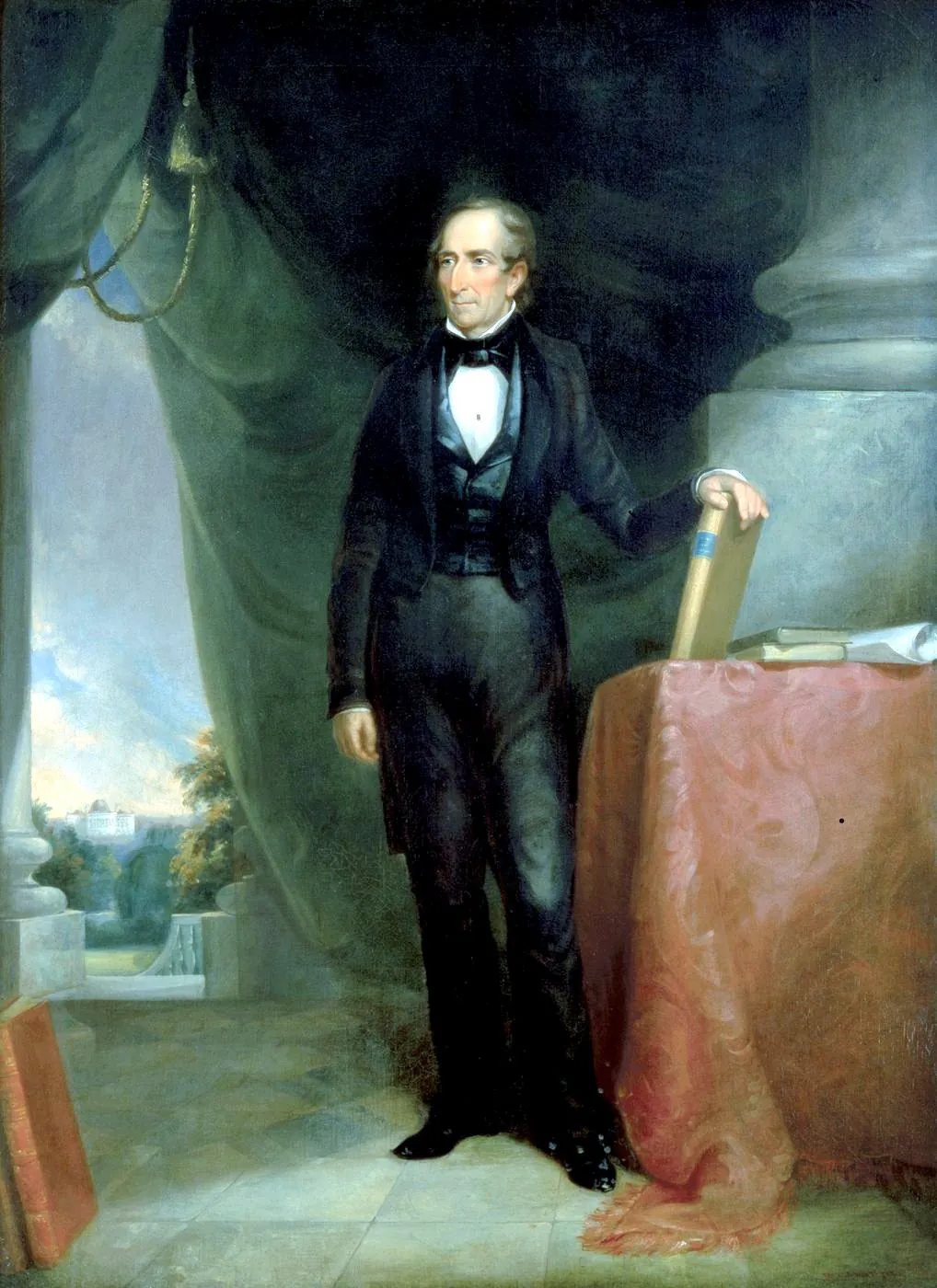
This John Tyler timeline traces the tenth president’s path from Virginia planter and vice president to the man whose response to a national crisis of succession defined the presidency for generations afterward.
Early Life and Path to the Vice Presidency
John Tyler was born on March 29, 1790, in Charles City County, Virginia, into an established planter family with deep ties to state politics; his father had served as governor of Virginia. Tyler trained as a lawyer and built a long political career in the state legislature, the U.S. House of Representatives, the governorship of Virginia, and the U.S. Senate, generally aligning with states’-rights and strict-constitutionalist positions even as he moved between parties. In 1840, the Whig Party nominated him as running mate to war hero William Henry Harrison, producing the famous campaign slogan “Tippecanoe and Tyler Too.” The ticket won, and Tyler was inaugurated as vice president in March 1841, a role that, within weeks, would thrust him into an unprecedented constitutional question.
Presidency: An Accidental President Who Set a Precedent
William Henry Harrison died on April 4, 1841, just one month after taking office, the first U.S. president to die in office. The Constitution at the time was ambiguous about what happened next: some believed the vice president became only an “acting president” carrying out the duties of the office. Tyler disagreed. He had himself sworn in with the full title and authority of president, moved into the White House, and insisted on being addressed as President Tyler rather than as a caretaker: a bold assertion that many of his contemporaries privately mocked him for, sometimes calling him “His Accidency.” His position held, however, and it became known as the Tyler Precedent, later formalized by the 25th Amendment in 1967. Beyond succession, Tyler’s presidency was defined by conflict with his own party: he vetoed Whig efforts to re-establish a national bank, prompting most of his cabinet to resign in protest and the Whigs to formally expel him from the party, leaving him a president without a party base for most of his term. Near the end of his presidency, in early 1845, Tyler signed the joint resolution annexing Texas, a major territorial expansion that would help trigger the Mexican-American War under his successor, James K. Polk.
Later Life and Legacy
After leaving office in 1845, Tyler retired to Sherwood Forest, his Virginia plantation, and largely stayed out of national politics for over a decade. As sectional tensions escalated toward the end of his life, he attempted to broker a last-minute peace compromise in early 1861 through a Washington peace conference, an effort that failed to prevent war. He then supported Virginia’s departure from the Union and was elected to the Confederate House of Representatives. He died in Richmond on January 18, 1862, before taking his seat, making him the only former U.S. president to die a citizen of a government at war with the United States. Tyler’s most enduring legacy is constitutional rather than legislative: his insistence on full presidential authority after Harrison’s death set the pattern followed by every vice president who has since succeeded a president who died, resigned, or was incapacitated in office, decades before that principle was written into the Constitution.
Frequently Asked Questions
What does this John Tyler timeline cover?
This timeline covers John Tyler's biography from his 1790 birth in Virginia through his vice presidency, his 1841 succession to the presidency after William Henry Harrison's death, his break with the Whig Party, the 1845 annexation of Texas, and his 1862 death.
Why is John Tyler historically significant?
Tyler was the first vice president to succeed a president who died in office, and his insistence that he held the full powers of the presidency, rather than acting as a caretaker, established the precedent later codified by the 25th Amendment.
Why did the Whig Party expel John Tyler?
Tyler vetoed Whig-backed legislation to re-establish a national bank, leading most of his cabinet to resign and the Whig Party to formally disown him during his presidency.
When did John Tyler die?
Tyler died on January 18, 1862, in Richmond, Virginia, shortly after being elected to the Confederate House of Representatives.