
Early Life and the Search for Backing
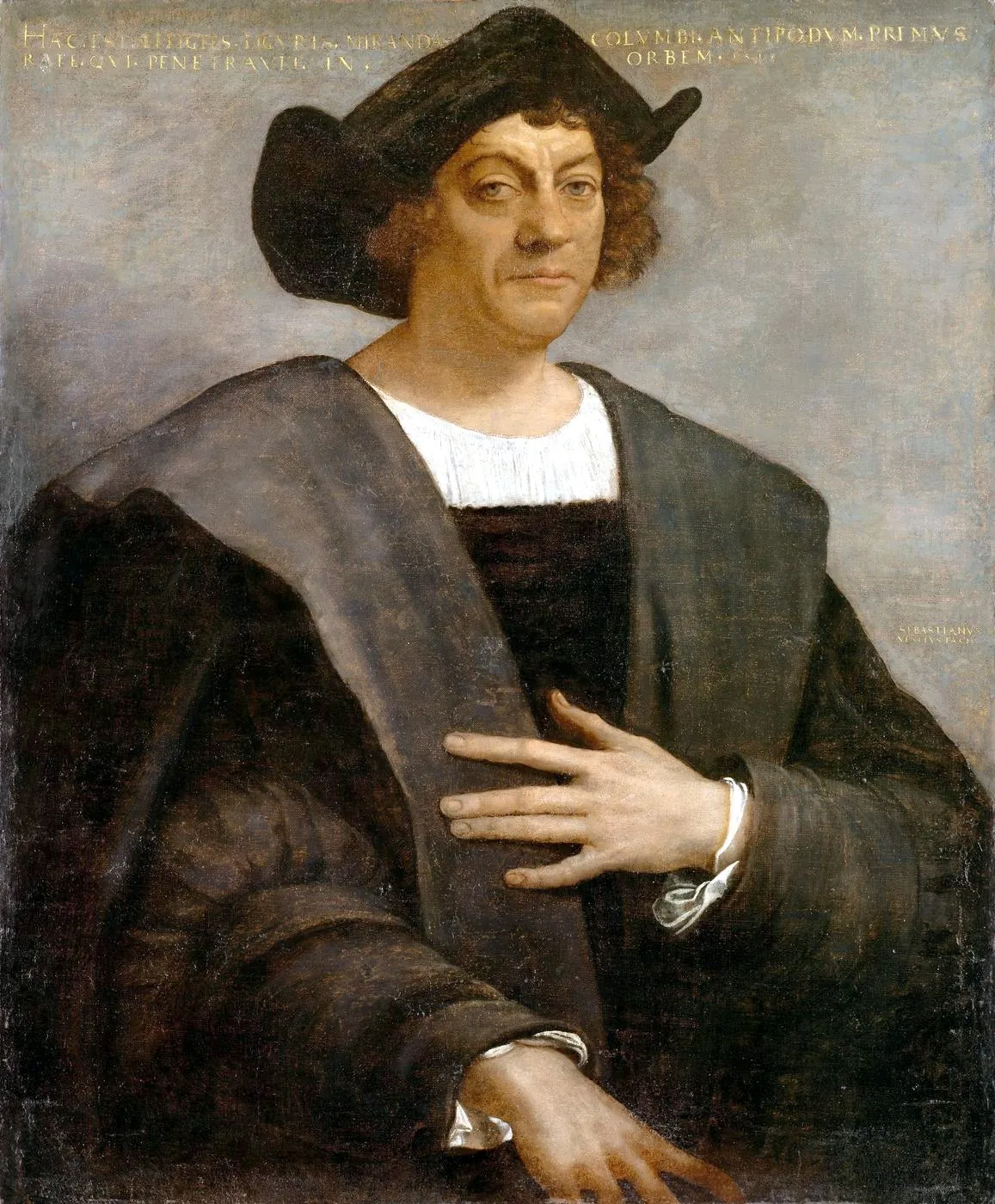
Christopher Columbus was born in 1451 in the Republic of Genoa, in what is now Italy, the son of a wool weaver. He went to sea as a young man, working on merchant voyages around the Mediterranean and later along the Atlantic coasts of Portugal, England, and possibly Iceland. By the 1480s he had settled in Portugal and developed a plan to reach Asia, and its lucrative trade in spices and silk, by sailing west across the Atlantic rather than around Africa, the route Portuguese navigators were already pursuing.
Columbus’s proposal rested on a significant miscalculation: he underestimated the Earth’s circumference and overestimated the extent of Asia, concluding that Japan lay a few thousand miles west of Europe. The Portuguese crown’s advisors rejected his plan, judging the true distance too great for any ship of the era to survive. Columbus then took his proposal to Spain, where he spent years petitioning the court before Ferdinand and Isabella, the Catholic Monarchs who had just completed the reconquest of Granada, agreed in 1492 to sponsor the voyage.
Four Voyages Across the Atlantic
Columbus departed the Spanish port of Palos de la Frontera in August 1492 with three ships, the Niña, the Pinta, and the Santa María, and a crew of roughly ninety men. After more than two months at sea, land was sighted on October 12, 1492, in the present-day Bahamas. Columbus believed he had reached islands near Asia and referred to the people he encountered as “Indians” on that assumption. He had no way of knowing, and would never accept, that he had instead reached a continent unknown to Europeans but home to millions of Indigenous people with their own long histories, societies, and civilizations.
Columbus made three further voyages across the Atlantic. On his second, in 1493, he led a much larger fleet carrying colonists and livestock, establishing the first sustained Spanish settlements in the Caribbean. On his third voyage, in 1498, he reached the coast of present-day Venezuela, the first recorded European contact with the South American mainland. His fourth and final voyage, begun in 1502, explored the coast of Central America; by this point Spanish officials in the Caribbean had already curtailed much of his authority over the colonies he had founded, and the voyage ended in shipwreck and hardship off Jamaica.
Death and Legacy
Columbus died in Valladolid, Spain, in 1506, still maintaining that he had reached the eastern edges of Asia rather than identifying a landmass previously unknown to Europeans. It was other explorers and geographers in the years after his death, notably Amerigo Vespucci, who argued that the lands Columbus had reached formed a separate continent, later named the Americas in Vespucci’s honor.
Columbus’s voyages opened sustained contact between Europe and the Americas, initiating an exchange of people, goods, crops, and diseases on a scale with no earlier precedent. For the Indigenous peoples of the Caribbean and, in the following decades, much of the wider Americas, that contact brought catastrophic consequences: epidemic diseases introduced from Europe, against which Indigenous populations had no immunity, caused massive loss of life, while the colonization that followed Columbus’s voyages brought forced labor, displacement, and the dismantling of existing societies and systems of governance. These outcomes are a documented and integral part of the historical record of Columbus’s voyages, not a separate footnote to them, and modern historical assessment weighs them alongside his navigational achievement in evaluating his legacy.