
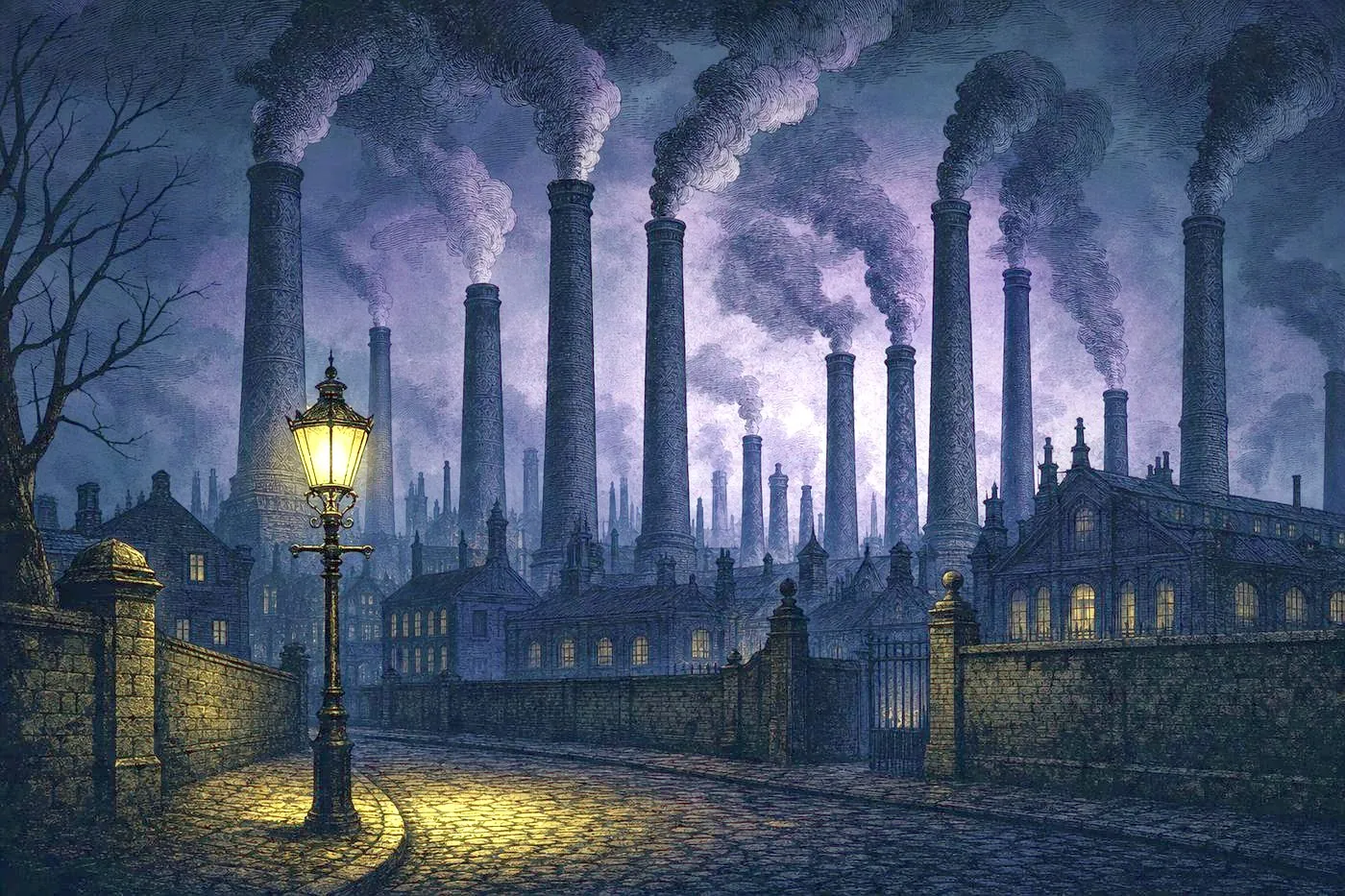
This gilded age timeline of events traces the rapid industrialization, concentrated wealth, and labor unrest that defined America between the 1870s and 1900, the period at the center of this american gilded age timeline of economic history.
Gilded Age Timeline: The Rise of Industrial America
The term “Gilded Age,” borrowed from a Mark Twain novel title, describes the period of roughly the 1870s to 1900 when America industrialized at extraordinary speed while masking deep social strain beneath a glittering surface of new wealth. Railroads expanded across the continent, oil and steel production surged, and a small number of industrialists built vast personal fortunes by consolidating entire industries under their control. John D. Rockefeller founded Standard Oil in 1870 and, through aggressive acquisitions and pricing tactics, built it into a near-monopoly over American oil refining. Steel magnate Andrew Carnegie and financier J.P. Morgan pursued similar strategies in their own industries, and the business combinations they built came to be organized as trusts, corporate structures that concentrated ownership and pricing power in the hands of a few men. Critics labeled these figures “robber barons,” arguing their fortunes came at the expense of workers and competitors, while defenders credited them with building the infrastructure and industrial capacity that transformed American economic history.
Wealth Inequality and Labor Unrest in Gilded Age America
Rapid industrial growth was not evenly shared. Wages for factory and railroad workers often stagnated even as fortunes accumulated at the top, and working conditions in mills, mines, and railyards were frequently dangerous and unregulated. Economic instability compounded the strain: the Panic of 1873, triggered by the failure of a major banking firm overextended in railroad financing, set off a depression that lasted several years and left many workers facing wage cuts or unemployment. Labor unrest followed in waves. The Great Railroad Strike of 1877 spread across several states after wage reductions, prompting some governors to call out militia, and federal troops were deployed in a few instances, one of the first large-scale confrontations between organized labor and state power in America’s history. In 1886, a labor rally in Chicago’s Haymarket Square ended when a bomb was thrown at police, killing several officers; the resulting trials and executions damaged the broader labor movement’s public standing for years afterward. Tensions peaked again in 1892 at Andrew Carnegie’s Homestead steel plant in Pennsylvania, where a wage dispute escalated into an armed clash between striking workers and private security guards.
Reform Movements and the History That Followed the Gilded Age
Public concern over the power of trusts and the condition of industrial workers gradually built political pressure for reform. In 1890, Congress passed the Sherman Antitrust Act, the first major federal law aimed at restricting monopolistic business combinations, although early enforcement against major trusts remained limited and inconsistent. Journalists, reformers, and some politicians increasingly drew attention to unsafe working conditions, child labor, and concentrated corporate power, laying groundwork for the Progressive Era reforms that followed. This gilded age timeline of events effectively closes around 1901, when J.P. Morgan orchestrated the merger of Carnegie’s steel holdings with other producers to form United States Steel, the first corporation capitalized at over a billion dollars, a scale of consolidation that both epitomized the era’s ambitions and helped spur the antitrust and regulatory reforms of the early twentieth century.
Frequently Asked Questions
What does "Gilded Age" mean?
The term, borrowed from an 1873 Mark Twain and Charles Dudley Warner novel title, describes a period whose glittering prosperity concealed serious social problems in American history, including poverty, unsafe labor conditions, and political corruption.
What caused wealth inequality in the Gilded Age?
Rapid industrial consolidation into trusts, weak labor protections, and concentrated corporate ownership let a small number of industrialists accumulate vast fortunes while many American workers' wages stagnated.
What was the Sherman Antitrust Act?
Passed in 1890, it was the first major US federal law aimed at restricting monopolistic business combinations, though its early enforcement against major trusts was limited.
How did the Gilded Age end?
There is no single end date, but this american gilded age timeline is often considered to close around 1900–1901, giving way to the Progressive Era; the 1901 formation of US Steel is frequently cited as the turning point.