
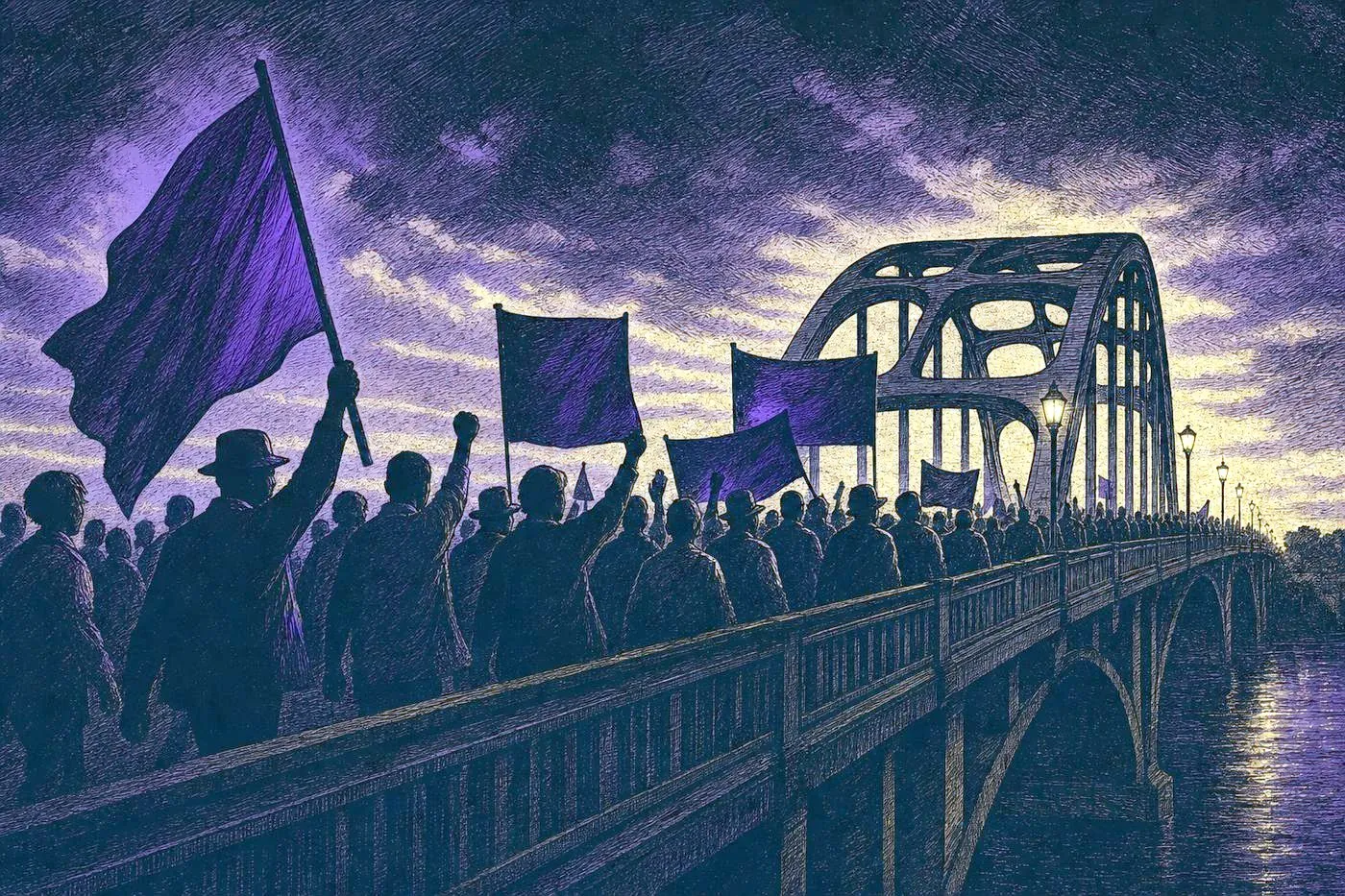
This civil rights movement timeline traces the organizations, laws, and marches that reshaped American life between 1954 and 1968, sourced and dated so it can serve as a quick civil rights movement timeline events reference alongside our biography pages on Martin Luther King Jr. and Rosa Parks.
Civil Rights Movement Timeline: Early Events (1954–1957)
The modern civil rights movement timeline begins with a legal turning point. In 1954, the Supreme Court’s decision in Brown v. Board of Education ruled that racial segregation in public schools was unconstitutional, overturning the “separate but equal” doctrine that had stood since the 1890s. The ruling gave the growing movement a legal foundation and set the stage for the direct-action campaigns that followed.
The next major event on this civil rights movement timeline unfolded in Montgomery, Alabama. After Rosa Parks was arrested in December 1955 for refusing to give up her bus seat to a white passenger (an act covered in depth on our dedicated Rosa Parks biography page), local organizers launched the Montgomery Bus Boycott, a year-long boycott of the city’s buses that ended only after the Supreme Court ordered Montgomery’s buses desegregated in 1956. The boycott introduced a young pastor named Martin Luther King Jr. to national leadership, though his fuller biography is covered separately on our dedicated Martin Luther King Jr. timeline.
In 1957, nine Black students known as the Little Rock Nine enrolled at Central High School in Little Rock, Arkansas, testing the Brown ruling in practice. Federal troops were deployed to enforce their right to attend after the state’s governor tried to block integration, making Little Rock one of the first major tests of federal authority over school desegregation.
American History Turns: Civil Rights Movement Timeline Events of the 1960s
By 1960, the civil rights movement timeline had shifted from the courts to lunch counters. Four Black college students sat down at a segregated Woolworth’s lunch counter in Greensboro, North Carolina, sparking a wave of sit-ins across the South that pressured businesses to desegregate their facilities.
The March on Washington for Jobs and Freedom in August 1963 became the movement’s most visible moment in American history, drawing roughly a quarter of a million demonstrators to the National Mall, where King delivered remarks remembered today as a defining speech of the era.
That pressure translated into law the following year. The Civil Rights Act of 1964, signed by President Lyndon B. Johnson, outlawed discrimination on the basis of race, color, religion, sex, or national origin in public accommodations and employment, one of the most consequential pieces of legislation in American history, and a central entry on any american civil rights movement timeline.
In early 1965, marchers attempting to walk from Selma to Montgomery, Alabama, were violently attacked by state troopers on the Edmund Pettus Bridge, in an event that became known as “Bloody Sunday.” Images of the attack helped build public and congressional support for the Voting Rights Act of 1965, which banned literacy tests and other discriminatory voting practices and authorized federal oversight of elections in areas with a history of voter suppression.
Legacy of the Civil Rights Movement Timeline in American History
The final major entries on this civil rights movement timeline came in 1968. In April, Martin Luther King Jr. was assassinated in Memphis, Tennessee, a loss that shook the movement and the country; his life and leadership are explored in full on our separate Martin Luther King Jr. timeline. Days later, Congress passed the Fair Housing Act, prohibiting discrimination in the sale, rental, and financing of housing.
Read together, these civil rights movement timeline events, from Brown v. Board through the Fair Housing Act, mark one of the most significant stretches of organizing and legislative change in American history. The legal protections won during this period remain the foundation for civil rights law in the United States today, and the organizations, marches, and legislation summarized in this american civil rights movement timeline continue to shape debates over voting rights and equal protection.
Frequently Asked Questions
What does this civil rights movement timeline cover?
This civil rights movement timeline covers the major organizations, marches, and legislation of the movement from the 1954 Brown v. Board of Education decision through the 1968 Fair Housing Act, including the Montgomery Bus Boycott, the March on Washington, and the Civil Rights and Voting Rights Acts.
When did the civil rights movement begin and end?
Historians commonly date the modern civil rights movement from the 1954 Brown v. Board of Education ruling to the 1968 Fair Housing Act and the assassination of Martin Luther King Jr., though organizing against racial discrimination in the United States began well before and continued after this period.
What was the most important law among the civil rights movement timeline events?
The Civil Rights Act of 1964 and the Voting Rights Act of 1965 are generally considered the two most consequential laws to emerge from the civil rights movement timeline events of the 1960s, outlawing discrimination in public life and protecting access to the vote.
How does this timeline relate to Martin Luther King Jr. and Rosa Parks?
This page covers the broader american civil rights movement timeline at the level of organizations, marches, and legislation; for the full life stories behind two of its central figures, see our separate Martin Luther King Jr. and Rosa Parks biography timelines.