
This Texas history timeline traces the state’s path from its earliest Indigenous nations through Spanish and Mexican colonial rule, a hard-fought revolution, nearly a decade as an independent republic, and its eventual growth into a major American economic and technological power, sourced and dated for reference.
Texas History Timeline: Indigenous Peoples and Spanish Colonization
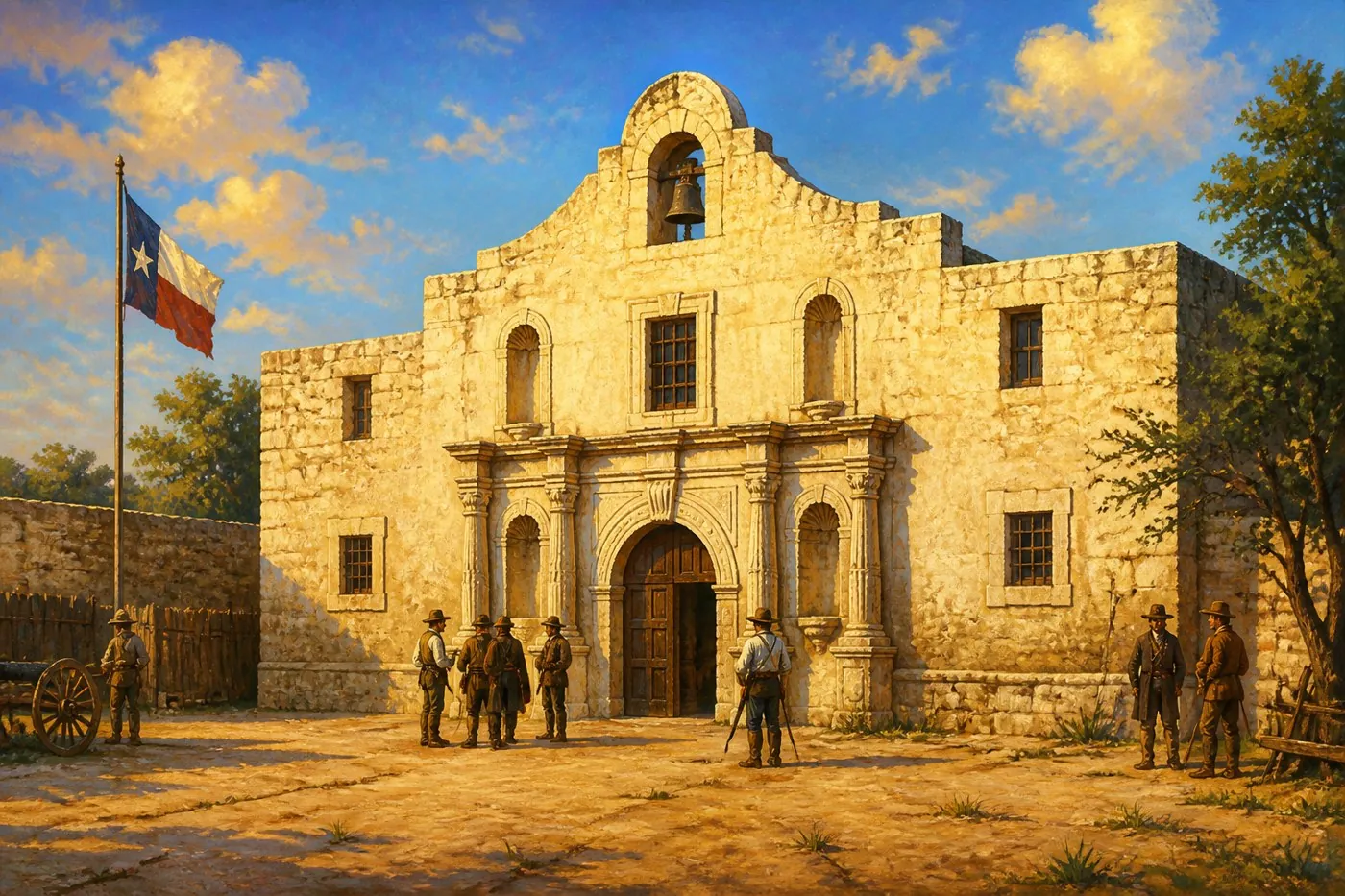
For thousands of years before European contact, the land that would become Texas was home to diverse Indigenous nations. The Caddo, in the piney woods of East Texas, built structured agricultural communities and mound complexes; the Karankawa lived along the Gulf coast, and Coahuiltecan groups inhabited the arid south, while the Comanche and Apache later became dominant on the southern Plains. Spanish contact began in 1519, when Alonso Álvarez de Pineda led an expedition that charted the Gulf coastline and produced the first known European map of the region, though sustained Spanish colonization did not follow immediately. Franciscan missionaries and Spanish soldiers gradually built a network of missions and presidios meant to secure Spain’s northern frontier and convert Indigenous populations, including the 1718 founding of Mission San Antonio de Valero — the mission chapel that later became famous as the Alamo — alongside a cluster of other missions along the San Antonio River. Roughly two dozen missions were established across Texas between the late 17th and late 18th centuries, with widely varying degrees of success, leaving San Antonio as the colonial era’s most significant settlement.
Texas History Timeline: Mexican Texas and the Fight for Independence
Mexico won its independence from Spain in 1821, and the newly formed state of Coahuila y Tejas absorbed the Texas territory. That same year, Stephen F. Austin led the first large group of Anglo-American colonists into Texas under an empresario land grant inherited from his father, beginning a wave of immigration that soon made Anglo settlers a majority in the region. Tensions between these colonists and the Mexican government over centralized authority, taxation, and slavery escalated through the early 1830s, and open conflict broke out in October 1835 at the Battle of Gonzales. Delegates meeting at Washington-on-the-Brazos declared independence on March 2, 1836, forming the Republic of Texas. Days later, Mexican forces under General Antonio López de Santa Anna overran the Alamo after a 13-day siege, killing its defenders; a similar defeat followed at Goliad. On April 21, 1836, Sam Houston’s army routed Santa Anna’s forces in the brief Battle of San Jacinto, securing Texan independence. The republic operated as an independent nation for nearly a decade before the United States annexed it, and Texas was admitted to the Union as the 28th state on December 29, 1845.
Texas History Timeline: Statehood Through the Modern Era
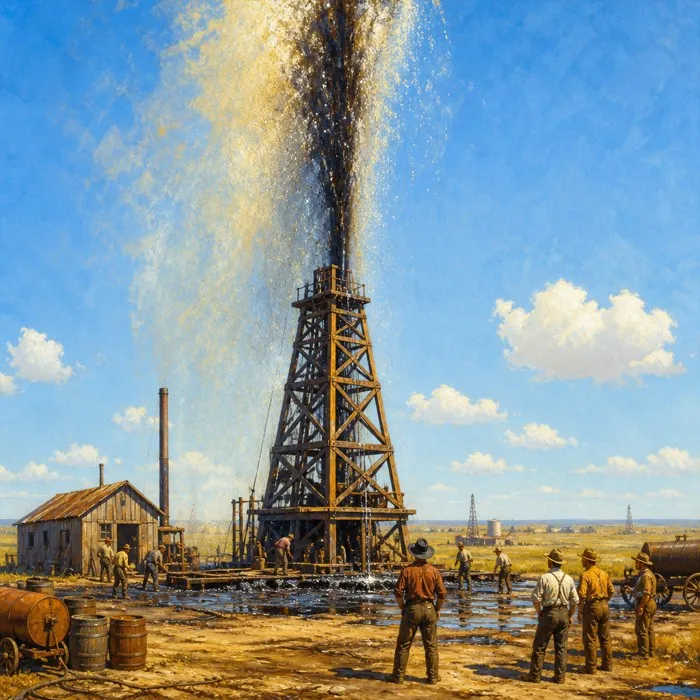
Statehood quickly drew Texas into national controversies over slavery and westward expansion, and in 1861 the state seceded to join the Confederacy, becoming both a battleground and a source of manpower and supplies during the Civil War before undergoing Reconstruction and, later, decades as a heavily agricultural, cattle-driving economy. The state’s trajectory changed dramatically on January 10, 1901, when the Lucas Gusher blew in at Spindletop near Beaumont, releasing far more oil in a day than any well drilled before it. The discovery triggered a boom that transformed Beaumont into a boomtown almost overnight and gave rise to companies including Texaco and Gulf Oil, cementing Texas’s place at the center of the American petroleum industry for the rest of the century. Texas’s importance to national life deepened further in September 1961, when NASA selected Houston as the site of its new Manned Spacecraft Center, later renamed the Johnson Space Center, making the city a permanent hub of the US human spaceflight program. From Indigenous nations and Spanish missions to oil fields and mission control, the state’s history has repeatedly reshaped the wider country’s economy and identity.
Frequently Asked Questions
What does this Texas history timeline cover?
This Texas history timeline covers the state from its earliest Indigenous nations and Spanish mission era through Mexican rule, the 1836 Texas Revolution, statehood in 1845, and into the 20th century with the Spindletop oil boom and the arrival of NASA's Manned Spacecraft Center in Houston.
Why is the Battle of the Alamo significant?
The 13-day siege and fall of the Alamo in February–March 1836 became a rallying point, summed up in the cry "Remember the Alamo!", for the Texan forces who won independence from Mexico weeks later at the Battle of San Jacinto.
When did Texas become a US state?
Texas was annexed by the United States and admitted to the Union as the 28th state on December 29, 1845, after nearly a decade as an independent republic.
What sparked the Texas oil boom?
The Lucas Gusher at Spindletop near Beaumont blew in on January 10, 1901, producing an unprecedented volume of oil and launching the modern petroleum industry in Texas.