
This Illinois history timeline traces the state’s development from the mound-building city of Cahokia through French and British colonial rule, statehood in 1818, and Chicago’s rise from a small lakefront settlement into one of the country’s great commercial and transportation hubs. It is sourced and dated so it can be cited with confidence.
Illinois History Timeline: Cahokia to the Illinois Country
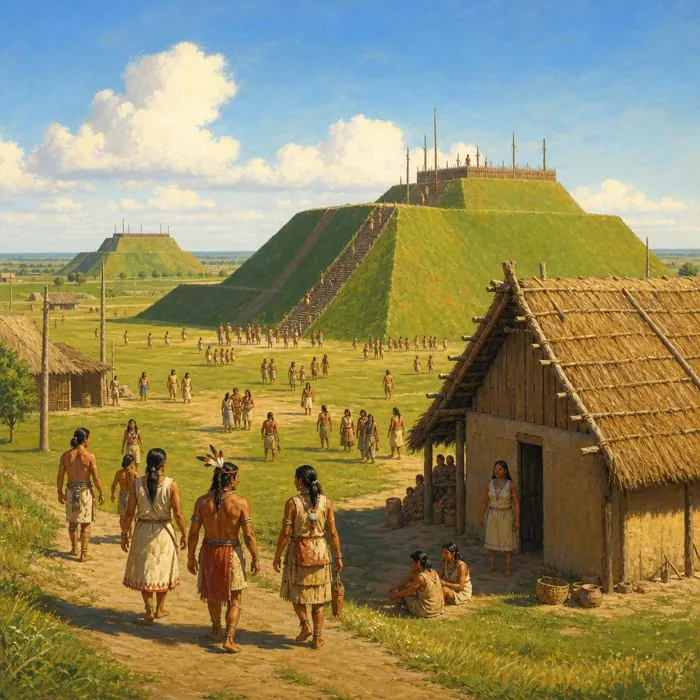
Long before Europeans arrived, the fertile land along the Mississippi River near present-day Collinsville supported Cahokia, the largest pre-Columbian city north of Mexico. Built by the Mississippian culture, Cahokia grew into a sophisticated urban center of monumental earthen mounds and a broad central plaza, reaching its peak around 1050–1150 with a population historians estimate at somewhere between 10,000 and 20,000 people. By the 14th century the city had been largely abandoned, though the descendants of Mississippian and later Algonquian-speaking peoples, including the tribes of the Illinois Confederation such as the Kaskaskia and Peoria, continued to live across the region. French contact began in 1673, when explorer Louis Jolliet and Jesuit missionary Jacques Marquette traveled the Mississippi and Illinois Rivers, recognizing the strategic value of the portage linking the Great Lakes to the Mississippi watershed near the future site of Chicago. French traders and missionaries built forts and mission towns across what became known as the Illinois Country over the following decades, before France ceded the territory east of the Mississippi to Britain after the French and Indian War in the 1760s. During the American Revolution, in 1778, militia leader George Rogers Clark captured the British-held town of Kaskaskia, and the region was organized as a county of Virginia.
Illinois History Timeline: Statehood and Chicago’s Rise
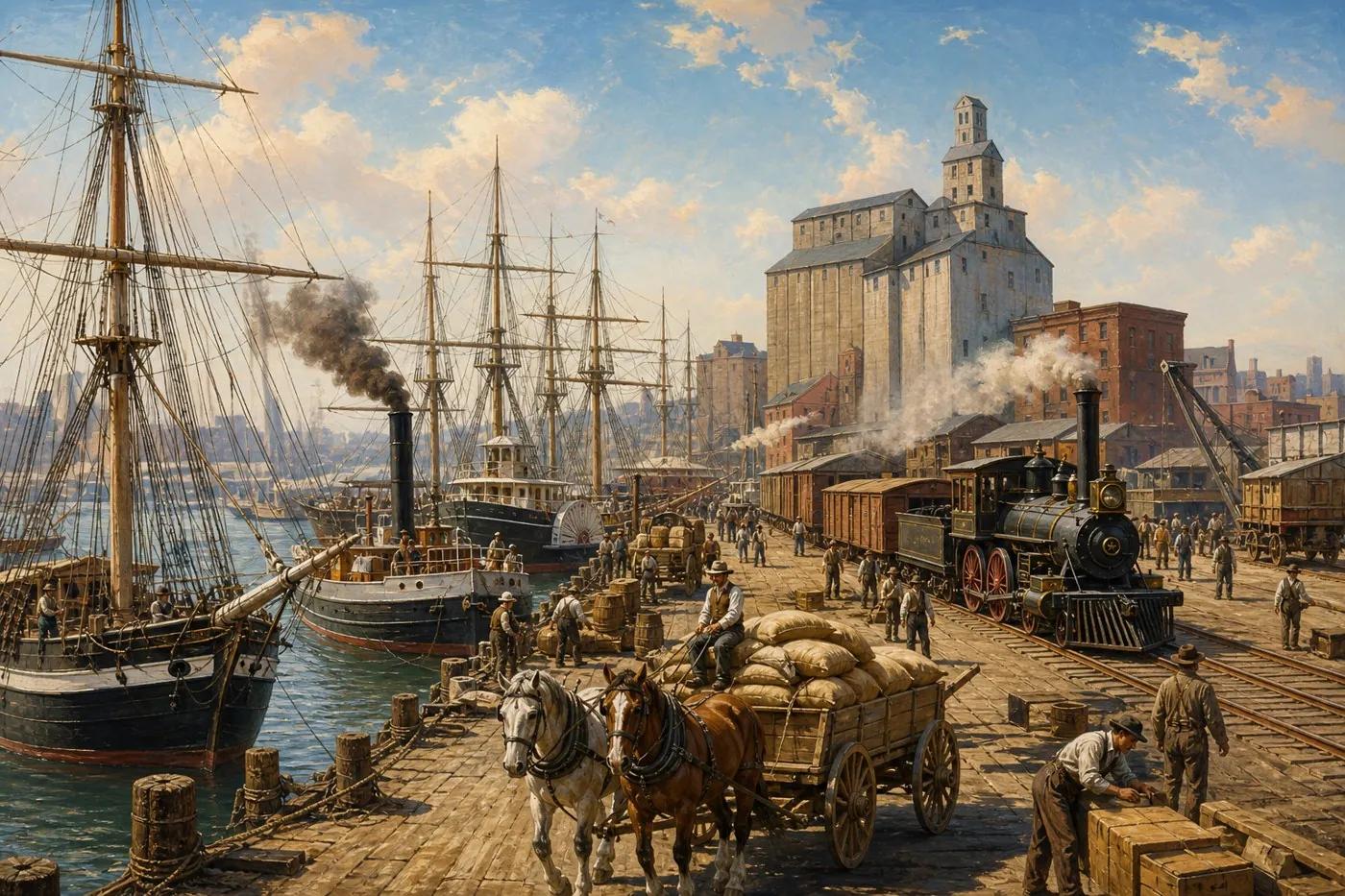
Illinois became part of the Indiana Territory in 1800 and gained its own territorial government in 1809, before being admitted to the Union as the 21st state on December 3, 1818. The following decades brought rapid settlement of the state’s agricultural land, even as the 1818 constitution controversially permitted a system of indentured servitude that stopped short of full legal slavery. Chicago, incorporated as a city in March 1837 with roughly 4,000 residents, grew slowly at first, but the arrival of railroads in the 1840s and 1850s transformed it almost overnight: by 1850 its population had passed 28,000, and by 1860 it exceeded 100,000, as more than a dozen railroad lines converged on the city. That explosive growth was interrupted on October 8, 1871, when the Great Chicago Fire tore through the city for roughly two days, killing an estimated 300 people, destroying more than 17,000 buildings, and leaving about 100,000 residents homeless before rain and martial law brought the crisis under control.
Illinois History Timeline: Rebuilding to the Present
Chicago rebuilt with striking speed, and by 1893 it was confident enough to host the World’s Columbian Exposition, a six-month world’s fair that drew more than 150,000 visitors a day, showcased the era’s architecture and engineering, and helped launch the City Beautiful movement in American urban planning. Through the late 19th and early 20th centuries, Illinois became one of the nation’s leading industrial and agricultural states, with Chicago’s stockyards, steel mills, and rail yards earning it a reputation as the country’s central transportation and manufacturing hub. That role continued into the 20th century’s air age: O’Hare Field opened to commercial traffic in 1955, and by the 1960s had become the world’s busiest airport by passenger traffic, a title it held for much of the following four decades. Today Illinois remains anchored by Chicago’s continuing importance as a national rail, highway, and air crossroads, a role that traces directly back to the same geographic advantages that drew Marquette and Jolliet to the Chicago portage more than three centuries earlier.
Frequently Asked Questions
What does this Illinois history timeline cover?
This Illinois history timeline covers the state from the Mississippian city of Cahokia and French exploration in 1673 through statehood in 1818 and Chicago's growth into a major American transportation and industrial hub.
How large was Cahokia at its peak?
Historians estimate Cahokia's population reached somewhere between 10,000 and 20,000 people around 1050–1150, making it the largest pre-Columbian city north of Mexico.
When did Illinois become a state?
Illinois was admitted to the Union as the 21st state on December 3, 1818, after territorial status under Indiana Territory and then its own Illinois Territory beginning in 1809.
How badly did the Great Chicago Fire damage the city?
The fire that began on October 8, 1871, killed an estimated 300 people, destroyed more than 17,000 structures, and left about 100,000 residents homeless, though Chicago rebuilt quickly in the following decades.