
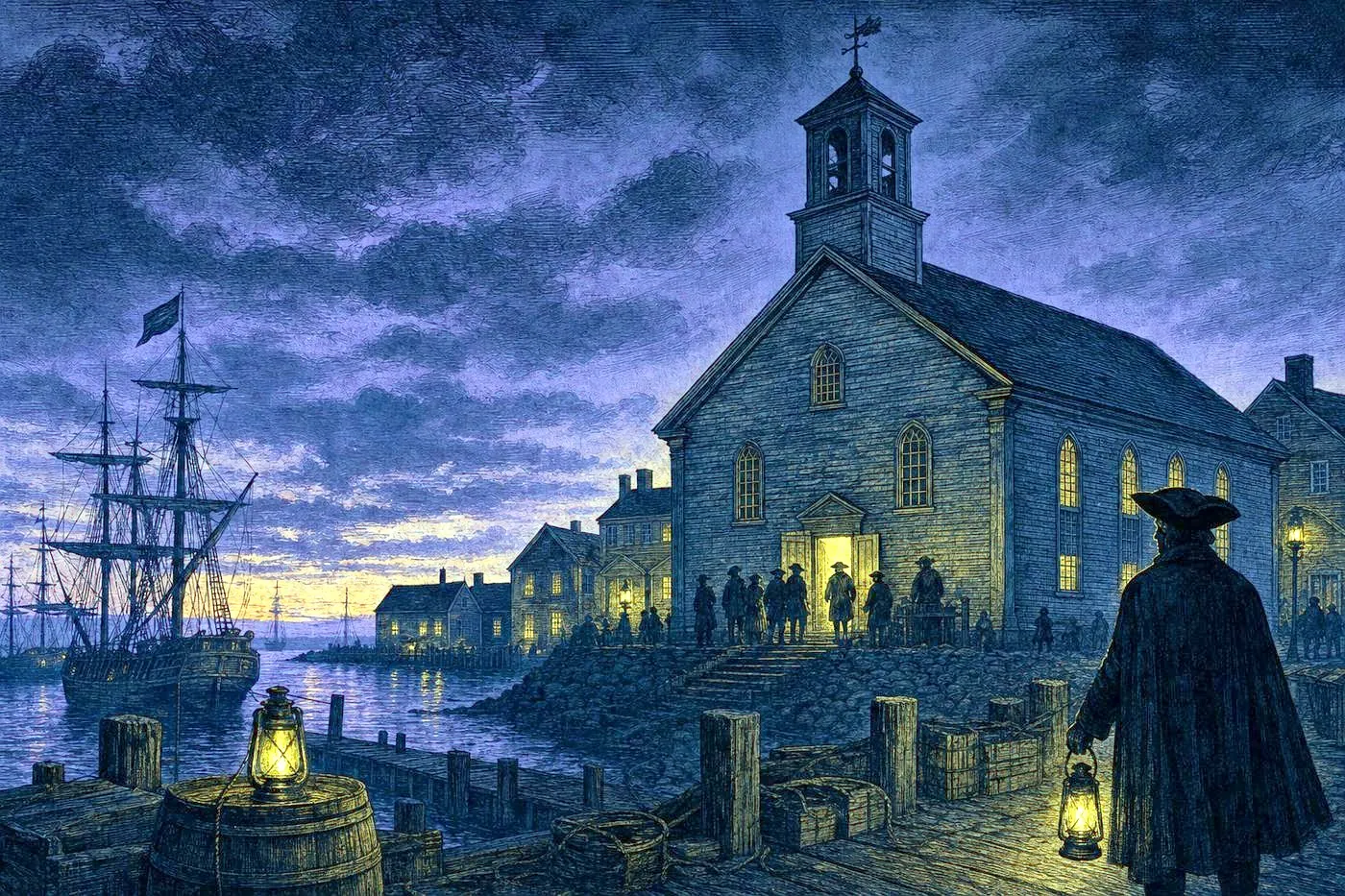
This Rhode Island history timeline traces the smallest state’s outsized role in American religious freedom, revolutionary independence, and its journey from colonial wealth to modern prosperity.
Founding and Religious Liberty
Rhode Island’s history begins in 1636 with Roger Williams, a Puritan minister banished from the Massachusetts Bay Colony for his controversial religious views and criticism of civil authority’s role in spiritual matters. Seeking refuge, Williams founded Providence at the head of Narragansett Bay on principles of religious tolerance and the separation of church and state: radical concepts in 17th-century colonial America. This sanctuary attracted religious dissenters and refugees, including Anne Hutchinson and others fleeing Puritan intolerance. In 1663, King Charles II granted a royal charter to Rhode Island and Providence Plantations, formally enshrining religious freedom and a more democratic governance structure than neighboring colonies. The charter’s protections made Rhode Island distinctive and attractive, establishing the colony’s enduring identity as a haven for religious minorities and free thinkers.

Commercial Wealth and the Slave Trade
Rhode Island’s geography, with its excellent natural harbors, positioned the colony as a center of Atlantic commerce. By the early 18th century, Newport had emerged as one of the wealthiest cities in North America, built substantially on the slave trade. Rhode Island merchants dominated the Atlantic slave trade, importing enslaved Africans and selling them throughout the Americas while profiting from the triangular trade in rum, molasses, and enslaved people. This wealth funded the mansions of Benefit Street and the commercial infrastructure that made Newport a cosmopolitan center, though it was built on slavery’s cruelty.
Independence and Constitutional Leadership
Rhode Island demonstrated early commitment to independence. On May 4, 1776, two months before the Continental Congress adopted the Declaration of Independence, Rhode Island’s colonial government formally renounced allegiance to the British Crown. Yet when the new nation proposed the Constitution in 1787, Rhode Island hesitated, fearing federal power might threaten state sovereignty and religious liberty. The state resisted ratification for nearly three years, finally ratifying the Constitution on May 29, 1790, as the last of the thirteen original states. This reluctance reflected Rhode Island’s deep commitment to the principles of local authority and individual liberty that had defined its colonial identity.
Today, Rhode Island balances its historic significance with a modern economy anchored by higher education, healthcare, and technology, while tourism preserves memories of its colonial and maritime heritage.
Frequently Asked Questions
Who founded Rhode Island and why?
Roger Williams founded Providence in 1636 after being banished from Massachusetts Bay Colony for his religious views. He established the colony on principles of religious tolerance and separation of church and state, making it a haven for religious dissenters.
What was significant about Rhode Island's charter?
The 1663 royal charter granted by King Charles II formally enshrined religious freedom and democratic governance in Rhode Island, distinguishing it from more restrictive Puritan colonies like Massachusetts.
Why was Rhode Island slow to ratify the Constitution?
Rhode Island feared that the new federal Constitution would threaten state sovereignty and individual liberties. The state resisted ratification for nearly three years, finally ratifying on May 29, 1790, as the last of the original thirteen states.
What was Rhode Island's role in the slave trade?
Rhode Island merchants, particularly based in Newport, dominated the Atlantic slave trade in the 18th century, importing enslaved Africans and profiting from the triangular trade. This trade created enormous wealth but was built on slavery's brutality.