This Massachusetts history timeline follows the state from the Indigenous nations who called the region home for thousands of years, through the Pilgrims’ 1620 landing and the rapid growth of the Massachusetts Bay Colony, to Massachusetts’s central role in igniting the American Revolution and its later national milestones. Each event below is dated and sourced so it can be cited with confidence.
Massachusetts History Timeline: Indigenous Nations and the Founding of Plymouth
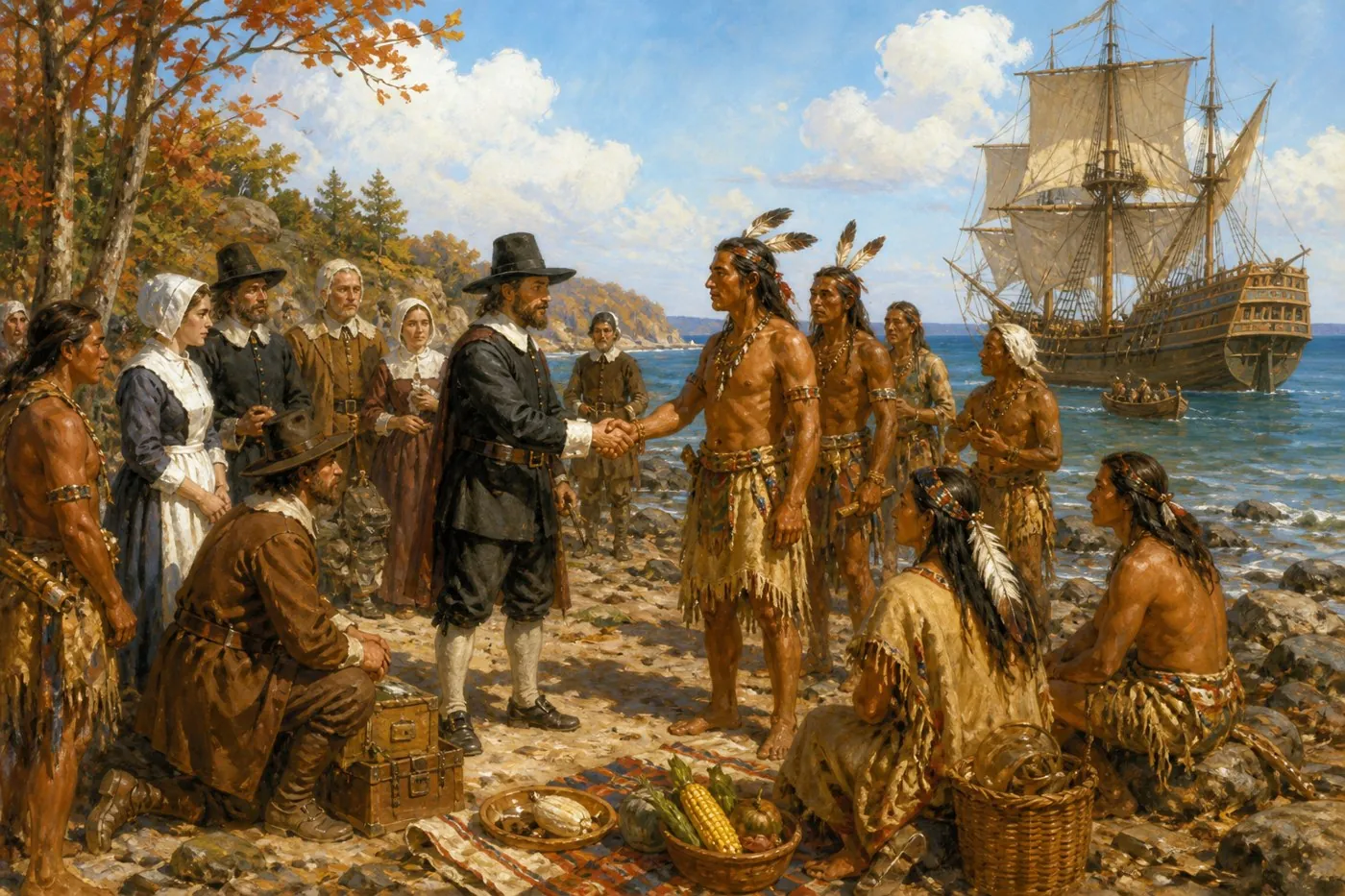
Long before European contact, the region that became Massachusetts was home to the Wampanoag, Massachusett, Nipmuc, and other Algonquian-speaking peoples, who built established networks of villages, farmland, and trade routes across the area. Historians note that a severe epidemic swept through coastal communities between roughly 1616 and 1619, killing a large share of the Native population shortly before sustained English settlement began. In 1620, a group of English religious Separatists, later remembered as the Pilgrims, crossed the Atlantic aboard the Mayflower and, before going ashore, signed the Mayflower Compact, an agreement to govern themselves by common consent. They founded Plymouth Colony on the coast, surviving a brutal first winter with help from the Wampanoag, including Tisquantum (Squanto) and the sachem Massasoit, with whom colonists formed an alliance commonly linked to the harvest gathering remembered as the first Thanksgiving. A decade later, in 1630, a larger group of Puritans led by John Winthrop established the Massachusetts Bay Colony and settled Boston as its capital, which quickly outgrew Plymouth and formally absorbed it in 1691.
Massachusetts History Timeline: Salem, Revolution, and the Road to Independence
As the colony matured, it was also shaken by crisis. In 1692, accusations of witchcraft in Salem Village spiraled into the Salem witch trials, in which more than 150 people were formally accused and 20 were executed before the hysteria subsided, an episode historians still study as a case of mass panic and legal failure. By the mid-18th century, Boston had become one of colonial America’s busiest ports and a center of resistance to British taxation. Tensions escalated through the 1760s and early 1770s, culminating on December 16, 1773, when colonists boarded British ships in Boston Harbor and dumped 342 chests of tea into the water in the protest known as the Boston Tea Party. Britain responded with the punitive Coercive Acts, and colonial militia began organizing.
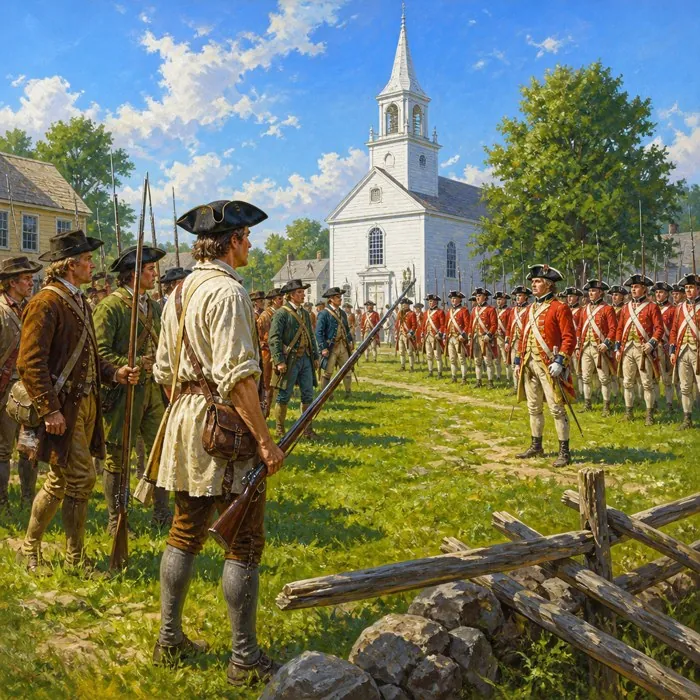
On April 19, 1775, British regulars marching to seize colonial arms clashed with militia at Lexington and then Concord, opening the Revolutionary War in what became known as “the shot heard round the world.” The subsequent Siege of Boston and the Battle of Bunker Hill that June cemented Massachusetts as the conflict’s opening battleground.
Massachusetts History Timeline: Statehood to the Modern Era
Massachusetts’s revolutionary momentum carried into the new republic. On February 6, 1788, it became the sixth state to ratify the US Constitution, doing so by a narrow convention vote while also proposing amendments that influenced the later Bill of Rights. In the 1780s, judicial rulings connected to the case of Quock Walker, an enslaved man who sued for his freedom, are widely credited with helping end slavery in the state under its 1780 constitution, making Massachusetts an early center of the abolitionist movement, home to figures such as William Lloyd Garrison and Frederick Douglass. The 19th century also brought industrialization, as textile mills in cities like Lowell drew workers from across the region and abroad, reshaping Boston and other cities well into the 20th century. Massachusetts continued to shape national life more recently: on May 17, 2004, following the state Supreme Judicial Court’s ruling in Goodridge v. Department of Public Health, it became the first US state to issue marriage licenses to same-sex couples, preceding nationwide recognition by more than a decade. Today, greater Boston remains a global center for higher education, medicine, and biotechnology.
Frequently Asked Questions
What does this Massachusetts history timeline cover?
This Massachusetts history timeline covers the state from the Indigenous Wampanoag and other Algonquian-speaking nations, through the 1620 founding of Plymouth Colony and the 1630 Massachusetts Bay Colony, the Salem witch trials, the American Revolution's Massachusetts roots, and into the 21st century.
Why is Plymouth Colony historically significant?
Plymouth Colony, founded in 1620 by English Separatists known as the Pilgrims, produced the Mayflower Compact, an early framework for self-government, and its survival depended on an alliance with the Wampanoag leader Massasoit.
Why is the Boston Tea Party important to Massachusetts history?
On December 16, 1773, colonists dumped 342 chests of British tea into Boston Harbor to protest taxation without representation, an act that provoked harsh British retaliation and helped set the colonies on the path to the Revolutionary War.
What modern milestone does this timeline include?
On May 17, 2004, Massachusetts became the first US state to legalize same-sex marriage, following the state Supreme Judicial Court's 2003 ruling in Goodridge v. Department of Public Health.