
This Oregon history timeline charts the state’s evolution from a remote territory reached only by dangerous overland trails to a Pacific power shaped by pioneer settlement, natural resources, and environmental stewardship.
Early Exploration and Missionary Settlement
The Oregon Territory existed in relative isolation until the 1830s, when American missionary efforts accelerated settlement. Marcus and Narcissa Whitman, along with other Protestant missionaries, established missions in the Willamette Valley starting in 1834, attracting settlers eager for religious community and arable land. These early outposts served as beachheads for subsequent waves of immigration. Indigenous peoples, including the Chinook, Nez Perce, Umatilla, and many others, had inhabited the Pacific Northwest for millennia before European contact; missionary settlement and subsequent American expansion displaced these nations from their ancestral territories.
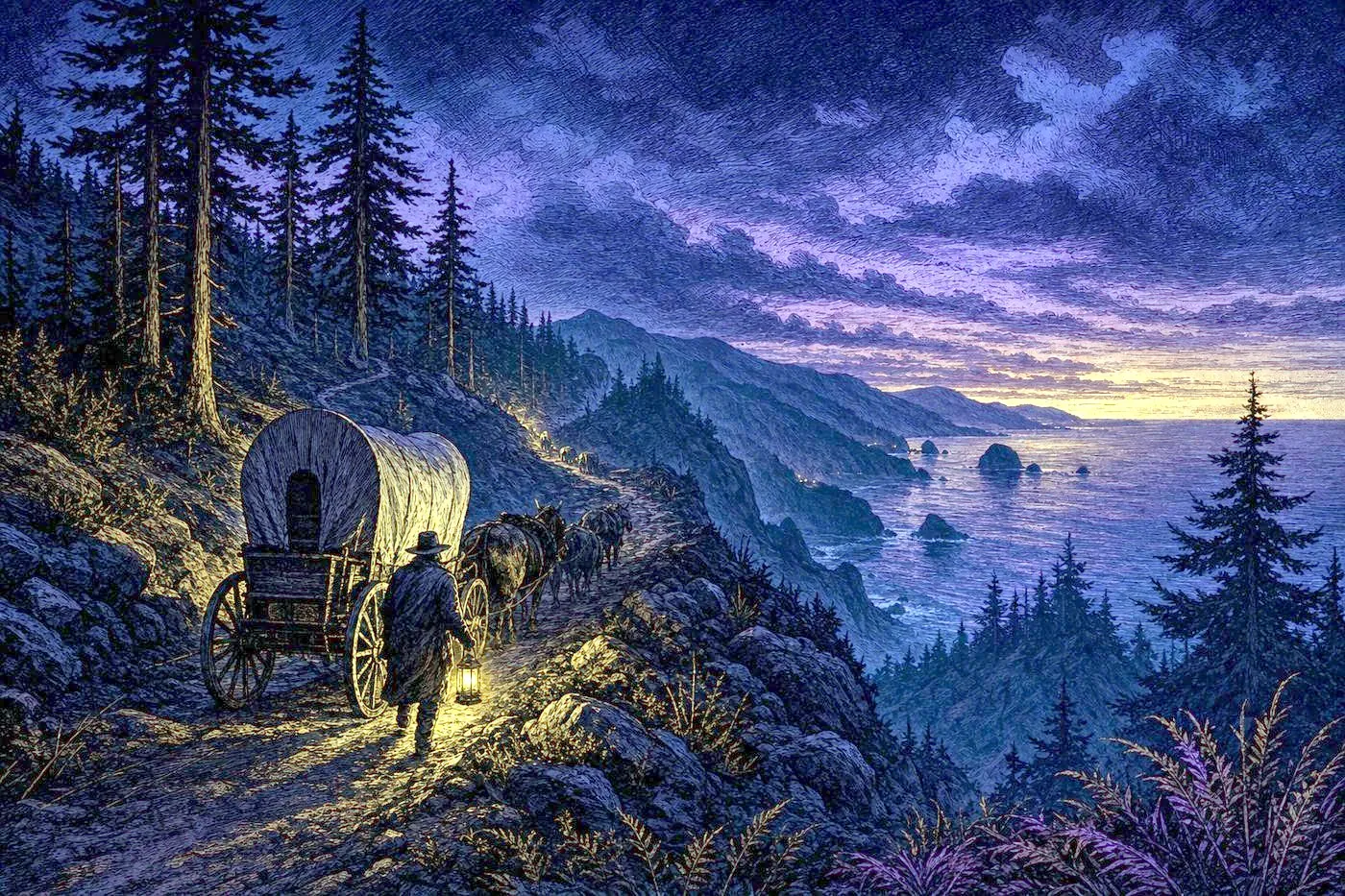
The famous Oregon Trail, which reached its peak of usage in the 1840s and 1850s, brought approximately 400,000 settlers across treacherous terrain over a 2,000-mile journey lasting four to six months. Families endured disease, accident, and harsh weather for the promise of free land at journey’s end, reshaping the region’s demographics and economy in a single generation.
Territorial Government and Statehood
Following international negotiations that resolved a territorial dispute with Britain, the Oregon Territory was formally established in 1848. The arrangement divided lands at the 49th parallel, with present-day Oregon, Washington, and Idaho falling under American jurisdiction. By 1859, Oregon’s population had grown sufficiently to support statehood; it entered the Union on February 14 as the 33rd state. The timing coincided with gold discoveries in eastern Oregon, which accelerated interior settlement and economic growth, further securing Oregon’s place in the American economy.
Natural Resources and Modern Development
For over a century, Oregon’s economy centered on timber harvesting, gold and other mineral extraction, and agriculture. The vast old-growth forests of the Pacific Northwest became the foundation of a logging industry that shaped the state’s identity. By the late 20th century, environmental consciousness prompted a shift toward sustainable forestry practices and ecosystem protection. Today, Oregon is known for both environmental leadership, where stringent land-use laws protect farmland and forests, and a thriving technology sector centered in Portland. The state balances its pioneer heritage with modern values, and outdoor recreation, including hiking and skiing, contributes significantly to the contemporary economy.
Frequently Asked Questions
What was the Oregon Trail?
The Oregon Trail was a 2,000-mile overland route from Missouri to Oregon's Willamette Valley that brought approximately 400,000 settlers west between 1841 and 1869. The journey took four to six months and was often deadly, but it was the primary means of reaching Oregon during the settlement era.
When did Oregon become a state?
Oregon was admitted to the Union on February 14, 1859, as the 33rd state, following territorial organization and sufficient population growth.
What role did missionaries play in Oregon's settlement?
Missionaries, including Marcus and Narcissa Whitman, arrived in Oregon Territory in the 1830s and established settlements that attracted further American settlers, particularly to the Willamette Valley. These missions served as early focal points for European and American presence in the region.
What was discovered in Oregon in 1860?
Gold was discovered in eastern Oregon, particularly in the Blue Mountains, driving a gold rush that accelerated population growth and economic development in Oregon's interior regions during the 1860s and beyond.