

This Wisconsin history timeline documents the region’s transformation from a frontier fur-trading center through territorial growth and statehood to its emergence as a Progressive stronghold and industrial powerhouse.
The Northwest Territory and Fur-Trade Era
Wisconsin was included in the vast Northwest Territory created by Congress in 1787, a region stretching from the Great Lakes to the Mississippi River and from the Canadian border to the Ohio River. The Northwest Ordinance of 1787 explicitly prohibited slavery, setting the stage for the region’s free-labor economy and eventual Republican alignment. Through the early 1800s, Wisconsin remained primarily a fur-trade frontier, with French and British traders establishing posts at Green Bay and other locations to conduct extensive trade with the Ojibwe, Ho-Chunk, Menominee, and other Indigenous nations who inhabited the region and controlled access to valuable furs. These traders, though often living in cross-cultural networks with Indigenous peoples, were the vanguard of European settlement that would ultimately displace Native peoples who had lived in Wisconsin for thousands of years.
Territorial Growth and Statehood
Settlement accelerated dramatically in the 1830s and 1840s, driven by the opening of new lands following forced Indigenous removal and the construction of transportation networks including railroads and canal systems. The Black Hawk War (1832), a conflict between Sauk leader Black Hawk and American forces, resulted in the displacement of Indigenous resistance and opened additional territory to European settlement. The Wisconsin Territory was officially organized in 1836, separated from Michigan Territory as population and commercial development justified formal governance. European settlement concentrated in southern and eastern regions, particularly around Milwaukee and Madison, where ports connected the region to eastern markets. On May 29, 1848, Wisconsin became the 30th state following completion of its state constitution. German and Scandinavian immigration beginning in the 1840s transformed the state’s ethnic composition and cultural identity.
The Progressive Era and Twentieth-Century Identity
Wisconsin’s defining political identity emerged in the early twentieth century through the Progressive movement led by Governor Robert M. La Follette, who took office in 1901. La Follette, a Republican increasingly critical of corporate power and machine politics, launched an ambitious reform agenda that became a national model. His reforms included the direct primary election system (allowing voters rather than party bosses to select candidates), railroad regulation to control freight rates, progressive income taxation, labor protection laws, and conservation initiatives protecting Wisconsin’s forests and waters. These reforms established Wisconsin as a national Progressive leader and template for political reform.
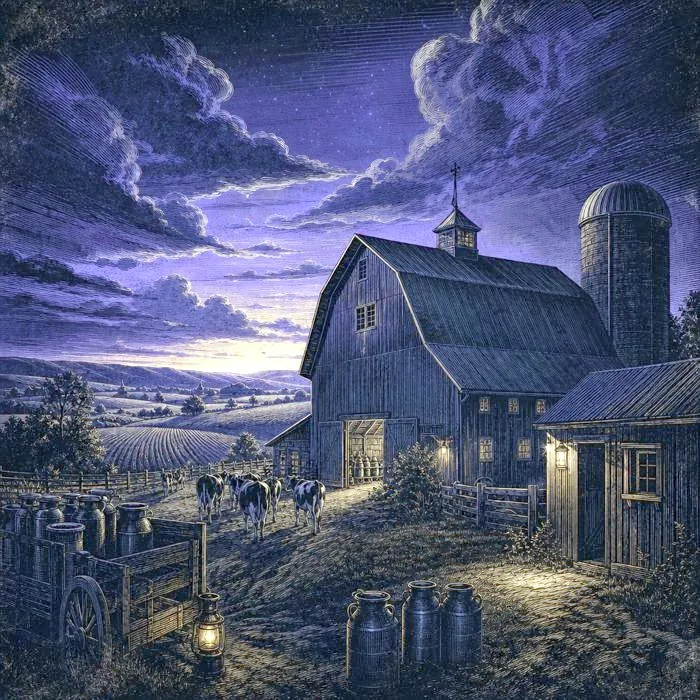
The state’s economy transformed during the twentieth century, anchored by agriculture, particularly dairy farming, which eventually made Wisconsin the nation’s leading dairy-producing state. Wisconsin’s cheese production became nationally legendary, and the state developed a cooperative system of dairy farmers and cheese makers that became a model for agricultural cooperation nationwide. Industrial cities like Milwaukee developed as manufacturing centers, with breweries, machine shops, and factories creating employment for immigrant workers. This combination of Progressive politics, agricultural strength, industrial growth, and strong labor organizing created a distinctive Wisconsin identity centered on pragmatism, public service, worker protection, and shared prosperity that persisted through the twentieth century and earned the state its progressive reputation.