
This Michigan history timeline traces the state’s story from the Anishinaabe nations of the Great Lakes and the 1701 French founding of Detroit through statehood in 1837 and into the industrial era that reshaped the state and the nation, sourced and dated so it can be cited with confidence.
Michigan History Timeline: Indigenous Nations and French Colonial Detroit
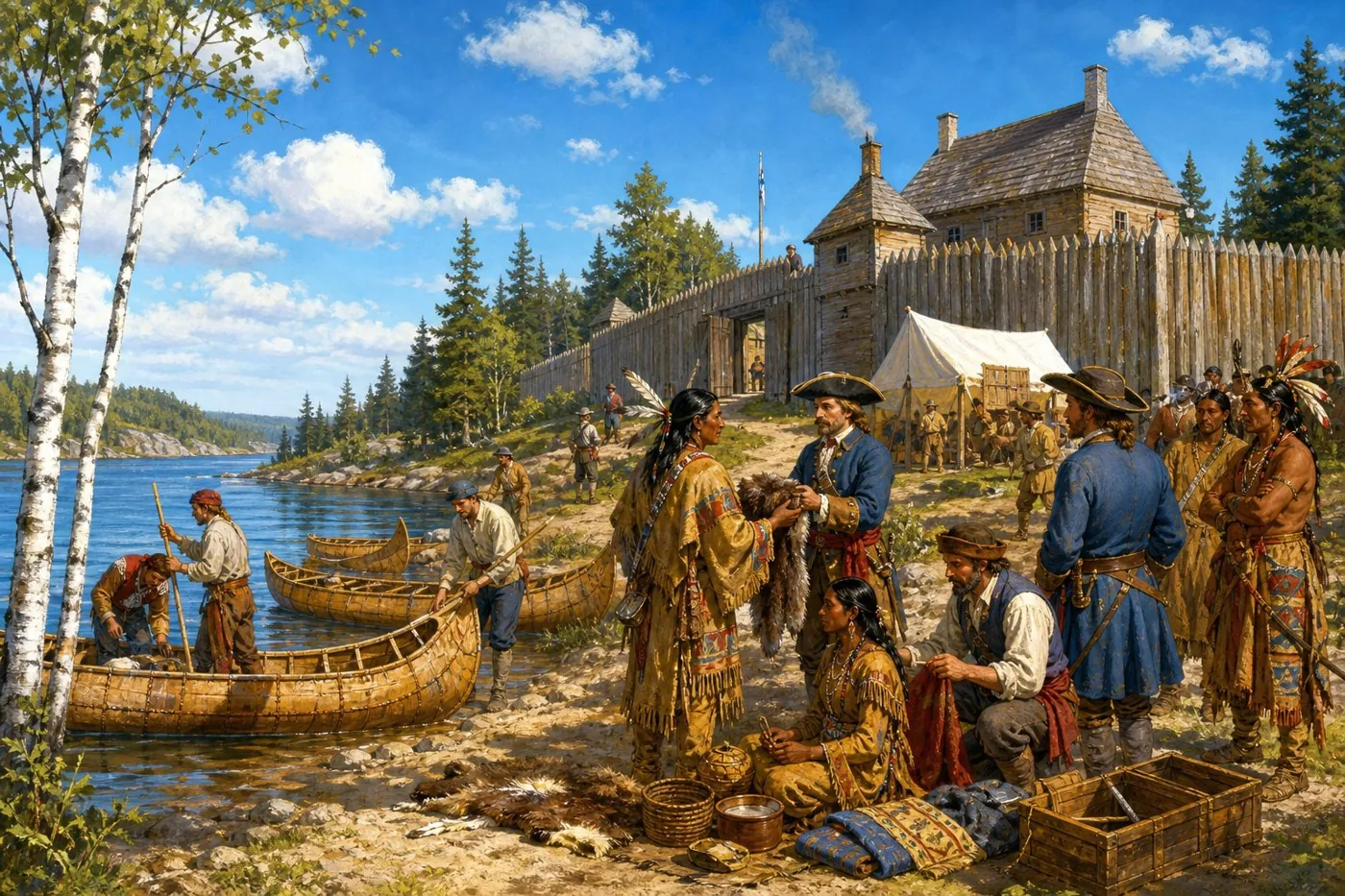
Long before European contact, the Great Lakes region that is now Michigan was home to the Anishinaabe peoples, whose Ojibwe (Chippewa), Odawa (Ottawa), and Potawatomi nations formed the Three Fires Confederacy, an alliance built on shared language and custom in which the Ojibwe served as keepers of ceremony, the Odawa as keepers of trade, and the Potawatomi as keepers of the council fire. French explorers and missionaries reached the region in the 17th century, drawn largely by the fur trade, but it was not until July 24, 1701, that Antoine de la Mothe Cadillac, leading roughly one hundred French colonists alongside Algonquian allies, established Fort Pontchartrain du Détroit on the strait (the “détroit”) linking Lakes Erie and St. Clair. The outpost, intended to secure French control of the fur trade and check British expansion in the interior, grew slowly through the early 18th century into the settlement that became Detroit, while French colonial administration extended a thin network of forts and missions across the wider Michigan territory.
Michigan History Timeline: British Rule to Statehood
French control of Detroit ended in 1760, when the fort surrendered to British forces during the French and Indian War, a transfer formalized by the 1763 Treaty of Paris that ceded France’s North American holdings to Britain. Although the 1783 Treaty of Paris ending the American Revolution assigned the region to the new United States, British troops did not actually withdraw from Detroit until 1796, following the Jay Treaty. The United States organized the Michigan Territory in 1805, and settlement accelerated in the following decades. Michigan’s path to statehood was complicated by the Toledo War of 1835–36, an almost bloodless boundary dispute with Ohio over a strip of land around present-day Toledo. Congress resolved the standoff in 1836 by admitting Michigan to the Union in exchange for surrendering its claim to the Toledo Strip and receiving roughly three-quarters of the Upper Peninsula instead, a trade that later proved highly favorable once the region’s copper and iron deposits were discovered. Michigan formally became the 26th state on January 26, 1837.
Michigan History Timeline: Industry, Labor, and the Modern Era
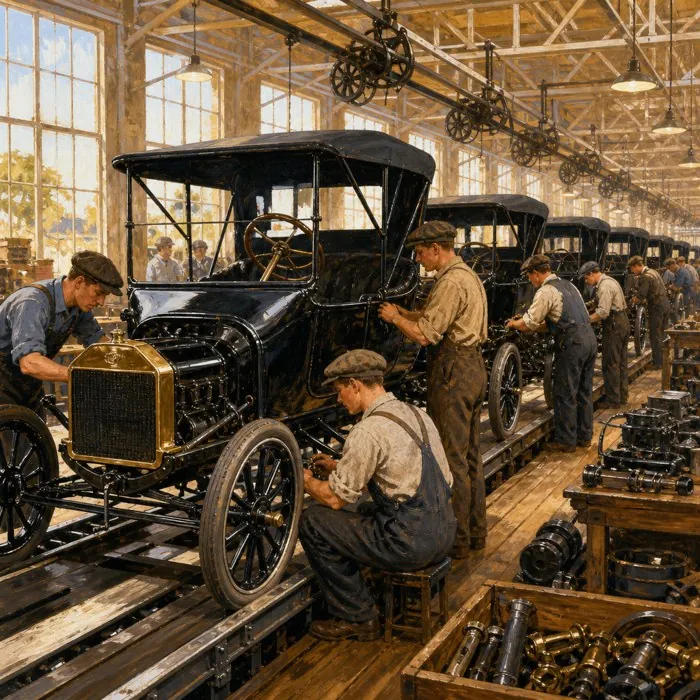
Michigan’s modern identity was forged by the rise of the automobile industry. Henry Ford founded the Ford Motor Company in Detroit in 1903, and in 1908 introduced the Model T, an affordable car whose production was transformed in 1913 by the moving assembly line at Ford’s Highland Park plant, which cut chassis assembly time from over twelve hours to roughly ninety minutes. Detroit became known worldwide as the Motor City as Ford, General Motors, and Chrysler concentrated automobile manufacturing in and around the city. That industrial power reshaped labor relations as well: from December 1936 to February 1937, autoworkers staged the Flint Sit-Down Strike against General Motors, occupying plants for 44 days in a standoff that forced GM to recognize the United Auto Workers and became a turning point for organized labor nationwide. Decades of later industrial decline and population loss culminated in Detroit filing for Chapter 9 bankruptcy on July 18, 2013, the largest municipal bankruptcy in US history at the time, before the city exited bankruptcy in December 2014 and began a widely noted downtown revitalization that continues into the present.
Frequently Asked Questions
What does this Michigan history timeline cover?
This Michigan history timeline covers the state from the Anishinaabe Three Fires Confederacy through the 1701 French founding of Detroit, British and American control of the territory, statehood in 1837, and the rise of the automobile industry through Detroit's 21st-century bankruptcy and recovery.
Why is Detroit's founding in 1701 significant?
Detroit began as Fort Pontchartrain du Détroit, established on July 24, 1701, by French officer Antoine de la Mothe Cadillac to secure the fur trade and French influence in the Great Lakes region, making it one of the oldest major settlements in the American interior.
What was the Toledo War and how did it affect Michigan statehood?
The Toledo War was an 1835–36 boundary dispute between Michigan and Ohio over a strip of land around Toledo. Congress resolved it by admitting Michigan as a state in 1837 in exchange for Michigan giving up its claim to the strip and receiving most of the Upper Peninsula instead.
Why is Michigan known for its automobile industry?
Henry Ford founded the Ford Motor Company in Detroit in 1903 and introduced the mass-produced Model T in 1908, and Detroit's concentration of major manufacturers earned it the nickname the Motor City, a legacy that still shapes Michigan's economy today.