
This South Dakota history timeline traces the region’s evolution from Dakota Territory through the frontier era, the gold rush, and statehood, with key dates verified against primary historical records.
The Dakota Territory and the Black Hills
South Dakota’s recorded American history began when the Dakota Territory was organized in 1861, encompassing a vast region including present-day Wyoming and Montana. The territory remained sparsely settled through the 1860s, but the transformative moment came in 1874 when a military expedition led by Lieutenant Colonel George Armstrong Custer confirmed rumors of gold in the Black Hills. The Black Hills held profound spiritual and economic significance for the Lakota, Cheyenne, and other Indigenous nations, who had rights to the region under the Fort Laramie Treaty of 1868. When gold was confirmed, prospectors and speculators flooded the region, openly violating the treaty and trespassing on lands promised to Indigenous peoples. The U.S. government attempted to purchase the Black Hills, but the tribes overwhelmingly rejected compensation. The government’s failure to enforce the treaty intensified tensions between settlers and Indigenous peoples, setting the stage for violent conflicts.

Statehood, Conflict, and the Frontier Close
By the 1880s, population in the Dakota Territory grew rapidly as settlers sought land under the Homestead Act, establishing farms and towns across the eastern regions. On November 2, 1889, President Benjamin Harrison made South Dakota the 40th state and North Dakota the 41st state simultaneously. However, tensions over the Black Hills and unfulfilled treaty obligations escalated into crisis by 1890. A religious movement called the Ghost Dance offered Lakota peoples spiritual hope for the return of their ancestral lands and way of life. U.S. military authorities viewed the movement with deep alarm, fearing it would spark rebellion. On December 29, 1890, troops of the 7th Cavalry opened fire on a Lakota encampment gathered at Wounded Knee Creek in South Dakota, killing an estimated 150 to 300 people, including women and children, in what became known as the Wounded Knee massacre. This tragedy marked the effective end of the Indian Wars era and symbolized the completion of Indigenous displacement in the Great Plains region.
The Twentieth Century and Mount Rushmore
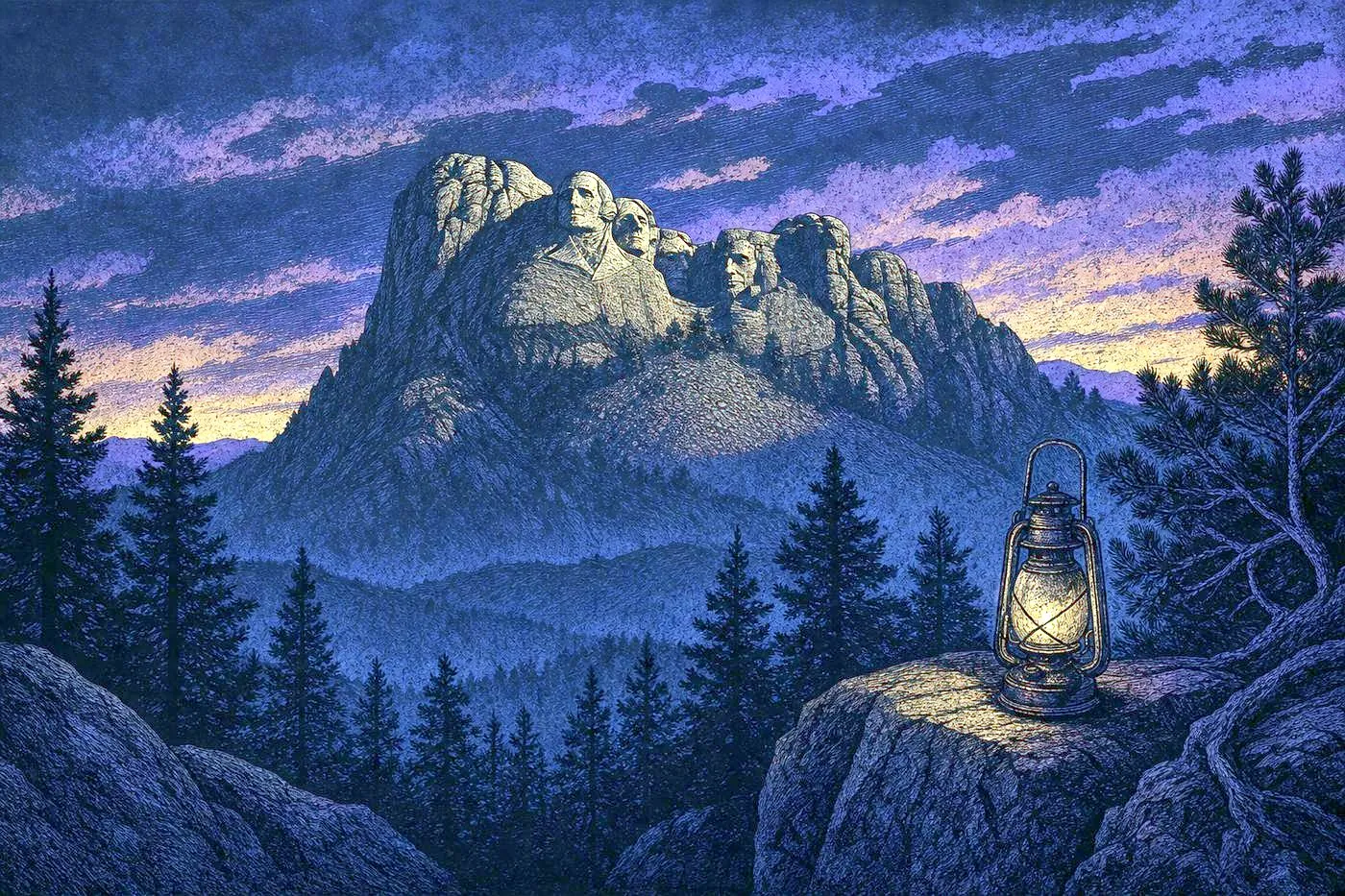
Early twentieth-century South Dakota developed through agriculture, ranching, and mining. Wheat farming dominated the eastern regions, creating a commodity-based agricultural economy. Gold and uranium mining operations developed in the Black Hills. The Great Plains suffered severe droughts during the 1930s Dust Bowl era, which devastated farming communities and forced many families to abandon their land. In 1927, sculptor Gutzon Borglum began carving Mount Rushmore into the Black Hills, a massive monument featuring the faces of four U.S. presidents. The project required fourteen years of construction and innovative engineering techniques, and upon completion became one of the nation’s most iconic landmarks. Mount Rushmore transformed South Dakota’s twentieth-century identity and economy through tourism. South Dakota’s modern history reflects the complex legacy of westward expansion, Indigenous dispossession, and ongoing negotiations between federal authority, state interests, and tribal nations over land, resources, and cultural preservation in the Northern Great Plains.