
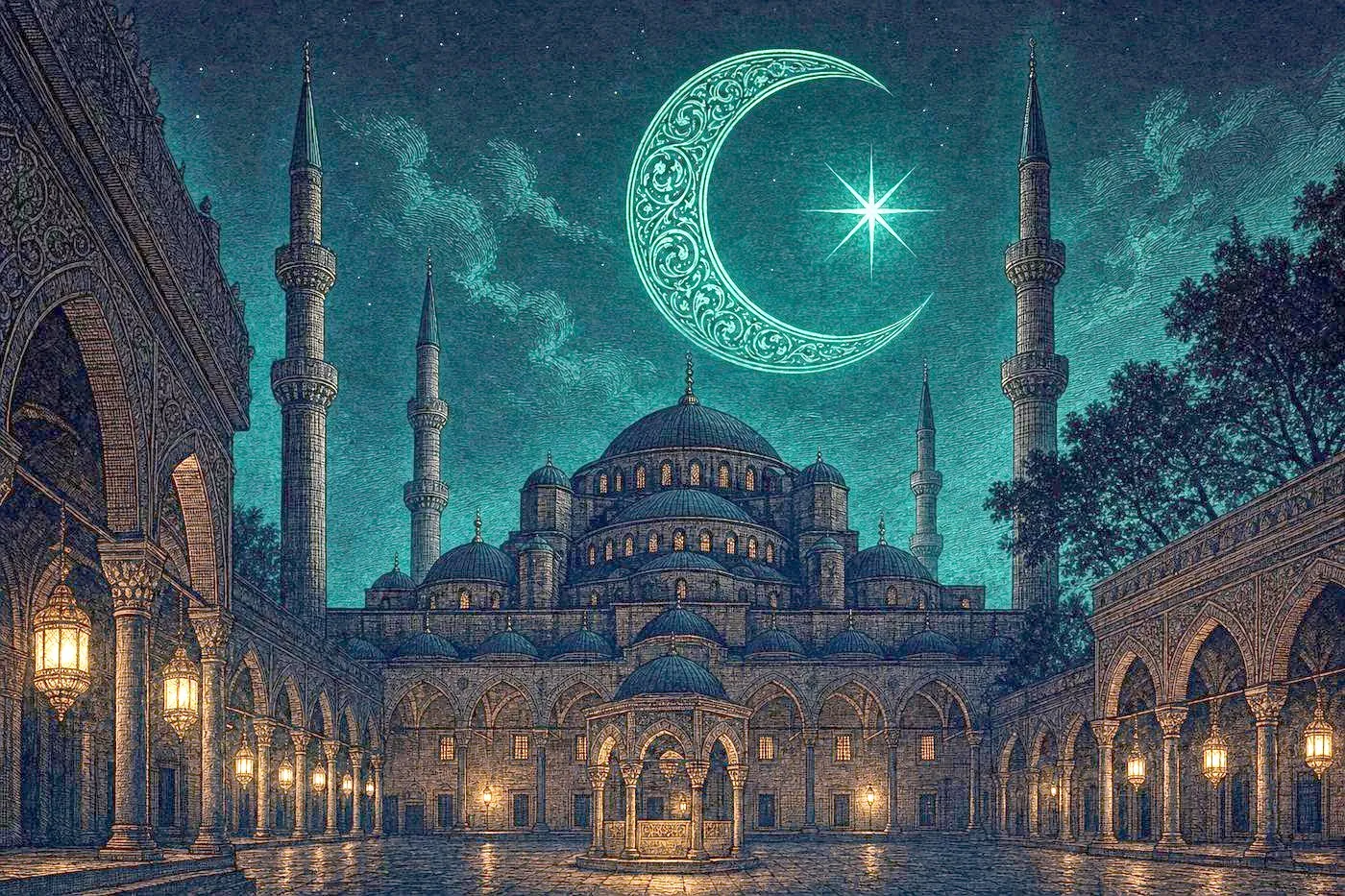
This Ottoman Empire timeline of events traces the empire from its founding as a small Anatolian principality in 1299 to its formal abolition in the early twentieth century, covering the sultans, conquests, and reforms that shaped more than six centuries of history. At its peak the empire stretched across three continents, from the Balkans to North Africa and deep into the Middle East, and its capital at Constantinople became one of the great cities of the early modern world. What follows is a dated, sourced walk through the reigns and turning points that make up this history, from Osman I’s founding campaigns to the empire’s dissolution after the First World War.
The Ottoman Empire Timeline: Founding to Conquest
Osman I founded the Ottoman dynasty in 1299, leading a small principality in northwestern Anatolia that expanded steadily at the expense of a weakening Byzantine Empire. Over the following century and a half, his successors pushed across the Balkans and consolidated territory on both sides of the Bosporus, building the administrative and military foundations, including the elite Janissary corps, that let a regional power grow into an empire. Read as an Ottoman Empire timeline of events, the decisive early turning point came in 1453, when Sultan Mehmed II captured Constantinople after a lengthy siege, ending the Byzantine Empire and giving the Ottomans a capital at the crossroads of Europe and Asia. The conquest reshaped trade routes, spurred a wave of construction and patronage in the newly renamed Istanbul, and marked the empire’s transition from a regional principality into a Mediterranean and Eurasian power.
Sultans and the Height of Ottoman Power

The reign of Suleiman the Magnificent, from 1520 to 1566, is generally treated as the empire’s territorial and cultural peak. Suleiman extended Ottoman control deep into Hungary and along the North African coast, reformed the legal code, and presided over a golden age of architecture and literature under architects such as Mimar Sinan. He was one of a long line of sultans whose courts combined military expansion with patronage of the arts, and any serious history of the Ottoman Empire timeline has to treat his reign as the high-water mark against which everything after it is measured. That high point had a hard edge, however: the failed Second Siege of Vienna in 1683 is widely regarded as the moment the empire’s long territorial expansion stalled and, gradually, began to reverse.
The Later History of the Ottoman Empire
By the nineteenth century, the empire was often described by European observers as the “sick man of Europe,” a label that reflected a long run of territorial losses and financial strain. Ottoman reformers responded with the Tanzimat, a program of modernizing reforms to law, education, and administration, beginning around 1839 and intended to strengthen the state from within. That reform effort fed into the 1908 Young Turk Revolution, which restored constitutional government and pushed for further change, though the empire’s underlying territorial problems continued. The Ottoman Empire entered the First World War in 1914 alongside the Central Powers, and its defeat in 1918 set in motion the events that ended it: the sultanate was formally abolished in 1922, and the Republic of Turkey was founded under Mustafa Kemal Atatürk in 1923. That is why any history of the Ottoman Empire timeline told honestly has to end not with a single dramatic collapse but with a decades-long process of reform, war, and reinvention.
Frequently Asked Questions
What does this Ottoman Empire timeline cover?
This Ottoman Empire timeline of events covers the empire's founding by Osman I in 1299, the 1453 conquest of Constantinople under Mehmed II, the reign of Suleiman the Magnificent, the failed 1683 siege of Vienna, the nineteenth-century Tanzimat reforms, and the empire's abolition in 1922–1923.
Who were the most important Ottoman sultans?
Osman I founded the dynasty, Mehmed II conquered Constantinople in 1453, and Suleiman the Magnificent, who reigned from 1520 to 1566, presided over the empire's territorial and cultural peak. Later sultans oversaw the Tanzimat reforms as the empire tried to modernize in the face of decline.
When did the Ottoman Empire end?
The sultanate was formally abolished in 1922, following defeat in the First World War, and the Republic of Turkey was founded under Mustafa Kemal Atatürk in 1923.
Why does the Ottoman Empire timeline matter to European history?
Because the empire controlled major trade routes and reached the gates of Vienna twice, its history of the Ottoman Empire timeline is closely tied to the political development of the Balkans, the Mediterranean, and much of the Middle East for six centuries.