This germany history timeline traces a story that runs from scattered Germanic and Frankish kingdoms through a centuries-old empire, a hard-won nineteenth-century unification, and the twentieth century’s catastrophes, to a divided nation’s peaceful reunification and its role in Europe today.
Germany History Timeline: Medieval Kingdoms and the Holy Roman Empire
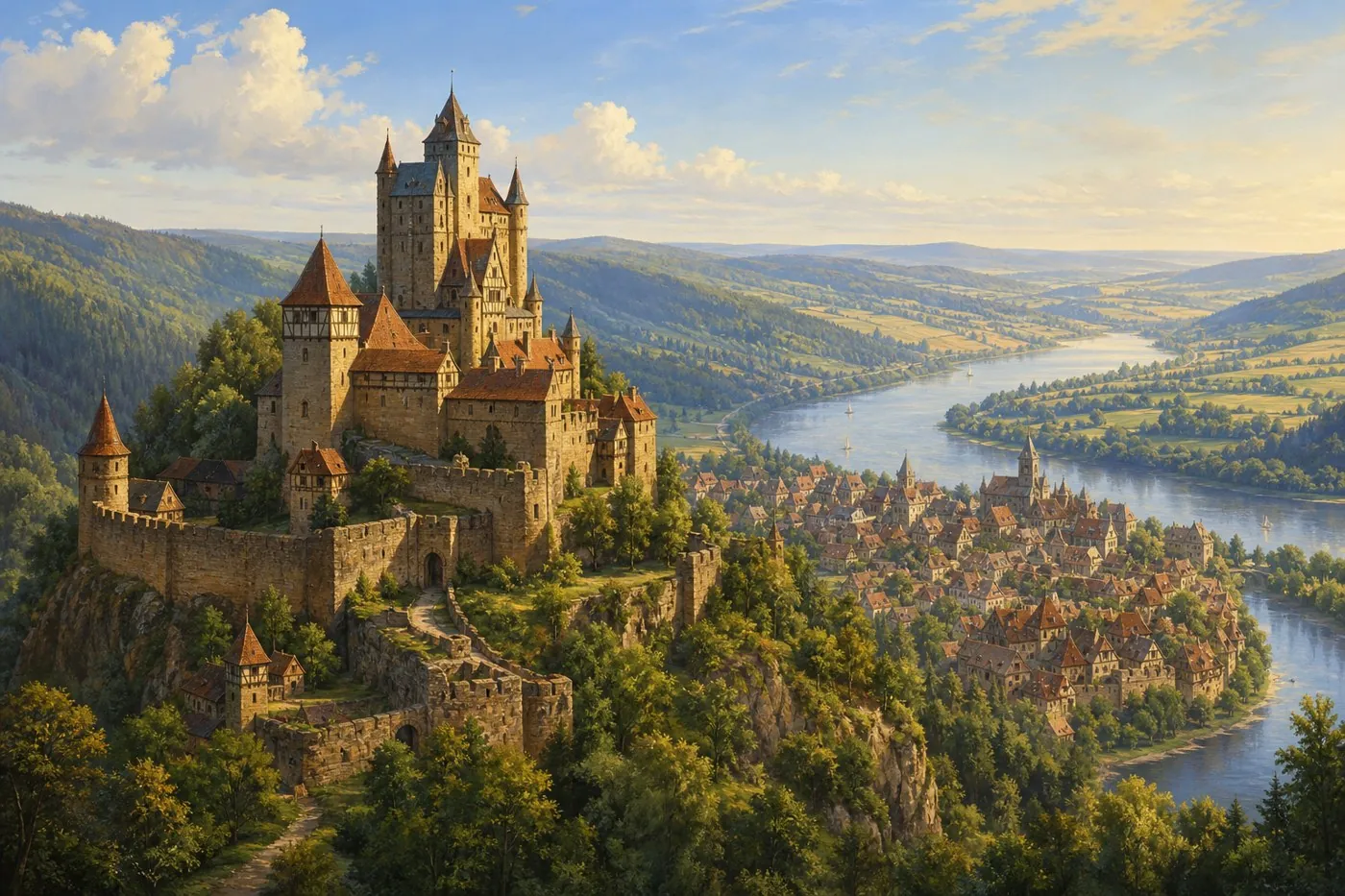
The lands that make up modern Germany were home to Germanic peoples long before any unified German state existed. Frankish king Charlemagne, crowned emperor in Rome in 800, brought much of the region under a single Christian empire, shaping how later rulers understood their own authority. In 962, Otto I, king of the East Frankish kingdom, was crowned emperor in Rome, an event conventionally treated as the founding of the Holy Roman Empire. Rather than a centralized state, the Empire was a loose federation of duchies, bishoprics, free cities, and principalities, nominally led by an elected emperor but governed locally by their own princes. This decentralized structure persisted for roughly eight centuries, shaping a Central Europe defined more by regional identity than national unity. Within that fragmented world, German-speaking territory became the birthplace of one of the most consequential religious movements in European history: in 1517, the monk Martin Luther’s public challenge to Catholic Church practices ignited the Protestant Reformation, dividing German lands along Catholic and Protestant lines for generations. The Holy Roman Empire itself was formally dissolved in 1806, amid the Napoleonic Wars, leaving a patchwork of independent German states behind.
Germany History Timeline: Unification and the World Wars
Throughout the nineteenth century, growing nationalist sentiment and Prussia’s rising military and economic power pushed toward German unification. Prussian chancellor Otto von Bismarck engineered a series of wars, against Denmark, Austria, and finally France, that positioned Prussia as the dominant German power. On 18 January 1871, King Wilhelm I of Prussia was proclaimed German emperor at the Palace of Versailles, uniting the German states into a single empire for the first time in history. This new empire rapidly industrialized and built a global colonial and military presence, tensions that contributed to the outbreak of World War I in 1914; Germany’s defeat in 1918 led to the fall of the monarchy and the fragile Weimar Republic. Economic crisis and instability during the Weimar years opened the door to the Nazi Party, which seized power in 1933. Nazi Germany launched World War II in 1939 and carried out the Holocaust, the systematic murder of six million Jews and millions of other victims. Germany’s total defeat in 1945 left the country occupied and devastated, closing one of the darkest chapters in modern history.
Germany History Timeline: Division, Reunification, and Modern Germany
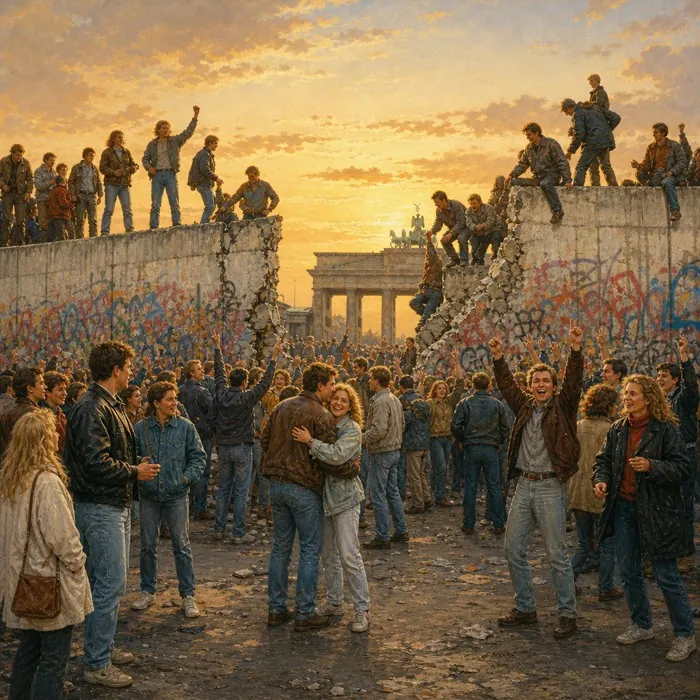
Post-war Germany was divided among the victorious Allied powers, and Cold War tensions soon hardened that division into two separate states: the Western-allied Federal Republic of Germany, founded in May 1949, and the Soviet-backed German Democratic Republic, founded in October 1949. Berlin itself, though located deep in East German territory, was similarly split, and in 1961 East Germany built the Berlin Wall to stop citizens fleeing west, turning the city into the Cold War’s most visible symbol of division. West Germany developed into a prosperous democracy and a founding member of what became the European Union, while East Germany remained under one-party communist rule. That division ended dramatically in 1989, when, amid a wave of pro-democracy movements across Eastern Europe, East German authorities opened the country’s borders on 9 November, and jubilant crowds began tearing down the wall. Formal reunification followed within a year: on 3 October 1990, the German Democratic Republic joined the Federal Republic of Germany, a date now marked annually as German Unity Day. In the decades since, reunified Germany has become one of Europe’s leading economic powers, working through lasting disparities between its eastern and western regions while playing a central role in the European Union.
Frequently Asked Questions
When did Germany become a unified country?
Germany first unified as a single state on 18 January 1871, when King Wilhelm I of Prussia was proclaimed German emperor following Prussia's military victories under chancellor Otto von Bismarck.
Why was Germany divided after World War II?
Post-war occupation by the Allied powers hardened into Cold War division, producing the Western-allied Federal Republic of Germany and the Soviet-backed German Democratic Republic, both founded in 1949 — a split that lasted until reunification in 1990.
When did the Berlin Wall fall?
The Berlin Wall opened on 9 November 1989, after East German authorities announced citizens could cross the border freely, and crowds began dismantling the wall that had divided the city since 1961.
When did East and West Germany reunify?
East and West Germany formally reunified on 3 October 1990, when the German Democratic Republic joined the Federal Republic of Germany as additional states, a date now celebrated as German Unity Day.