
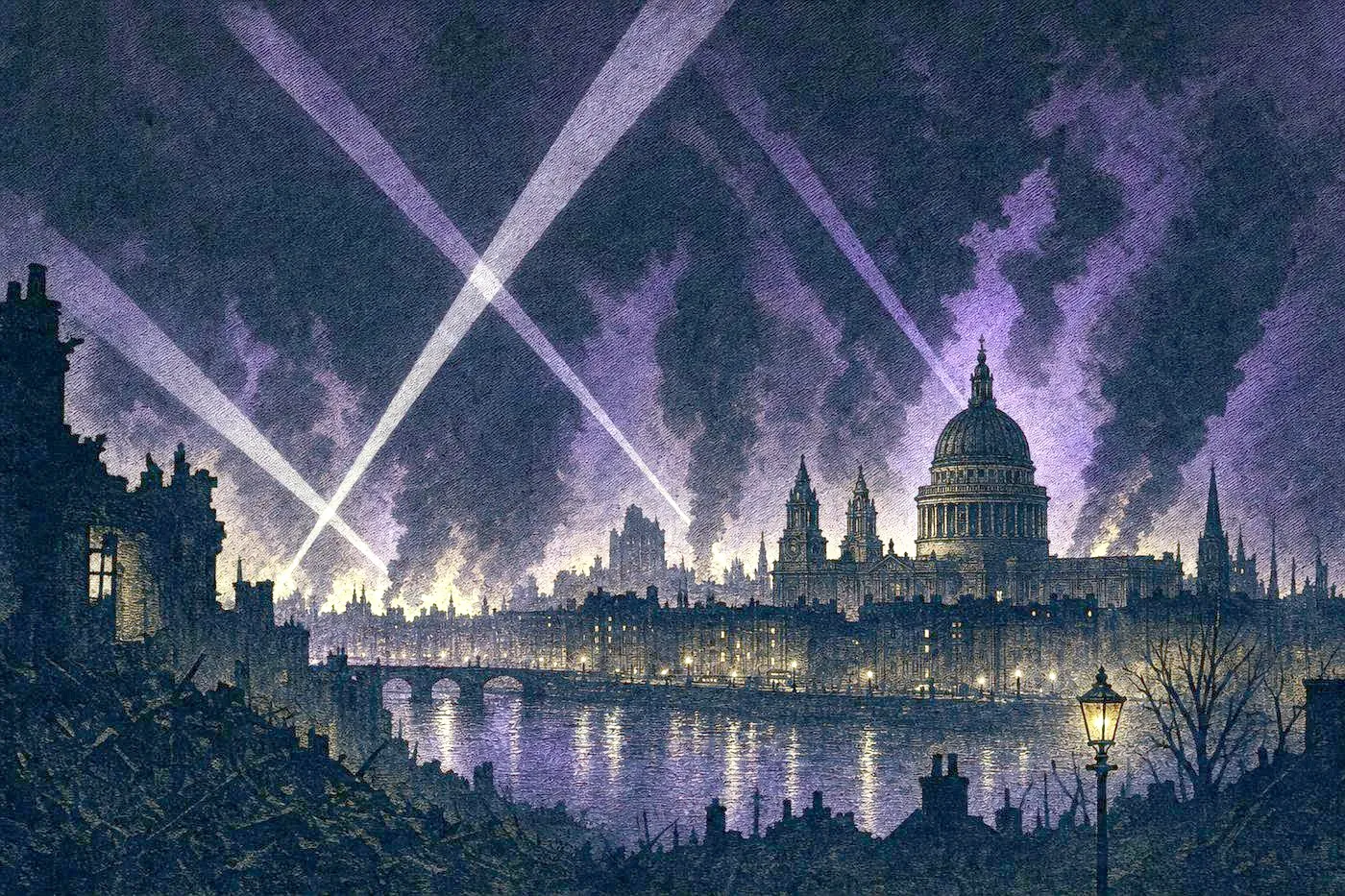
This World War II timeline covers the conflict’s major turning points from the 1939 invasion of Poland through Japan’s surrender in 1945, drawing on standard historical reference sources.
The War Begins, 1939–1941
Germany’s invasion of Poland on September 1, 1939, led Britain and France to declare war two days later, beginning the conflict in Europe. After a period of relative inaction on the Western Front through the winter, Germany launched a rapid campaign in the spring of 1940 that defeated the Netherlands, Belgium, and France within weeks, leaving Britain to fight on alone. The Battle of Britain that followed saw the Royal Air Force repel a sustained German bombing campaign, denying Germany the air superiority it needed for a cross-Channel invasion. The war expanded dramatically in 1941: Germany launched Operation Barbarossa, a massive invasion of the Soviet Union, in June, opening what became the war’s largest and most costly front, and in December, Japan’s attack on the US naval base at Pearl Harbor brought the United States into the war on both the Pacific and European fronts. Elsewhere, Italy under Benito Mussolini had entered the war alongside Germany in June 1940, and fighting spread across North Africa, the Balkans, and the Mediterranean, while Japan’s rapid conquests across Southeast Asia and the Pacific through late 1941 and early 1942 brought much of that region under Axis occupation.
Turning Points, 1942–1943
By 1942, the momentum of the early Axis advances had begun to slow. In the Pacific, the US Navy’s victory at the Battle of Midway in June 1942 blunted Japanese naval power and shifted the strategic initiative toward the Allies. On the Eastern Front, German forces became bogged down in a prolonged and brutal battle for the city of Stalingrad; the Soviet counteroffensive that encircled and ultimately destroyed the German Sixth Army, concluding in February 1943, is widely regarded by historians as one of the war’s decisive turning points. Combined with the Allied invasion of North Africa and, later, Italy, these campaigns marked the point at which German and Japanese forces shifted from offense to defense on most fronts. The Eastern Front, in particular, absorbed the largest share of Germany’s military resources and inflicted the majority of its casualties, and the scale of fighting there, along with the accompanying atrocities against civilians, prisoners of war, and, in territories under German occupation, the systematic murder of six million European Jews and millions of other victims in the Holocaust, remains central to any accounting of the war’s human cost.
Liberation and Endgame, 1944–1945
The Allied landings in Normandy on June 6, 1944, known as D-Day, opened a major Western Front and began the liberation of occupied France, while Soviet forces continued to advance from the east. Over the following year, Allied armies closed in on Germany from both directions; Berlin fell to Soviet forces in late April 1945, Adolf Hitler died by suicide, and Germany’s unconditional surrender took effect on May 8, 1945, marking VE (Victory in Europe) Day. The war in the Pacific continued for several more months, with intense fighting at places such as Iwo Jima and Okinawa. In August 1945, the United States dropped atomic bombs on Hiroshima and Nagasaki, the only use of nuclear weapons in warfare to date; estimates of the resulting deaths vary considerably and are generally cited as tens of thousands in each city within the following months, with the total continuing to rise from radiation-related illness in subsequent years. Japan announced its surrender on August 15, 1945, and the formal surrender ceremony aboard the USS Missouri on September 2, 1945, is generally marked as the war’s end. Taken as a whole, World War II is considered the deadliest conflict in human history, with total deaths (combining military losses, civilian casualties, and genocide) commonly estimated at somewhere between 70 and 85 million people worldwide, though exact figures remain difficult to establish and vary between sources.