This salem witch trials timeline traces the panic that gripped Salem Village, Massachusetts, in 1692, when accusations of witchcraft, fueled by fear and flawed legal procedure, led to the deaths of twenty people. It follows the outbreak from its first unexplained symptoms through the trials, the executions, and the colony’s long process of acknowledging what had gone wrong.
Salem Witch Trials Timeline: Outbreak in Salem Village
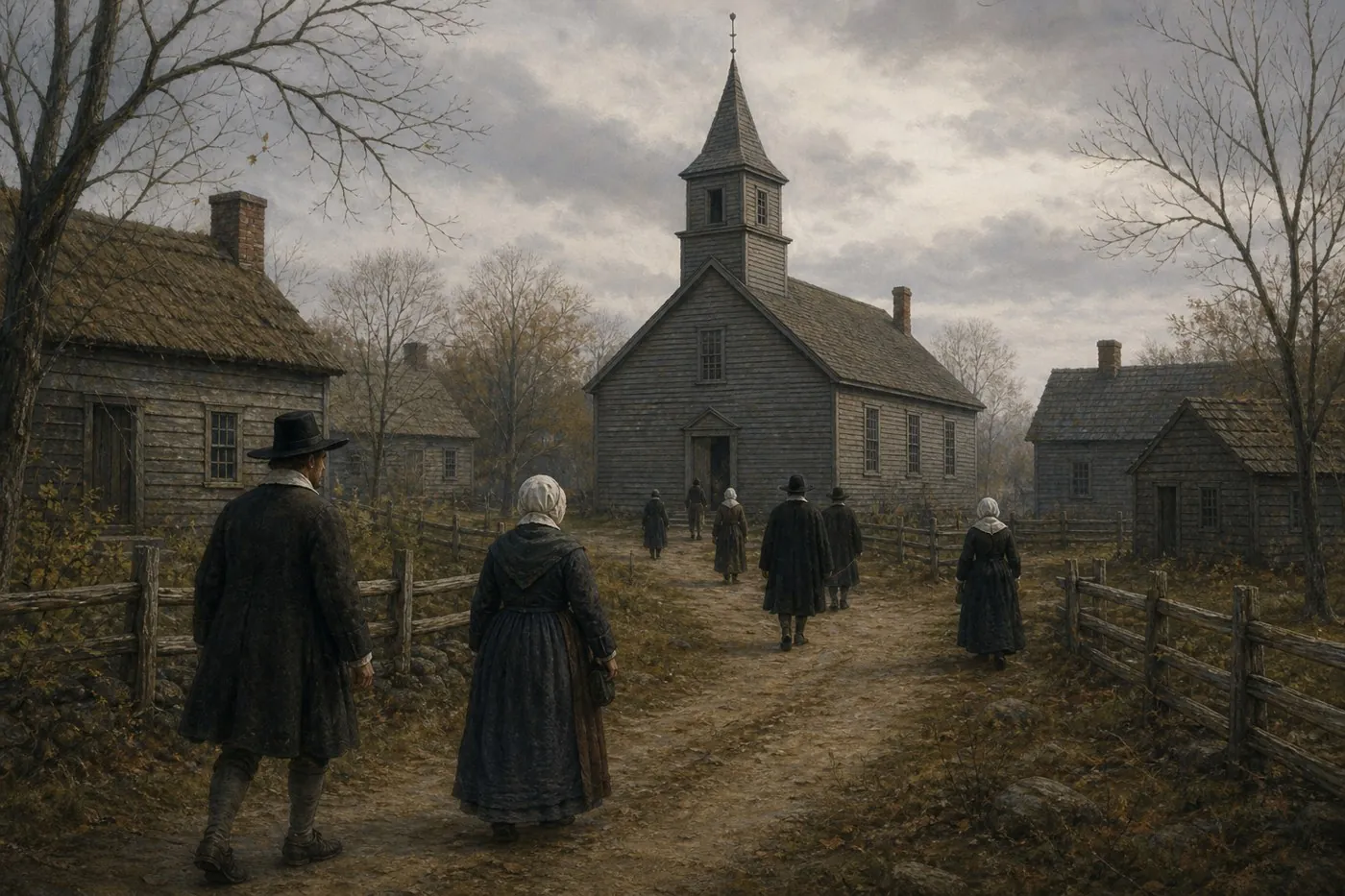
The crisis began in January 1692, when Betty Parris and Abigail Williams, the daughter and niece of Salem Village minister Samuel Parris, began suffering fits that a local physician could not diagnose medically and attributed instead to supernatural affliction. Under pressure from adults to name a cause, the girls accused three women: Tituba, an enslaved woman in the Parris household, and Sarah Good and Sarah Osborne, both already viewed with suspicion in the village. All three were arrested in late February 1692. Tituba’s confession, in which she described encounters with the devil and other witches, intensified rather than calmed the panic, and further accusations followed through March and April as more villagers, including church members in good standing, were named. As the number of accused grew beyond what existing courts could process, Governor William Phips established a special Court of Oyer and Terminer in May 1692 to hear the cases, staffed by judges including William Stoughton and Samuel Sewall. The court would go on to rely heavily on spectral evidence — testimony that a person’s specter had appeared to and tormented an accuser, evidence that could not be independently verified or contested by the accused, a procedural weakness that later critics identified as central to the trials’ injustice.
Salem Witch Trials Timeline: Trials and Executions
The Court of Oyer and Terminer handed down its first conviction on June 2, 1692, against Bridget Bishop, and she was hanged eight days later on June 10, becoming the first of the trials’ victims. Five more people were hanged in July, five in August — including George Burroughs, a former Salem Village minister whose recitation of the Lord’s Prayer at the gallows, believed impossible for a witch to say correctly, briefly unsettled the crowd — and eight more in September, the deadliest month of the crisis. On September 19, 1692, farmer Giles Corey was pressed to death under heavy stones over two days after refusing to enter a plea, a method meant to compel testimony that instead killed him. In total, historians count twenty people executed in the Salem witch trials — nineteen hanged and one pressed to death — while at least five more accused people died in jail awaiting trial, amid overcrowded and unsanitary conditions.
Salem Witch Trials Timeline: Collapse of the Trials and Their Legacy
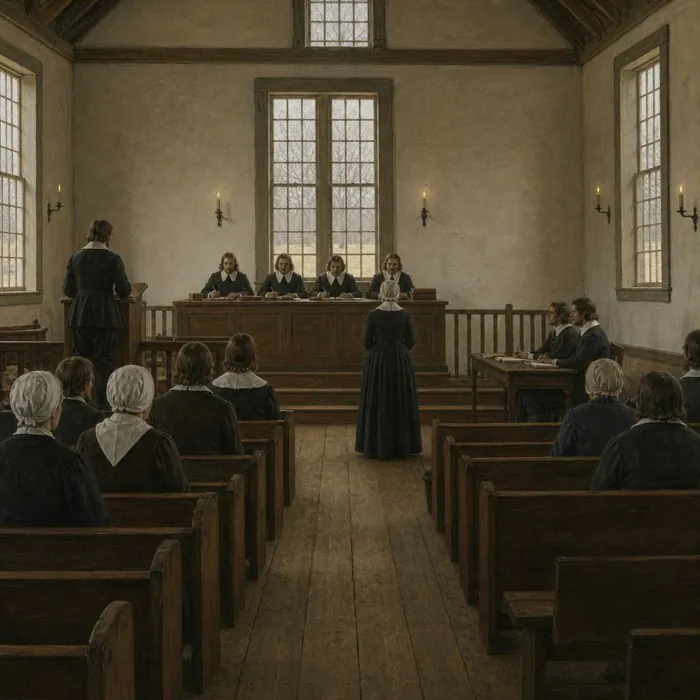
Public confidence in the trials began to erode by autumn 1692, as accusations reached increasingly prominent and clearly implausible targets, and as ministers and officials voiced growing doubt about the reliability of spectral evidence. Governor Phips dissolved the Court of Oyer and Terminer on October 29, 1692, replacing it with a Superior Court of Judicature that barred spectral evidence from being admitted; that reconstituted court convicted only three of the roughly fifty-six defendants who came before it, and Phips ultimately pardoned those still held on witchcraft charges by May 1693, ending the prosecutions. The colony’s reckoning with its actions unfolded slowly over the centuries that followed. In 1711, the Massachusetts legislature passed a bill restoring the good names of many of the accused and granting financial restitution to their families. It took until 1957 for Massachusetts to issue a formal apology for the trials, a resolution later amended in 2001 to formally exonerate several victims it had initially omitted. The final chapter closed only in July 2022, when Elizabeth Johnson Jr. — whose name had been left off the earlier resolutions for reasons that remain unclear — was formally exonerated following a campaign led by a class of Massachusetts civics students, bringing a legal process begun in 1692 to a close three hundred and thirty years later.
Frequently Asked Questions
What triggered the Salem witch trials?
The trials began after two young girls in the household of minister Samuel Parris experienced unexplained fits in January 1692 and, under questioning, named local women as the cause of their suffering.
How many people were executed in the Salem witch trials?
Twenty people were executed — nineteen were hanged and one, Giles Corey, was pressed to death — and at least five more accused people died in jail while awaiting trial.
Why did the Salem witch trials end?
Growing public and clerical doubt over the reliability of spectral evidence led Governor William Phips to dissolve the Court of Oyer and Terminer in October 1692 and bar such testimony from its replacement court, after which convictions and executions stopped.
Have the Salem witch trials victims been formally exonerated?
Massachusetts restored victims' names and paid restitution as early as 1711, issued a formal apology in 1957, and completed the process in July 2022 when the last convicted defendant, Elizabeth Johnson Jr., was officially exonerated.