
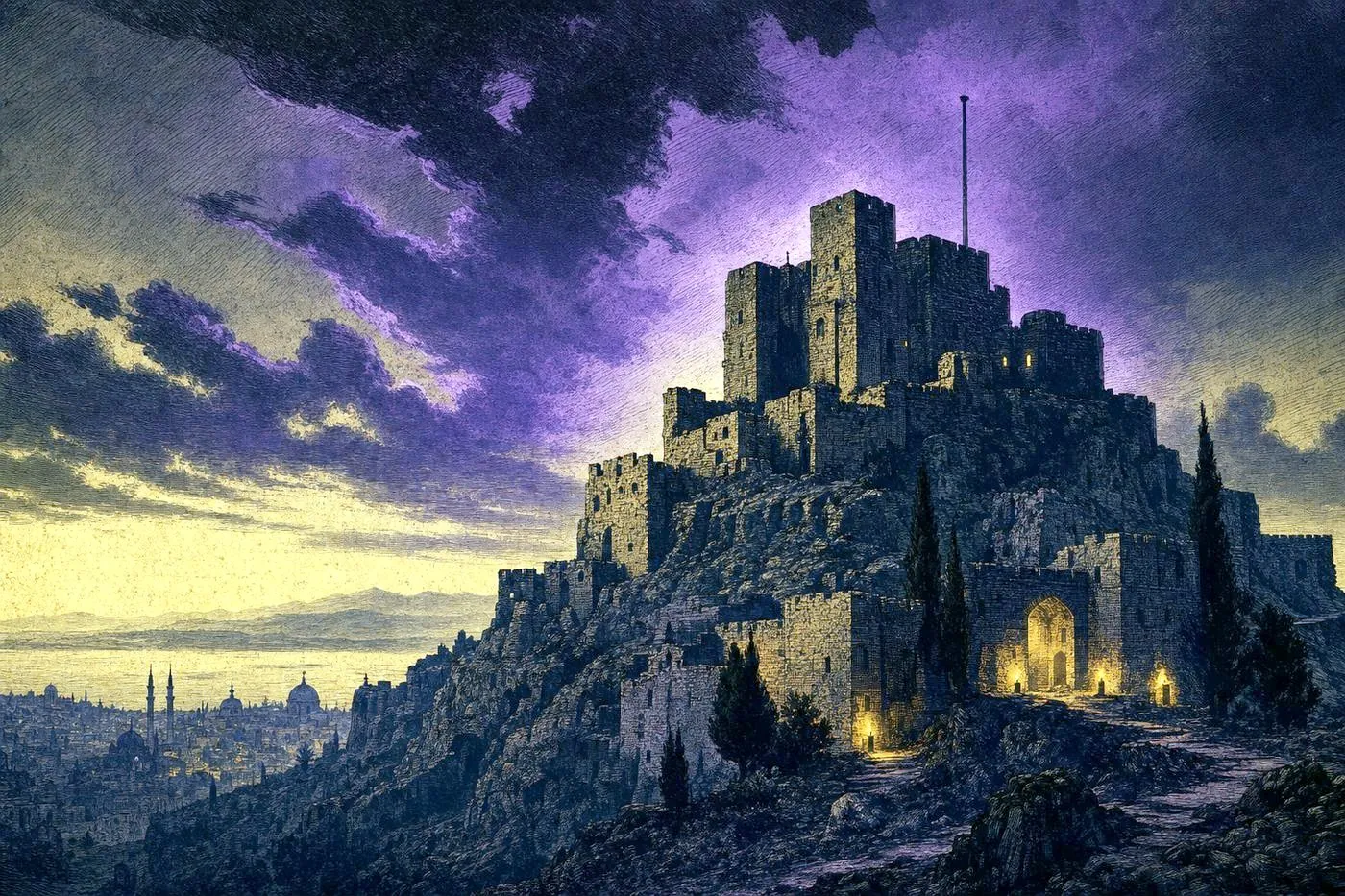
This timeline of the Crusades traces the series of religious wars fought between roughly 1095 and 1291, from Pope Urban II’s initial call to arms through the fall of the last Crusader stronghold in the Levant.
Origins and the First Crusade, 1095–1099
The Crusades began in 1095, when Pope Urban II, responding to a request for military assistance from the Byzantine Emperor Alexios I and to reports of restricted Christian access to holy sites in Jerusalem, called on Western European Christians at the Council of Clermont to take up arms and march east. The resulting First Crusade, a mix of nobles, knights, and ordinary pilgrims, made its way through Byzantine territory and Anatolia, capturing the cities of Antioch and, in July 1099, Jerusalem itself after a difficult siege. The conquest was followed by widespread killing of the city’s Muslim and Jewish inhabitants, an episode described in some contemporary Crusader chronicles and long remembered in the region’s historical memory, though the precise scale is disputed among historians. In the aftermath, the Crusaders established a set of Crusader states along the eastern Mediterranean coast, including the Kingdom of Jerusalem, the County of Edessa, the Principality of Antioch, and the County of Tripoli, which would persist in various forms for nearly two centuries. These states depended heavily on continued military support and pilgrim traffic from Europe, and their survival was aided in part by political divisions among neighboring Muslim powers in the decades following the First Crusade.

Saladin, the Loss of Jerusalem, and Later Crusades, 1147–1204
Subsequent Crusades were shaped largely by efforts to defend or recover these territories. The Second Crusade, launched in 1147 after the fall of the Crusader County of Edessa, failed to achieve its goals, including a botched siege of Damascus. The most significant reversal for the Crusader states came in 1187, when the Kurdish Muslim leader Saladin, having unified much of Egypt and Syria under his rule, decisively defeated Crusader forces at the Battle of Hattin and went on to retake Jerusalem later that year. The Third Crusade, which followed, brought European monarchs including Richard I of England into direct conflict with Saladin; although it failed to recapture Jerusalem, it secured a treaty preserving Christian access to the city and control of a coastal strip of territory. The Fourth Crusade, launched in 1202, took a notably different turn: diverted by debts, political intrigue, and the ambitions of the Republic of Venice, its forces attacked and sacked Constantinople, the capital of the Byzantine Empire, in 1204, an act that inflicted lasting damage on relations between the Latin and Orthodox Christian worlds. Rather than reinforcing the Crusader states in the Levant, the Fourth Crusade instead established a short-lived Latin Empire centered on Constantinople, further fragmenting Byzantine power at a time when a unified Christian front against expanding Muslim states in the region might have proven more advantageous to the Crusader cause.
Decline and the End of the Crusader States, 1291
Later Crusades in the thirteenth century, including expeditions led by figures such as Louis IX of France, achieved limited or no lasting success, and the Crusader territories in the Levant gradually contracted under pressure from the Ayyubid and, later, Mamluk states of Egypt and Syria. The Mamluk conquest of the port city of Acre in 1291, after a lengthy siege, eliminated the last major Crusader stronghold on the mainland and is generally treated by historians as the effective end of the Crusader states in the region, even though smaller Crusading expeditions and related military orders continued elsewhere for some time afterward. The Crusades’ long-term legacy remains a subject of extensive historical debate, encompassing their effects on trade, cultural exchange, and relations between the Christian and Muslim worlds that extended well beyond the campaigns themselves. Beyond the Levant, related Crusading campaigns were also directed against other groups, including the Baltic pagans, the Cathars of southern France, and Muslim rulers on the Iberian Peninsula during the Reconquista, reflecting how the Crusading movement evolved into a broader instrument of medieval papal and royal policy rather than remaining confined to a single theater of war.