This Russian Revolution timeline of events traces the collapse of the three-century Romanov monarchy in 1917 and the Bolshevik seizure of power that followed, tracking the key dates historians use to mark Russia’s turn from empire to Soviet state. As a timeline of the Russian Revolution, it follows events from the February uprising in Petrograd through the Provisional Government’s short, troubled rule to the October Revolution and the opening months of civil war. Read as a russian revolution events timeline, it also flags the calendar confusion: Russia’s Julian dates ran thirteen days behind the Gregorian calendar used in the West, which still causes the “February” and “October” revolutions to be dated differently across sources.
Russian Revolution Timeline: The February Revolution and Key Events
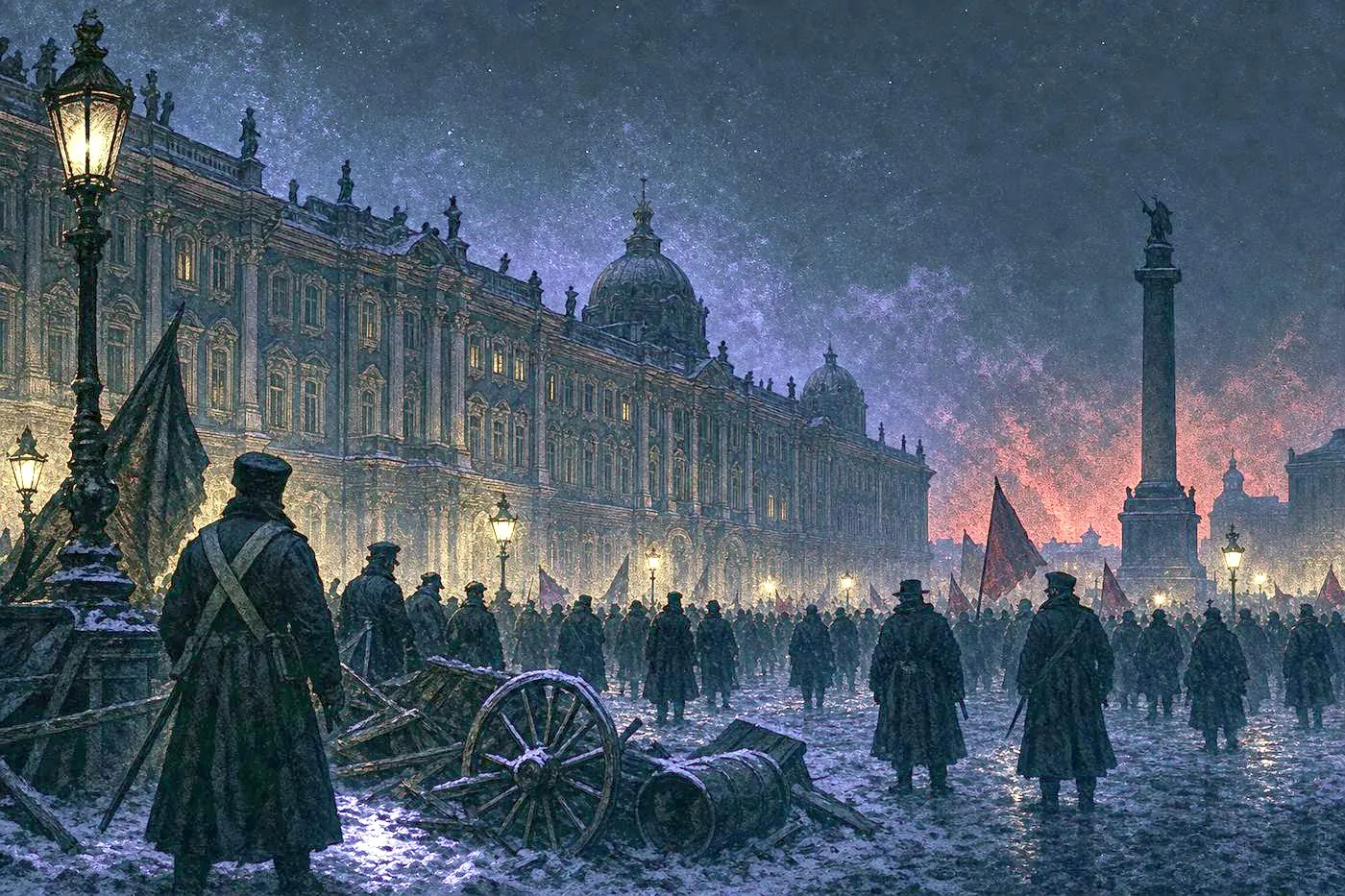
By early 1917, years of war losses, food shortages, and inflation had eroded support for Tsar Nicholas II’s government. On February 23 by the old Julian calendar (March 8 by the Gregorian calendar used today), International Women’s Day protests over bread shortages in Petrograd grew into a general strike. Within days, garrison soldiers ordered to suppress the unrest instead mutinied and joined the crowds, and the Duma formed a Provisional Committee to fill the resulting vacuum of authority. Facing the collapse of military and political support, Nicholas II abdicated on March 2 (March 15, Gregorian), ending more than three hundred years of Romanov rule. Power initially split between the Provisional Government, led first by Prince Georgy Lvov, and the Petrograd Soviet, a rival council of workers’ and soldiers’ deputies: an arrangement historians call “dual power” that left neither body fully in control.
The Provisional Government and the October Revolution
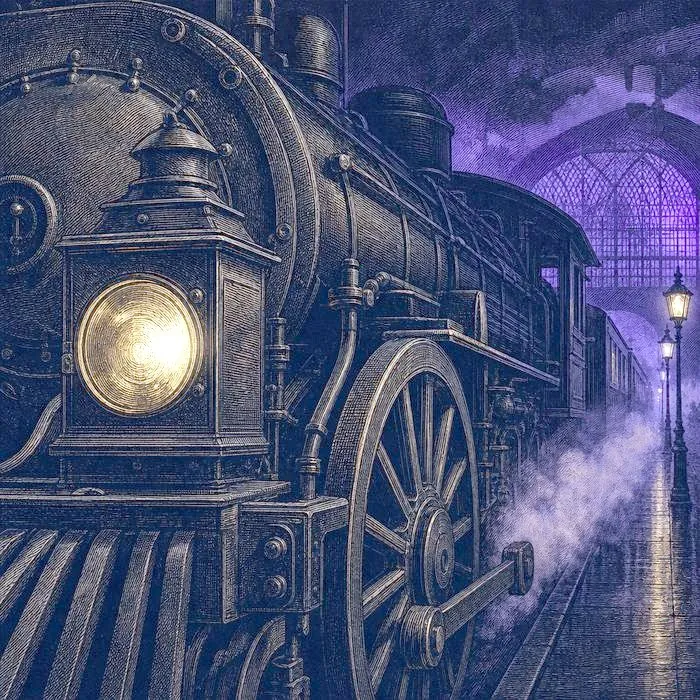
Vladimir Lenin, the Bolshevik leader, returned from exile in April 1917 aboard a train provided by Germany, hoping his return would destabilize Russia’s war effort, and issued his April Theses calling for “all power to the soviets.” The Provisional Government, by then led by Alexander Kerensky, struggled to manage continued war losses, land shortages, and growing unrest, surviving an attempted right-wing coup in the summer before losing control entirely. Any timeline of the Russian Revolution treats this dual-power arrangement between the Provisional Government and the Petrograd Soviet as inherently unstable, and it collapsed within months. On the night of October 24–25 by the Julian calendar (November 6–7, Gregorian), Bolshevik Red Guards seized key points across Petrograd and stormed the Winter Palace, arresting the Provisional Government’s remaining ministers with comparatively little resistance.
The Bolshevik Seizure of Power and the History of the Civil War’s Onset
The Bolsheviks moved quickly to consolidate power, establishing the Cheka secret police in December 1917 and dissolving Russia’s first freely elected Constituent Assembly in January 1918 after it produced a non-Bolshevik majority. In March 1918, the new Soviet government signed the Treaty of Brest-Litovsk, ceding substantial territory to withdraw Russia from the First World War. These moves, combined with the Bolsheviks’ seizure of land and industry, pushed opponents ranging from monarchists to moderate socialists into open armed resistance, and by mid-1918 a full civil war between the Bolshevik Red Army and a loose coalition of anti-Bolshevik White forces was underway. This Russian Revolution timeline treats 1918 as the hinge point where a revolution became a state, and a state was almost immediately forced to fight for its survival: a conflict historians studying the history of the Russian Revolution generally trace forward into the early 1920s.
Frequently Asked Questions
What does this Russian Revolution timeline cover?
This Russian Revolution timeline of events covers the collapse of the Romanov monarchy in February 1917, the Provisional Government's rule, the Bolshevik-led October Revolution, and the opening months of the civil war that followed into 1918.
What is the difference between the February and October Revolutions?
The February Revolution toppled the Tsar and installed a Provisional Government, while the October Revolution, months later, saw the Bolsheviks overthrow that government; a russian revolution events timeline lists them as separate events roughly eight months apart.
Why do dates for the Russian Revolution vary between sources?
Russia used the Julian calendar until February 1918, thirteen days behind the Gregorian calendar most Western sources use, so the "February" and "October" revolutions are sometimes given as March and November events instead.
What ended the Russian Revolution?
Most historians treat the Bolshevik consolidation of power in 1918, including the Brest-Litovsk treaty and the onset of civil war, as the point where the revolution gave way to the founding of the Soviet state; a fuller history of the Russian Revolution follows the civil war through the Bolsheviks' eventual victory in 1922.