This french revolution timeline of events traces France’s transformation from an absolute monarchy into a republic, tracking the key dates, causes, and consequences of one of the most consequential upheavals in modern history. Beginning with the financial crisis and the convening of the Estates-General in 1789 and ending with Napoleon Bonaparte’s coup in 1799, this timeline of the French Revolution follows ten turbulent years of reform, violence, and reinvention. Whether you’re researching for school, writing, or general interest, this french revolution events timeline is built to be a clear, dated reference you can return to.
The French Revolution Timeline: Key Events
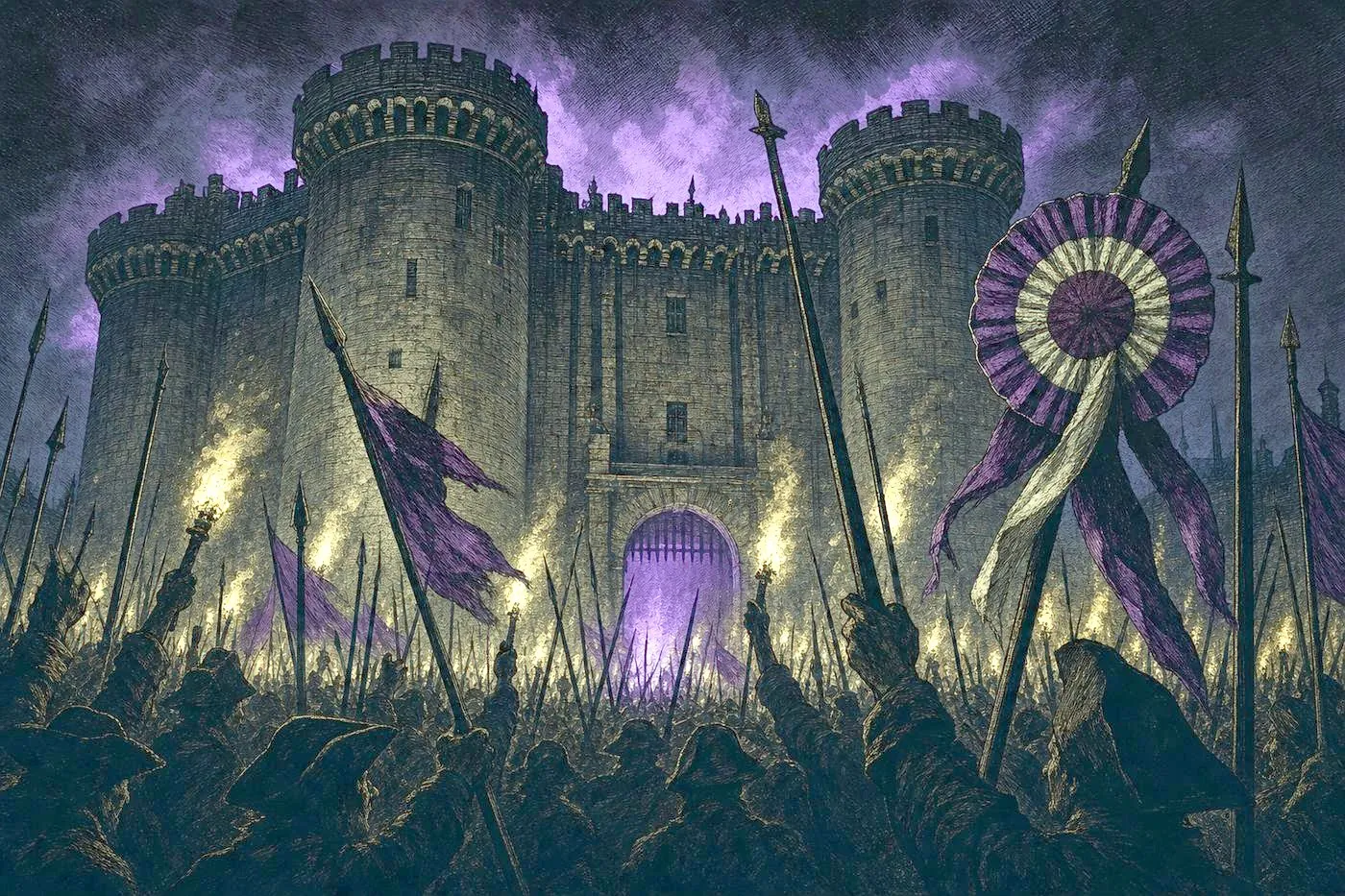
By the late 1780s, France’s monarchy faced a mounting fiscal crisis, made worse by drought, poor harvests, and the enormous cost of financing wars abroad. In May 1789, King Louis XVI convened the Estates-General for the first time in over a century, hoping to resolve the crisis. Instead, the Third Estate broke away to form a National Assembly, and on July 14, 1789, Parisians stormed the Bastille fortress, a moment now treated as the symbolic start date on almost every french revolution timeline. Weeks later, the National Assembly adopted the Declaration of the Rights of Man and of the Citizen, asserting liberty, property, and equality before the law. By 1791, a constitutional monarchy briefly limited the king’s powers, but the compromise didn’t hold: in 1792, the monarchy was abolished and France was declared a republic. Read as a french revolution events timeline, these early years compress an extraordinary amount of change into roughly three years.

The Reign of Terror and the Republic
The republic’s early years were marked by war with other European monarchies and deep internal division over how far the revolution should go. In January 1793, Louis XVI was executed by guillotine, a decisive break with the old order that shocked royal courts across Europe. Amid fears of invasion and counter-revolution, the Committee of Public Safety, dominated by Maximilien Robespierre, assumed emergency powers and launched the Reign of Terror: a period in which thousands of perceived enemies of the revolution were arrested and executed. The Terror consumed even its own architects: in July 1794, Robespierre himself was arrested and executed, an event known as the Thermidorian Reaction that ended the Terror. From 1795 to 1799, a five-member executive body called the Directory governed France, struggling with corruption, economic instability, and continued war. This middle stretch of the french revolution timeline is often the least remembered, overshadowed by the Bastille and the Terror, but the Directory years shaped the political vacuum that a young general would soon step into.
Legacy and History of the Revolution
The Directory’s instability came to a head in November 1799, when Napoleon Bonaparte staged a coup on 18 Brumaire, replacing the Directory with the Consulate and installing himself as First Consul. Most historians treat this coup as the formal end point of the French Revolution, even though many of its ideas about citizenship, law, and the limits of royal power carried forward into the Napoleonic era. Any complete timeline of the French Revolution has to grapple with this paradox: a movement that began by trying to reform a monarchy ended up abolishing one, executing a king, surviving a Terror, and finally handing power to a military strongman. In the broader sweep of European history, the French Revolution is usually treated as the hinge between the early modern and modern worlds, an era whose events reshaped ideas about citizenship, sovereignty, and civil rights that still echo in constitutional history today.
Frequently Asked Questions
What does this French Revolution timeline cover?
This french revolution timeline covers the key dates of the French Revolution, from the 1789 Estates-General and the storming of the Bastille to Napoleon's 1799 coup, including the Reign of Terror and the years of the Directory.
When did the French Revolution start and end?
Most historians date the French Revolution from 1789, when the Estates-General convened and the Bastille fell, to 1799, when Napoleon Bonaparte's coup ended the Directory and established the Consulate.
What caused the French Revolution?
The French Revolution grew out of a severe financial crisis, unequal taxation, food shortages, and widespread frustration with absolute monarchy, all of which came to a head at the 1789 Estates-General.
What was the Reign of Terror?
The Reign of Terror was a period from 1793 to 1794 when the Committee of Public Safety, led by Robespierre, executed thousands of people it considered enemies of the revolution; a full timeline of the French Revolution places it between the execution of Louis XVI and the Thermidorian Reaction.