
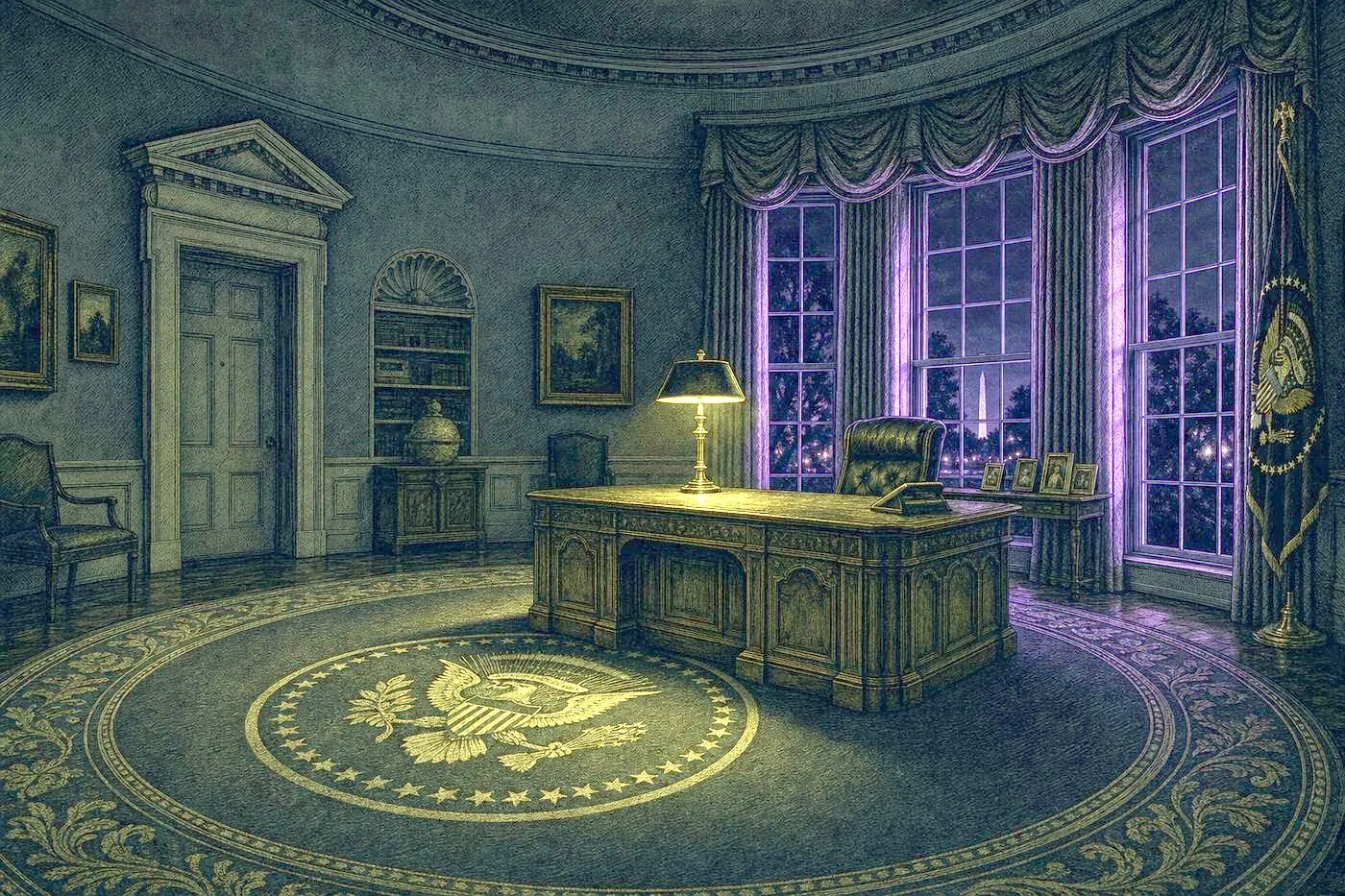
This timeline traces the presidency as an institution: its constitutional origins, the precedents that shaped how the office is used, and the amendments that formally defined its limits, rather than the biography of any single president.
Constitutional Origins and Early Precedents
The office of the presidency was created at the 1787 Constitutional Convention in Philadelphia, where delegates debated at length how much authority to vest in a single executive after their experience under British royal governors and the weak, executive-less government of the Articles of Confederation. The resulting compromise, laid out in Article II of the Constitution, gave the president command of the armed forces, the power to negotiate treaties and make appointments (subject to Senate approval), and a general duty to “take care that the laws be faithfully executed,” while leaving many practical details of the office undefined. George Washington, elected unanimously and inaugurated in 1789, filled in many of those blanks by example: he established the practice of a cabinet of department heads, accepted the title “Mr. President” rather than something more monarchical, and, by declining to seek a third term, set an informal two-term precedent that most of his successors would follow for close to a century and a half. The Twelfth Amendment, ratified in 1804 after the disputed election of 1800 exposed a flaw in the original electoral system, required electors to cast distinct ballots for president and vice president rather than simply electing the runner-up as vice president, changing how the ticket itself would function going forward.

Succession, Growth, and the Limits of the Office
The presidency’s practical scope has expanded and been tested at several key moments. When William Henry Harrison died after only about a month in office in 1841, the Constitution’s succession language was ambiguous about whether Vice President John Tyler became president in full or merely an acting president; Tyler’s insistence on the former, though contested at the time, set a precedent that stood for well over a century before being formally codified in the 25th Amendment in 1967. The office’s authority and administrative reach grew substantially over the nineteenth and twentieth centuries, particularly during national emergencies: the Civil War, the World Wars, and the Great Depression each saw presidents assume broader executive powers than had typically been exercised before. Franklin D. Roosevelt’s presidency marked the clearest break with earlier custom: elected four times between 1932 and 1944, he served through both the Depression and the Second World War, and his tenure is often cited as the point at which the modern, more powerful presidency took shape.
Formalizing the Two-Term Limit and the Modern Presidency
Concern over the precedent set by Roosevelt’s four terms led Congress to propose, and the states to ratify, the 22nd Amendment in 1951, formally limiting individuals to two elected terms as president, converting Washington’s voluntary example into binding constitutional law. In the decades since, the presidency has continued to evolve alongside changes in mass communication, national security policy, and the size of the federal government, with scholars and historians often debating how far executive power has grown relative to the other two constitutional branches. The office today bears only a loose resemblance to the relatively modest role imagined by the delegates in Philadelphia in 1787, having absorbed responsibilities, from managing a large standing military to directing a sprawling federal bureaucracy, that the Constitution’s framers left largely unaddressed.