
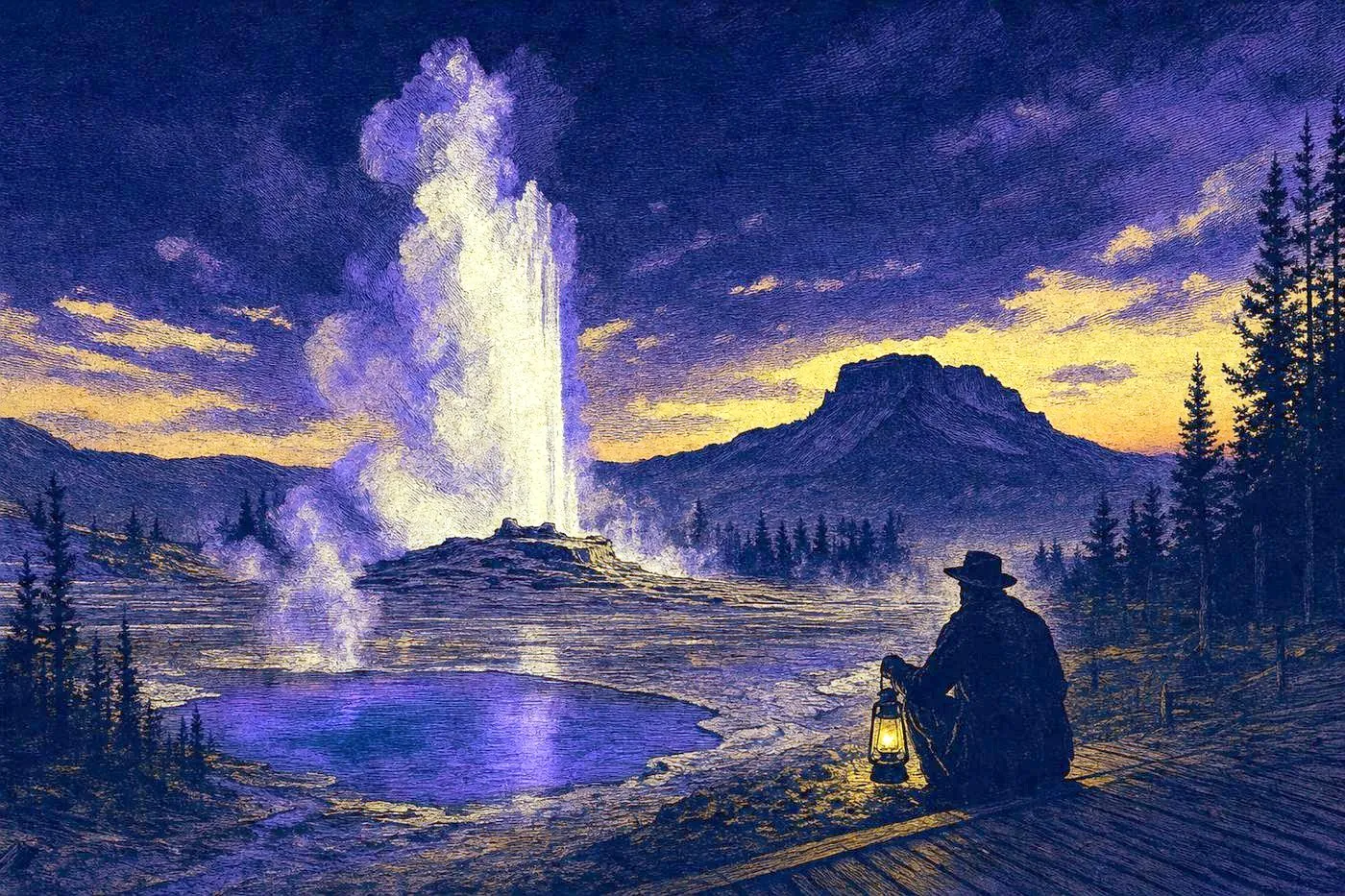
This Wyoming history timeline chronicles the territory’s journey from frontier to statehood, highlighting its pioneering role in women’s suffrage and the creation of Yellowstone, the nation’s first national park.
Frontier Settlement and Trading Posts
Wyoming’s recorded American history began with the 1803 Louisiana Purchase, which brought the territory under U.S. sovereignty, although the region remained primarily inhabited by Native American nations including the Lakota, Cheyenne, Arapaho, Shoshone, and Crow peoples who had occupied the land for thousands of years. The landscape was dominated by high plains, mountain ranges, and river valleys that supported diverse wildlife including vast buffalo herds and other game that sustained Indigenous communities. The first sustained European-American presence came through fur traders and trappers during the 1820s and 1830s, seeking beaver pelts for the lucrative North American fur trade. In 1834, the American Fur Company established Fort Laramie on the Laramie River, which became a crucial trading post and supply station for the expanding fur trade and for travelers moving along the Oregon Trail toward the Pacific. Fort Laramie’s strategic location reflected Wyoming’s position on transcontinental trade routes, though settlement remained sparse until the discovery of precious metals in nearby regions and railroad construction in the 1870s opened the territory to more intensive development.
Women’s Suffrage and Territorial Governance
Wyoming Territory was officially organized in 1868, and in a remarkable decision that preceded national women’s suffrage by more than fifty years, the territorial legislature granted women the right to vote in 1869. The decision was championed by legislators who saw both principle and pragmatism in female suffrage: some were genuinely committed to women’s equality, while others recognized that women settlers were essential to building stable frontier communities. Wyoming became the first U.S. territory or state to grant female suffrage, a pioneering decision that made Wyoming a beacon for the national women’s suffrage movement. When Wyoming achieved statehood on July 10, 1890, it became the 44th state and the first state in the Union to retain women’s voting rights as part of its state constitution, rights that Wyoming citizens had already exercised for two decades, proving that women’s participation in democracy did not threaten social stability.
Yellowstone and Environmental Conservation
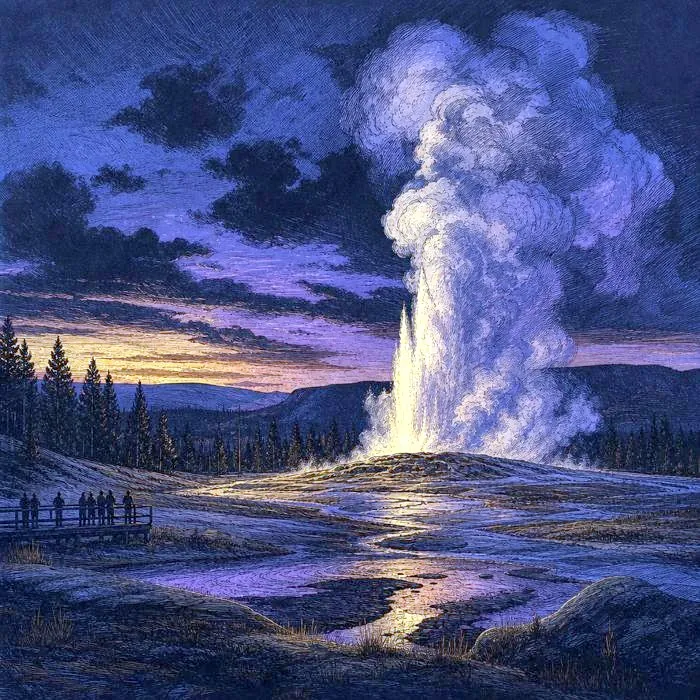
Wyoming’s historical significance was further enhanced by the establishment of Yellowstone National Park in 1872, when President Ulysses S. Grant signed legislation creating the world’s first national park. Yellowstone’s geothermal wonders (the famous Old Faithful geyser, dramatic canyons, massive waterfalls, and abundant wildlife) made it an extraordinary landscape worthy of federal protection and set aside for public benefit rather than private exploitation. This pioneering decision established the conservation principle that certain lands held value for their natural and scenic qualities beyond their potential for economic development. The park encompasses approximately 2.2 million acres, with the bulk located in Wyoming and portions extending into Montana and Idaho. Yellowstone became a symbol of American natural heritage and demonstrated that the nation could designate public lands for preservation. The park’s establishment created a template for national parks across the country. This conservation philosophy influenced American environmental policy throughout the twentieth century and beyond, establishing the principle that public lands belong to all citizens and should be preserved for future generations.