
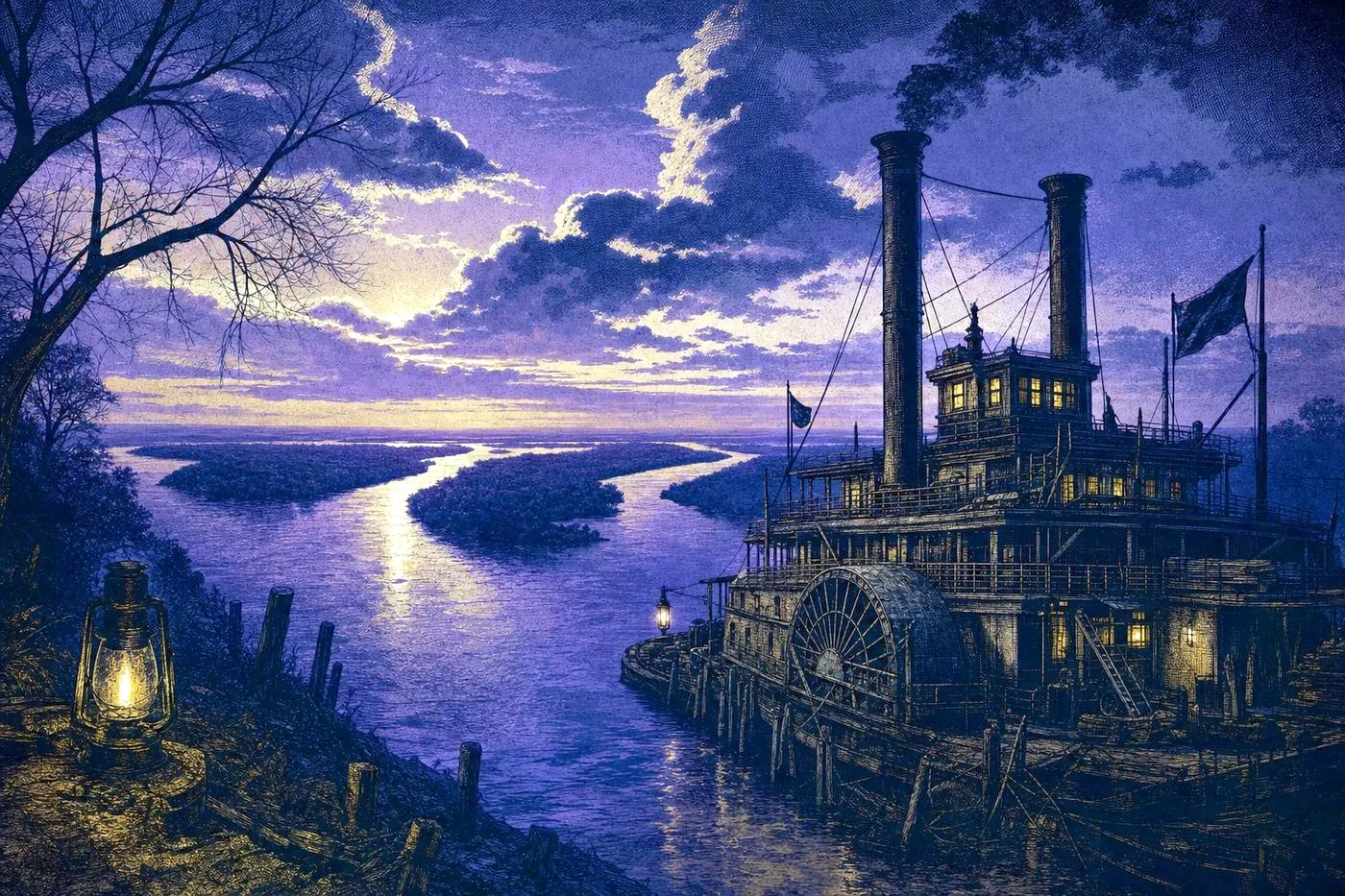
This Missouri history timeline traces the state from Indigenous occupation through French and Spanish colonial rule, the Louisiana Purchase, pivotal statehood via the Missouri Compromise in 1821, and its role as the gateway to American westward expansion.
Indigenous Peoples and Early European Colonization
Missouri was home to numerous Indigenous nations for thousands of years before European contact, including the Osage, Sioux, Shawnee, Delaware, and other peoples who hunted, traded, and maintained complex relationships across the Mississippi and Missouri river systems. French explorers and fur traders began entering the region in the early 1700s, establishing trading posts and small settlements. Ste. Genevieve (1735) became one of the oldest permanent European settlements west of the Mississippi River, built by French colonists seeking furs and river access. St. Louis was founded in 1764 as a French fur-trading post and quickly grew into the region’s dominant settlement. Following the Seven Years’ War, Spain gained control of Missouri as part of Spanish Louisiana in 1762, maintaining French colonial settlements while introducing Spanish administrative structures. Spanish rule lasted nearly 40 years until France reacquired the territory in 1800, only to sell it to the United States three years later.

The Louisiana Purchase and Westward Expansion
Missouri’s critical moment in American history came with the Louisiana Purchase of 1803. The vast territory, including Missouri, doubled the nation’s size and transformed Missouri’s strategic importance. St. Louis, positioned at the confluence of the Mississippi and Missouri rivers, became the natural starting point for westward exploration and settlement. The Lewis and Clark Expedition (1804–1806) departed from St. Louis to explore the newly acquired western territories, and Missouri became the launching point for fur traders, trappers, and eventually settlers pushing westward. The territory developed rapidly during the early 19th century, with population growth driven by river commerce, fur trade, and agricultural settlement. By 1820, Missouri was ready for statehood, but its admission sparked the first major national sectional crisis over slavery expansion. The Missouri Compromise of 1821 admitted Missouri as a slave state while simultaneously admitting Maine as a free state, temporarily easing tensions but establishing a precedent for linking free and slave state admissions.
Missouri’s Role as the Gateway and Modern Development
Missouri’s admission as the 24th state on August 10, 1821, cemented its position as the gateway to western expansion. The state’s rivers became vital transportation corridors for settlers, supplies, and goods moving westward and for furs and agricultural products moving east. St. Louis grew into one of the nation’s great cities, a center of commerce, manufacturing, and culture. In the 19th and early 20th centuries, Missouri became known for brewing (Anheuser-Busch), riverboat transportation, and later, railroad development. The state played a significant role during the Civil War, with conflicting loyalties that sometimes turned bloody. After the war, Missouri diversified its economy into manufacturing, agriculture, and service industries. Today, Missouri remains an important transportation and commercial hub, with St. Louis serving as a regional financial center and Kansas City as a major metropolitan area. The state’s heritage as a frontier gateway, combined with its role in westward expansion and its position at major river crossings, remains central to its identity and economic importance.
Frequently Asked Questions
What was the Missouri Compromise?
The Missouri Compromise of 1821 was a deal that admitted Missouri as a slave state while simultaneously admitting Maine as a free state, maintaining the balance of free and slave states in the Senate. It temporarily eased sectional tensions but established a troubling precedent of linking slavery expansion to westward statehood.
Why was St. Louis important to westward expansion?
St. Louis, located at the confluence of the Mississippi and Missouri rivers, served as the natural launching point for westward exploration and settlement. The Lewis and Clark Expedition departed from St. Louis in 1804, and the city became the gateway for trade, exploration, and migration westward.
How long did Spain control Missouri?
Spain controlled Missouri from 1762 to 1800, nearly 40 years, as part of Spanish Louisiana. France regained the territory in 1800 and sold it to the United States in 1803. French culture and French place names remain evident in Missouri today.
What indigenous nations originally inhabited Missouri?
Missouri was home to the Osage, Sioux, Shawnee, Delaware, and other Indigenous nations for thousands of years. These peoples developed hunting and trading networks throughout the region and were eventually displaced by European colonization and American westward expansion.