
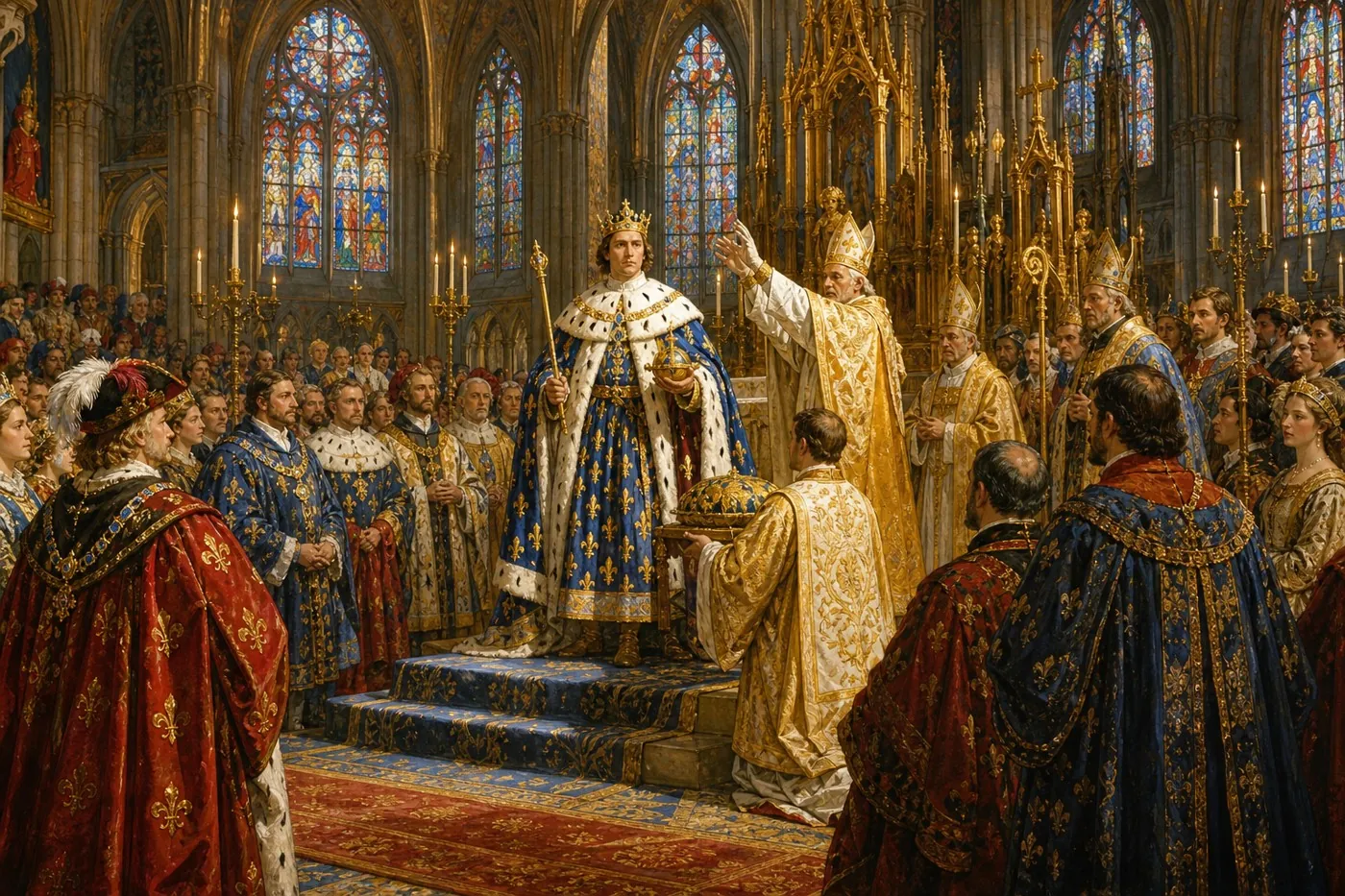
This france history timeline traces the country’s arc from Roman Gaul and the Frankish kingdoms through medieval monarchy, Bourbon absolutism, revolution and empire, into the modern republic that governs France today.
France History Timeline: Gaul, the Franks, and Medieval France
Long before “France” existed as a nation, the region was known as Gaul, home to Celtic tribes who came under Roman control after Julius Caesar’s Gallic Wars of 58 to 51 BCE, campaigns that included defeating a major revolt led by the chieftain Vercingetorix. Roman rule brought roads, cities, and a Latin language that would eventually evolve into French. In the fifth century, Germanic Frankish peoples moved into the region, and Clovis I, king of the Salian Franks, unified rival Frankish groups and is traditionally said to have converted to Catholicism around 496, forging a lasting bond between the Frankish monarchy and the Church. His Merovingian dynasty gave way in time to the Carolingians, and then, in 987, the nobleman Hugh Capet was elected king, founding the Capetian dynasty that laid the institutional foundations of the French state. Capetian and later Valois kings gradually extended royal authority, though the kingdom was tested severely during the Hundred Years’ War against England. That conflict’s fortunes turned in 1429, when Joan of Arc, a young peasant woman claiming divine guidance, convinced the dauphin Charles VII to relieve besieged Orléans, a victory that helped restore French royal authority and pushed English forces into a long retreat.
France History Timeline: Bourbon Monarchy and the Road to Revolution
The Bourbon dynasty came to the French throne in 1589 with Henry IV, ending decades of religious civil war between Catholics and Protestants. French monarchy reached its most powerful and lavish expression under Louis XIV, who ruled from 1643 to 1715 and became the model of European absolute monarchy, governing as, in his own view, God’s representative on Earth. In 1682, Louis XIV formally moved the royal court to his enlarged palace at Versailles, turning it into the political and cultural center of the kingdom and a symbol of centralized royal power other European courts sought to imitate. That concentration of wealth, combined with costly wars and heavy tax burdens on commoners, left the monarchy financially strained and politically vulnerable by the late 18th century. Enlightenment ideas about liberty and representative government spread among the French public, and on 14 July 1789 a Parisian crowd stormed the Bastille fortress-prison, an event that came to symbolize the uprising against royal despotism and opened the French Revolution. That Revolution’s own turbulent course is a deep chapter of French history covered in detail elsewhere on this site, but its immediate effect here was decisive: it permanently ended centuries of Bourbon absolute rule.
France History Timeline: Napoleon to the Modern Republic
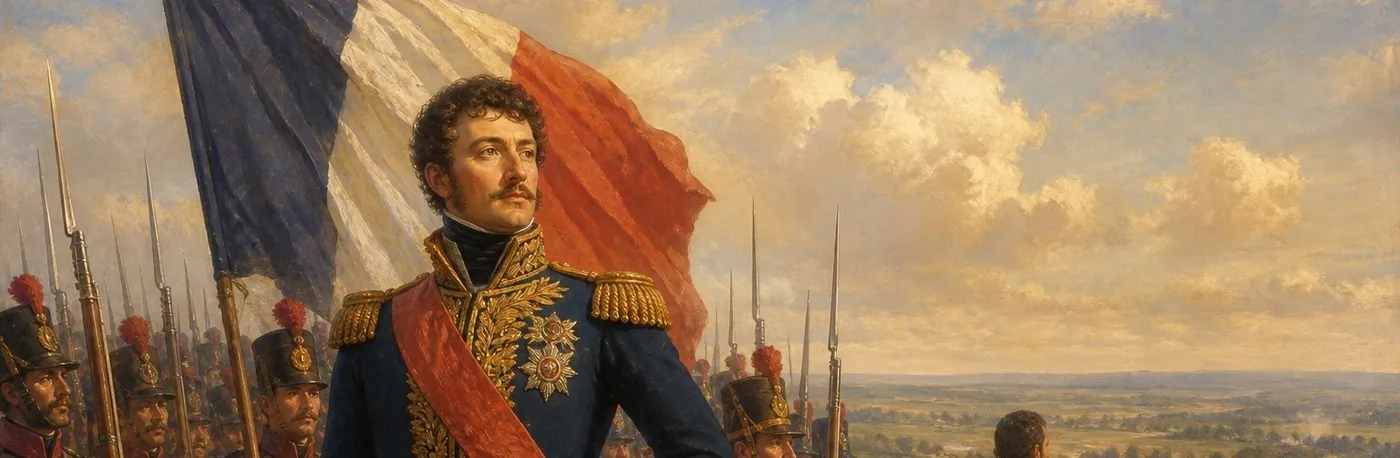
Out of the Revolution’s instability rose Napoleon Bonaparte, a general who seized political power and, in December 1804, crowned himself Emperor of the French at Notre-Dame Cathedral, founding the First French Empire. Napoleon’s armies dominated much of continental Europe for a decade, reshaping legal codes and borders, until a coalition of European powers defeated him in 1815, ending the empire and leading to a restored monarchy that itself proved short-lived. France cycled through further monarchies, a Second Empire under Napoleon III, and a Third Republic that endured until the upheavals of the 20th century. France suffered enormous losses on the Western Front during World War I from 1914 to 1918, and was later occupied by Nazi Germany in World War II before Allied and Free French forces helped liberate Paris in 1944. Postwar instability under the Fourth Republic, worsened by a political crisis over the war in Algeria, led Charles de Gaulle to oversee a new constitution, approved by referendum in September 1958, that created the Fifth Republic with a strengthened presidency. That system of government remains in place today, carrying this france history timeline from ancient Gaul to the present republic.
Frequently Asked Questions
How old is French history?
French history stretches back to Roman-era Gaul, conquered by Julius Caesar between 58 and 51 BCE, and continues through the Frankish kingdoms, medieval monarchy, and revolution into the modern republic.
Who founded the French monarchy?
Clovis I united the Frankish tribes and founded the Merovingian dynasty around the late fifth century, while Hugh Capet's election in 987 founded the Capetian dynasty that laid the lasting foundations of the French state.
What did Joan of Arc do?
Joan of Arc convinced the dauphin Charles VII to send an army that relieved the besieged city of Orléans in 1429, a turning point in the Hundred Years' War that helped restore French royal authority against English claims.
What is the Fifth Republic?
The Fifth Republic is France's current system of government, established under a constitution led by Charles de Gaulle and approved by referendum in September 1958, which created a strengthened presidency still in use today.