
Discovery: The Missiles Are Found
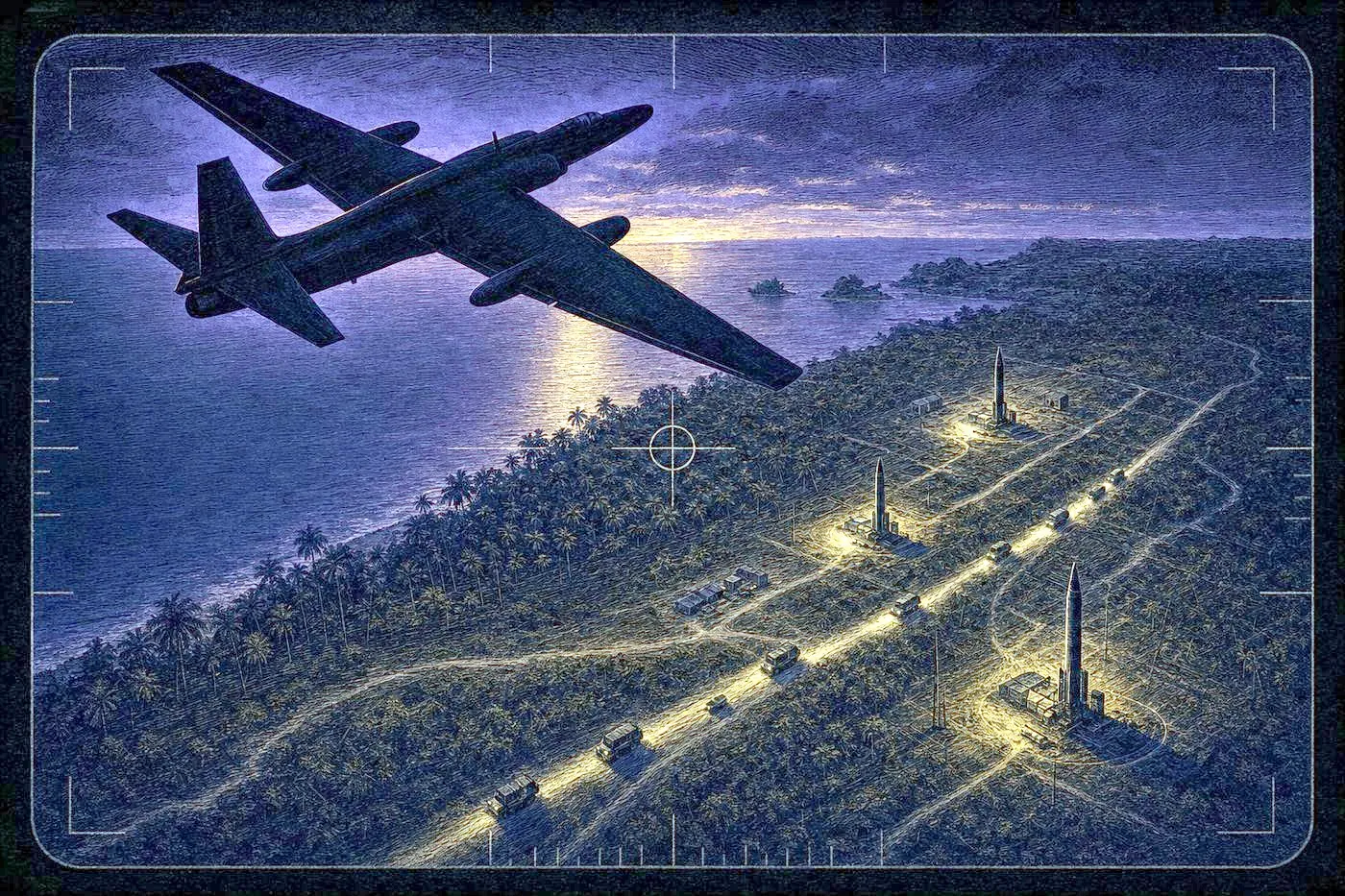
By the autumn of 1962, the Soviet Union had begun secretly shipping medium-range ballistic missiles to Cuba, following Premier Nikita Khrushchev’s decision to place nuclear weapons capable of reaching much of the continental United States roughly ninety miles from Florida. The move came against a backdrop of Cold War tension that included the Soviet construction of the Berlin Wall the previous year and the failed U.S.-backed Bay of Pigs invasion of Cuba in 1961, which had already strained relations between Washington and Havana and left Cuban leader Fidel Castro more closely aligned with Moscow. On October 14, 1962, a U.S. Air Force U-2 reconnaissance aircraft flying over western Cuba photographed what analysts soon identified as missile installations under construction. President John F. Kennedy was briefed on the findings two days later, on October 16, and convened a group of senior advisers, an executive committee of the National Security Council that came to be known as ExComm, to consider how the United States should respond.
Confrontation: The Quarantine and the Standoff
Over the following days, ExComm debated a range of options, from a diplomatic approach to air strikes against the missile sites to a full invasion of Cuba. Kennedy settled on a naval “quarantine” (a term chosen partly because a formal blockade would have been considered an act of war under international law) intended to prevent additional Soviet military materiel from reaching the island while pressing for the removal of the missiles already there. He announced the decision in a televised address to the American public on October 22, 1962, revealing the presence of the missiles for the first time and putting U.S. armed forces on heightened alert. The following days were marked by extraordinary tension as Soviet-flagged ships approached the quarantine line and both sides weighed their next moves. The crisis reached its most dangerous point on October 27, later referred to as “Black Saturday,” when a U-2 aircraft was shot down over Cuba, killing its pilot, and a separate naval incident brought a Soviet submarine, reportedly carrying a nuclear torpedo and battered by depth charges intended only as a signal to surface, into a tense encounter with U.S. Navy destroyers.
“We’re eyeball to eyeball, and I think the other fellow just blinked,” U.S. Secretary of State Dean Rusk is widely reported to have remarked as the crisis neared its resolution.
Resolution and Legacy
A resolution came through a combination of public diplomacy and secret back-channel negotiation. On October 28, 1962, Khrushchev announced that the Soviet Union would dismantle and remove its missiles from Cuba. In exchange, the United States publicly pledged not to invade Cuba and, through a confidential arrangement not disclosed to the public for many years, agreed to remove its own Jupiter intermediate-range missiles from Turkey within several months. The immediate crisis was over, though the removal and verification of the Soviet missiles continued over the following weeks. The episode left a lasting mark on Cold War diplomacy: in 1963, the two superpowers established a direct communications link, often called the “hotline,” between Washington and Moscow to allow leaders to communicate quickly during a future crisis, and the experience influenced subsequent efforts toward arms control, including the Partial Nuclear Test Ban Treaty signed later that year. The Cuban Missile Crisis is widely regarded by historians as the closest the world came to direct nuclear conflict between the United States and the Soviet Union during the Cold War.