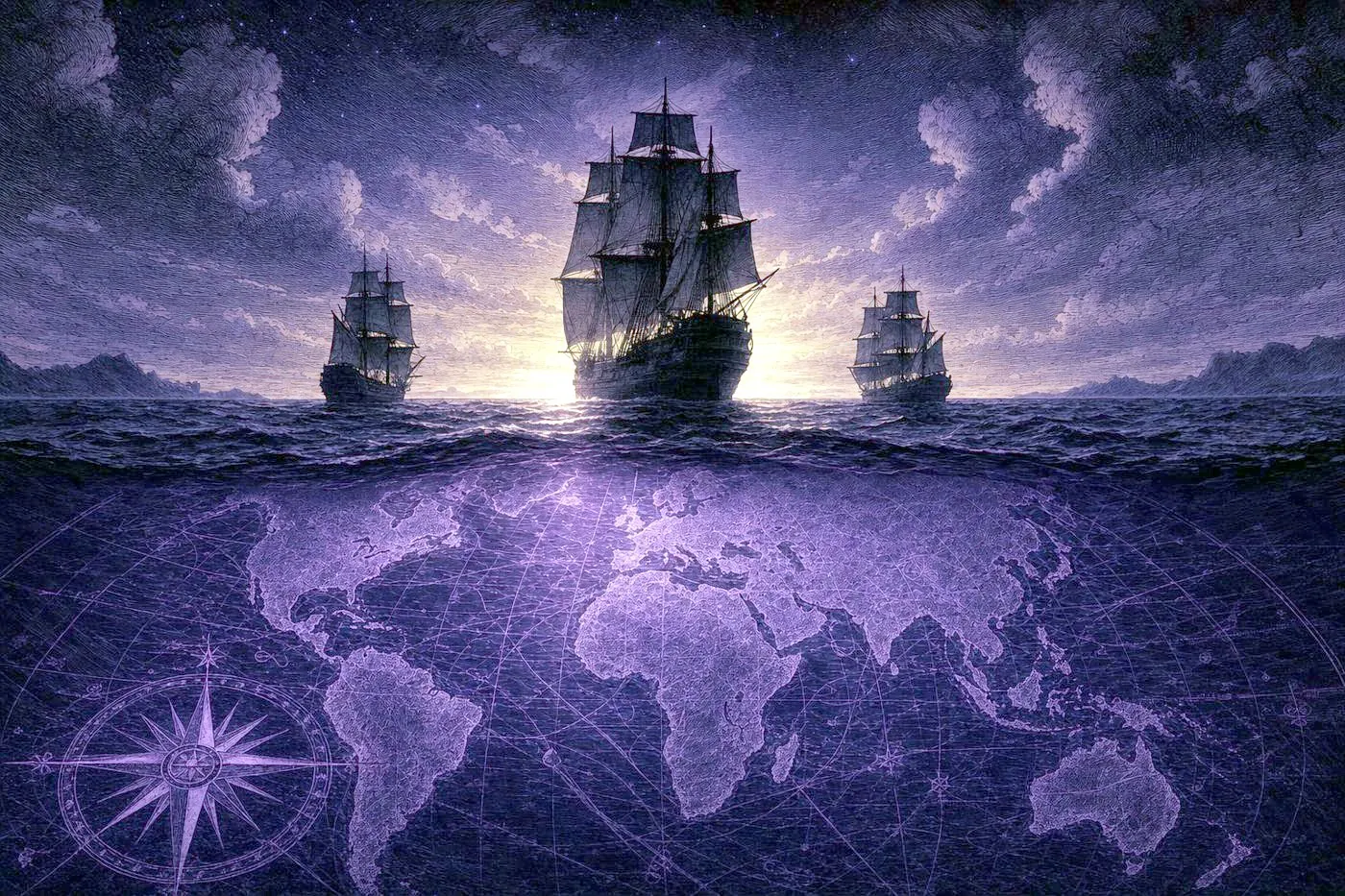
This age of exploration timeline traces the roughly one century between Portugal’s push down the West African coast and the completion of the first circumnavigation of the globe, when European mariners charted ocean routes that had not previously been recorded in Europe. Read as an age of exploration timeline of events, it moves from Portugal’s 1415 capture of Ceuta through Bartolomeu Dias rounding the Cape of Good Hope, Christopher Columbus’s 1492 Atlantic crossing, Vasco da Gama’s sea route to India, and Ferdinand Magellan’s expedition completing the first voyage around the world. It also works as an age of exploration explorers timeline: a record of the individual navigators, financiers, and crews whose decisions and rivalries shaped where ships sailed and what followed.
Early Voyages: The Age of Exploration Timeline of Events
Historians differ on exactly where to start an age of exploration timeline, but many mark 1415, when Portugal captured the North African port of Ceuta, an early foothold that opened the way for Portuguese ships to work steadily down the West African coast over the following decades. In 1488, the Portuguese navigator Bartolomeu Dias rounded the Cape of Good Hope, proving for the first time that ships could pass from the Atlantic into the Indian Ocean. Four years later, in 1492, the Genoese navigator Christopher Columbus, sailing for the Spanish crown, reached the islands of the Caribbean while searching for a westward route to Asia. That single, well-documented voyage is covered in full on this site’s dedicated Columbus timeline, so it’s only touched on briefly here.
In 1498, Vasco da Gama completed what Dias had made possible, reaching India by sea and opening a direct maritime trade route between Europe and South Asia. Vasco Núñez de Balboa crossed the Isthmus of Panama in 1513 and is generally credited as the first European to see the Pacific Ocean from the Americas. And between 1519 and 1522, Ferdinand Magellan’s expedition achieved the era’s most ambitious feat: the first circumnavigation of the globe. Magellan himself was killed in 1521 in the Philippines, but part of his crew, aboard the last surviving ship, completed the voyage back to Spain the following year.
Explorers Who Defined the Era
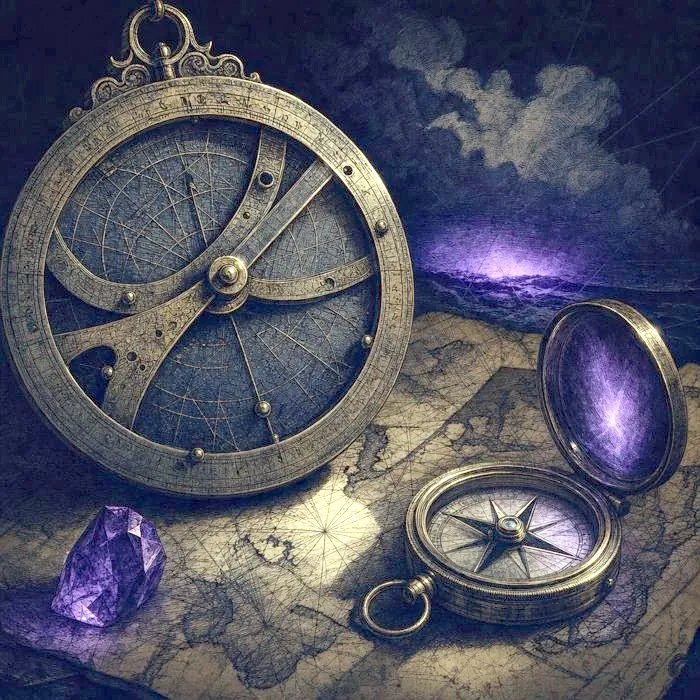
No single figure carries the whole age of exploration explorers timeline; it’s a story of overlapping careers, rival royal sponsors, and steadily improving technology. Portugal’s Prince Henry, often called “the Navigator,” is credited with funding decades of voyages down the African coast without sailing on them himself, while explorers such as Dias, da Gama, and Magellan (who sailed for Spain despite being Portuguese) carried that investment into open ocean. Spain’s crown backed Columbus and, later, Balboa and Magellan, turning exploration into a direct rivalry between the two Iberian kingdoms. These explorers relied on the caravel, a maneuverable ship developed in Portugal, along with improved compasses and astrolabes that made longer, more confident ocean crossings possible. Their voyages weren’t lone acts of curiosity; they were expensive, state-backed ventures aimed at reaching Asian spice markets without going through Ottoman- or Venetian-controlled overland routes.
History, Consequences, and Legacy of the Age of Exploration
The history of this period isn’t only a history of navigation; it’s also the history of what followed contact. The voyages of Columbus, da Gama, and their successors set off the Columbian Exchange, the transfer of crops, animals, and diseases between the Americas, Europe, Africa, and Asia, which reshaped diets and populations on every continent it touched. That same contact opened the way for European colonization of the Americas, Africa, and parts of Asia, backed by the same crowns that had financed the voyages. For Indigenous peoples in the Americas, the consequences were catastrophic: forced labor, land seizure, and epidemic disease, to which Indigenous populations had no prior immunity, killed enormous numbers of people within a few generations of first contact. Any honest age of exploration timeline has to hold both halves of that history together: the navigational achievement and the human cost that came with it.
Frequently Asked Questions
What does this age of exploration timeline cover?
This age of exploration timeline covers roughly 1415 to 1522, from Portugal's capture of Ceuta and Bartolomeu Dias rounding the Cape of Good Hope, through Columbus's 1492 voyage and Vasco da Gama's sea route to India, to Ferdinand Magellan's expedition, which his crew completed as the first circumnavigation of the globe after his death in the Philippines.
Who were the key explorers of the Age of Exploration?
The best-known explorers include Bartolomeu Dias, Christopher Columbus, Vasco da Gama, Vasco Núñez de Balboa, and Ferdinand Magellan, each backed by either the Portuguese or Spanish crown and each responsible for a distinct navigational breakthrough.
What is an age of exploration timeline of events, in brief?
In brief, an age of exploration timeline of events runs from Portugal's 1415 capture of Ceuta, to Dias rounding Africa's tip in 1488, Columbus reaching the Caribbean in 1492, da Gama reaching India in 1498, Balboa sighting the Pacific in 1513, and Magellan's expedition finishing its circumnavigation in 1522.
What were the consequences of the Age of Exploration?
The voyages led to the Columbian Exchange of crops, animals, and diseases across continents, to European colonization of the Americas and parts of Africa and Asia, and to devastating, well-documented harm to Indigenous peoples in the Americas through disease, forced labor, and land seizure.